Corgi Puppy Socialisation Tips
How to Raise a Confident, Well-Adjusted Dog
The window closes faster than most Corgi owners realise. Between the ages of three weeks and twelve weeks, your puppy's brain is actively constructing its model of what the world is — what is safe, what is frightening, what is familiar, and what is worth investigating. Miss this window, or fill it poorly, and you spend years working against a foundation laid in those first few months.
Many first-time owners arrive home with an eight-week-old Corgi and assume that love, routine, and a puppy class eventually booked will be enough. For some dogs it is. But Corgis are a herding breed with a strong instinct to control their environment — and an under-socialised Corgi does not simply become shy. It becomes reactive, territorial, and increasingly difficult to manage in exactly the situations you want your dog to handle calmly.
This guide gives you a practical, stage-by-stage Corgi socialisation plan — from the week you bring your puppy home through to the end of the critical developmental stage — built on positive reinforcement and realistic milestones you can actually achieve.
QUICK ANSWER
What is the best way to socialise a Corgi puppy?
Corgi socialisation is most effective between 3 and 12 weeks. During this window, expose your puppy gradually to new people, environments, sounds, and animals using positive reinforcement — treats, calm praise, and predictable routine. Begin with low-intensity experiences and increase complexity progressively. Forced exposure at any stage creates fear rather than confidence.
1. Why Corgi Socialisation Is Different From Other Breeds
Corgis are not neutral-temperament companion dogs waiting to be moulded. They are working dogs — bred for centuries to move livestock by nipping at heels, making independent decisions in the field, and vocalising confidently to control animals many times their size. These instincts don't disappear in a family home. They redirect. A Corgi that hasn't learned to moderate its herding impulses through early socialisation and consistent training will attempt to herd children, visitors, and other pets — often with accompanying barking and nipping that is bewildering to owners who didn't anticipate it.
Understanding this breed background doesn't mean Corgis are difficult to socialise — quite the opposite. Their intelligence and eagerness to work with humans makes positive reinforcement-based socialisation highly effective. But it does mean that generic puppy socialisation advice won't fully serve a Corgi owner. Breed-specific context matters.
What makes Corgi socialisation distinct:
- High vocality - Corgis use bark as a working tool; socialisation must include sound management and cue-based quiet commands from early on
- Movement reactivity - Herding instinct means fast-moving stimuli (running children, cyclists, other dogs at play) trigger a strong response; graduated exposure is essential
- Strong owner bond - Corgis bond intensely with their primary handler; socialisation must involve multiple handlers early to prevent single-person dependency
- Persistence - Corgis that encounter a frightening stimulus and are not guided through it will often escalate rather than withdraw; proactive management is more effective than reactive management
2. The Critical Developmental Stage
Weeks 3 to 12
The science of canine socialisation is built on a well-established framework of developmental stages. Understanding where your puppy sits within this framework tells you what kind of socialisation is appropriate, and what the consequences of delay are.
The primary socialisation window runs from approximately 3 to 12 weeks of age. Research by Scott and Fuller, whose foundational work at the Bar Harbor canine behaviour laboratory was published in 1965 and remains the backbone of behavioural developmental science, identified this as the period during which social bonds, fear thresholds, and environmental associations are most rapidly and permanently established.
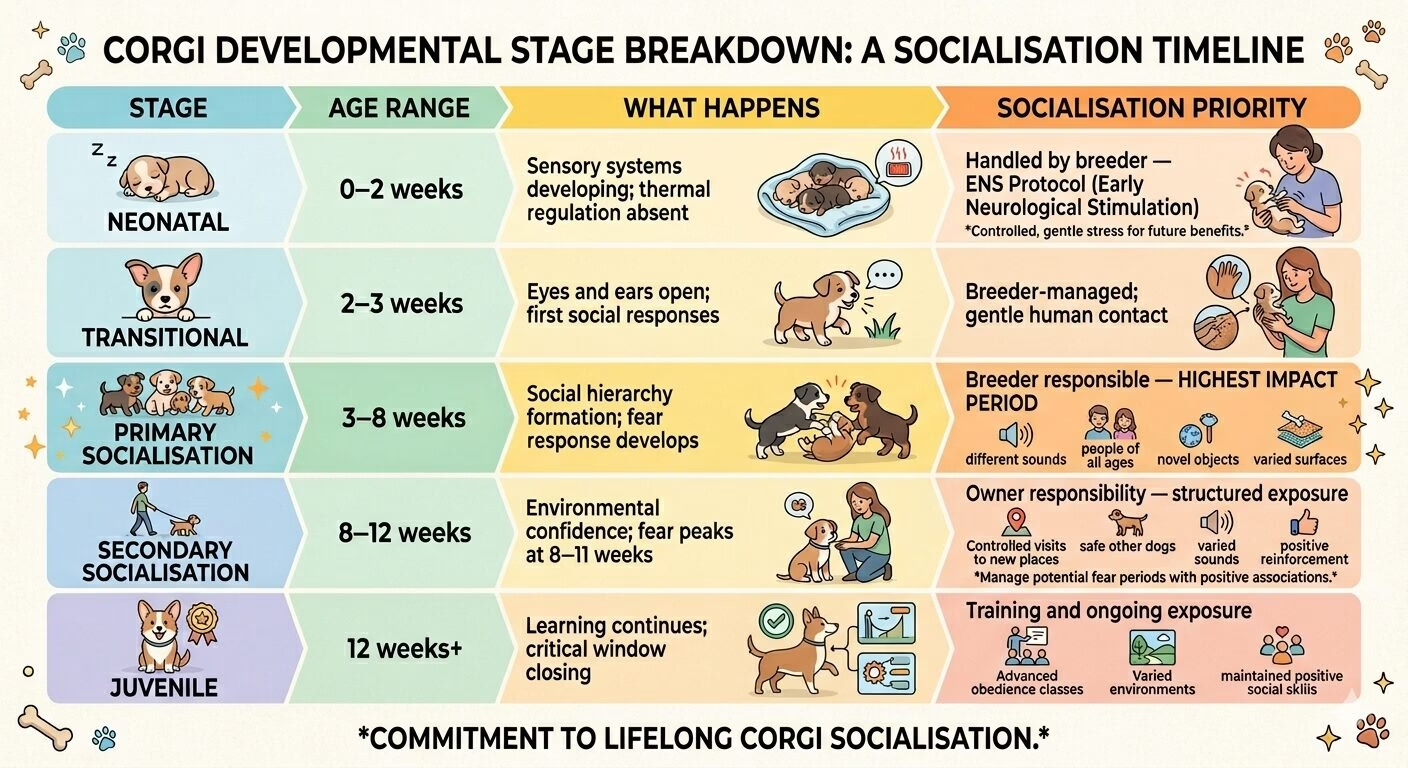
By the time your puppy arrives at eight weeks, the most neurologically critical period of their socialisation has already been shaped by the breeder. This is why ethical breeding practices — specifically the breeder's socialisation programme during weeks 3 to 8 — matter so directly to you as an owner. For a detailed look at how responsible breeders manage this period, Corgi Ethical Breeding on PemberDiamonds sets out the professional standards that the best Corgi breeders apply before any puppy leaves their care.
Your role begins at week 8. The secondary socialisation window (weeks 8 to 12) remains highly influential — but it is also the period during which the fear response reaches its peak. This means exposure must be carefully managed: positive, graduated, and never forced.
3. Your First Week Home
Foundations Before Exposure
The temptation in the first week is to share your new Corgi puppy with everyone. Resist this. The first week is not a socialisation showcase — it is a foundation-building period in which your puppy establishes a sense of safety in their new environment and with their primary handlers.
A puppy who doesn't yet feel secure at home cannot draw on that security during novel exposures. You are building the platform from which all future socialisation launches.
First-week priorities:
- Establish a consistent routine feeding, sleeping, and toileting on a predictable schedule reduces ambient anxiety and accelerates house training simultaneously
- Introduce your home systematically, one room at a time, not the whole house at once. Let the puppy map their environment at their own pace
- Prioritise calm human contact, multiple family members should handle and interact with the puppy, but visitors should be limited to a maximum of two to three per day, introduced quietly, and instructed not to approach the puppy directly — let the puppy approach
- Introduce the puppy's crate as a positive space, crate training and socialisation are not separate projects; a puppy who accepts their crate confidently has a portable safe space during all future socialisation outings
- Begin name recognition and basic positive reinforcement, even in week one, pairing the puppy's name with a food reward plants the first seed of reliable recall — the foundation skill that makes all future social interactions manageable
What to avoid in week one:
- Puppy parks or high-density dog exposure before vaccination status is confirmed
- Loud, chaotic environments (markets, busy streets, large gatherings)
- Long car journeys
- Forcing interaction with children or unfamiliar adults
4. Introducing Your Corgi to Other Dogs Safely
Introducing a Corgi puppy to other dogs is one of the most important — and most frequently mishandled — parts of the socialisation process. The goal is not simply to expose your puppy to other dogs. The goal is to build a history of positive, appropriate canine interaction that your dog can draw on when they encounter unfamiliar dogs throughout their life.
Before full vaccination is complete, the risk of disease transmission at uncontrolled environments (puppy parks, public paths) is genuine. This does not mean your puppy must be isolated. It means you control the exposure.
Safe introduction options before full vaccination:
- Dogs in your own household (vaccinated, known health status)
- Dogs belonging to friends or family (vaccinated, known health status, controlled meeting environment)
- Puppy classes held indoors in cleaned environments with vaccination-verified attendees — many qualified trainers run age-appropriate classes for puppies from 8 weeks using sanitised indoor venues
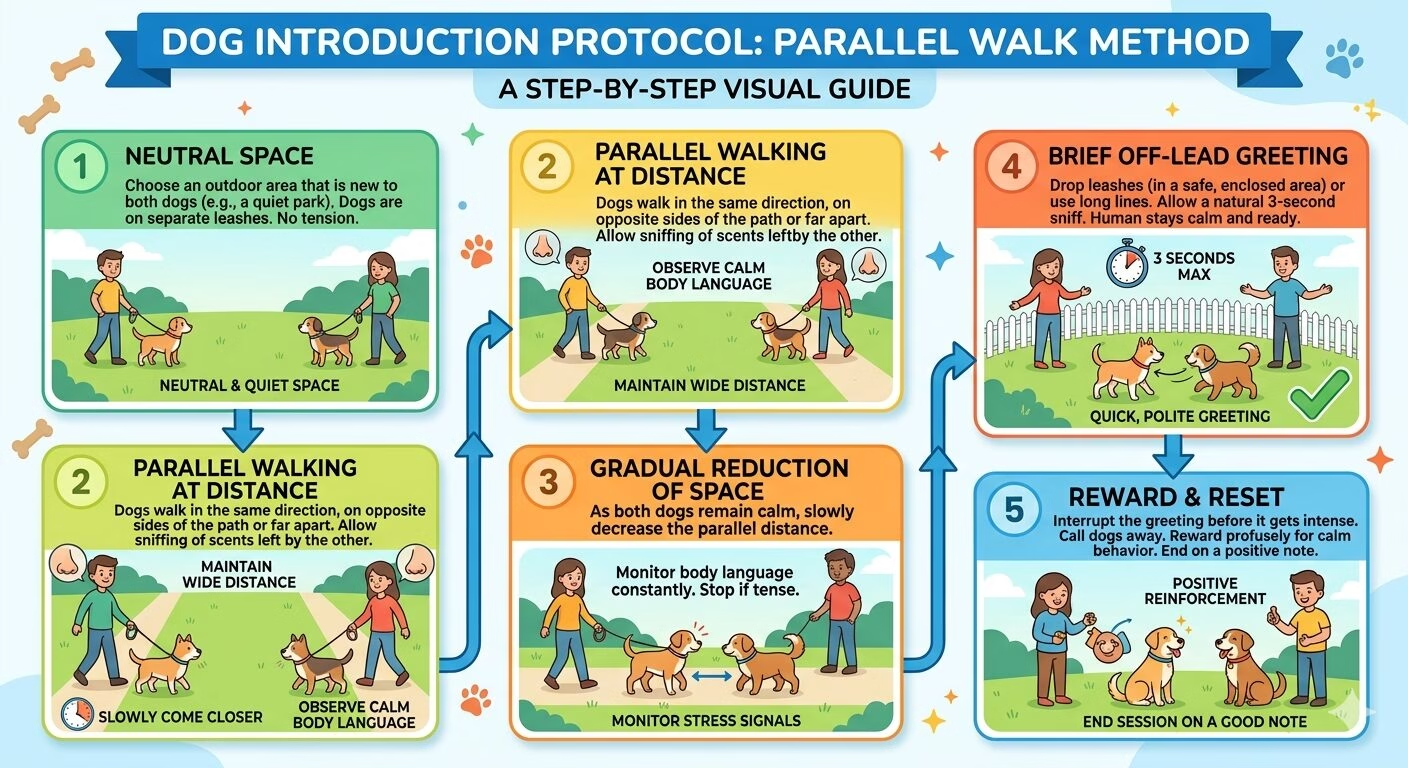
Corgi-specific note: Corgis frequently attempt to herd other dogs during play. This includes circling, barking, and occasional heel contact. Appropriate redirection — recall, short lead, reward for calm disengagement — teaches the puppy to self-regulate this impulse rather than simply suppressing it.
5. Puppy Playdates
What Works and What Backfires
Puppy playdates are a valuable socialisation tool when structured correctly. An unstructured playdate — two or more puppies released together with minimal handler involvement — is one of the most common ways puppy socialisation creates problems rather than solving them.
What effective puppy playdates look like:
- Matched energy levels
- A boisterous 12-week Corgi and a cautious 9-week companion breed require different management.
- Mismatched energy creates bullying dynamics that damage both puppies' social confidence
- Handler involvement - Handlers should be actively engaged — calling dogs back regularly, rewarding calm interaction, separating for rest every 10–15 minutes. Play should never run until one or both puppies become over-stimulated
- Short sessions - 15–20 minutes of structured play is more valuable than an hour of chaotic interaction. Over-arousal during puppyhood can create a dog who is unable to self-regulate in social situations as an adult
- End on a positive note - The session should end while both puppies are still enjoying themselves, not after one has become overwhelmed or conflict has occurred
What backfires:
- Unmonitored play in enclosed spaces
- Allowing the resident dog to discipline the puppy harshly — this is not natural learning, it is trauma
- Repeated exposure to a dominant or aggressive dog under the assumption that the puppy will "figure it out"
- Dog parks for puppies under 16 weeks — too many unknown variables
- Tracking social skills development
- Keep a simple log of each playdate. Date, dogs involved, duration, notable behaviours observed. This creates a record that allows you to identify patterns (a puppy who consistently freezes around large dogs, or who becomes over-aroused in group settings) before they become entrenched.
6. Building Corgi Confidence Around Strangers
A well-socialised Corgi greets strangers with curiosity and appropriate friendliness — not alarm barking, hiding, or defensive snapping. Building this response requires deliberate practice across a wide range of human presentations during the socialisation window.
Stranger introduction is one of the areas where first-time owners most commonly make the same mistake: they allow strangers to crowd, reach over, or directly pursue their puppy. Every one of these interactions — however well-intentioned — teaches the puppy that strangers are unpredictable and intrusive. The opposite of what you want.
The correct stranger introduction framework:
1. Start with known adults
Family friends who can follow instructions. Brief them before arrival: ignore the puppy initially, sit or crouch at the puppy's level, and let the puppy initiate contact
2. Expand to varied presentations progressively
People wearing hats, glasses, hoods, uniforms, carrying bags or equipment — each creates a visually distinct "type" of human that the puppy adds to their mental template of "safe human"
3. Children require specific management
Children move fast, speak loudly, and approach directly — all of which trigger alert and defensive responses in under-socialised Corgis. Children should be coached to approach slowly, avoid direct eye contact, and offer a closed fist for sniffing before attempting to pet
4. Use positive reinforcement at every interaction
High-value treats (not kibble — real food rewards) delivered at the moment of calm investigation teach the puppy to associate novel humans with good outcomes
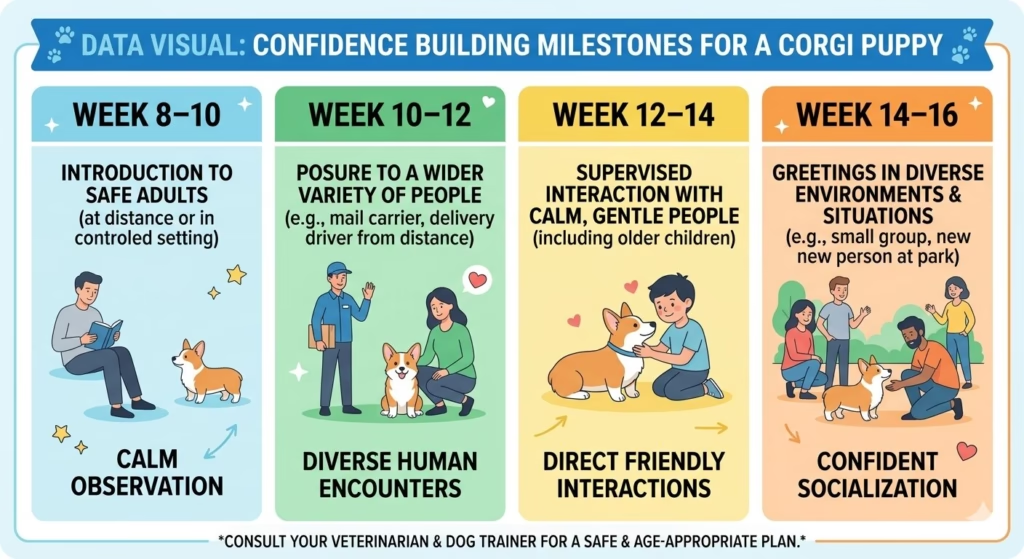
Confidence building milestones for stranger introduction (weeks 8–16):
7. Group Puppy Training Classes
What to Look For
Group puppy training is not simply an obedience exercise — it is a controlled multi-stimulus socialisation environment. A well-run puppy class exposes your Corgi to other dogs, other handlers, novel equipment, and an unfamiliar indoor or outdoor space, all within a structure that allows a qualified trainer to intervene when behaviour patterns need redirecting.
Not all puppy classes are equal. Before enrolling your Corgi in any group class, evaluate it against the following criteria:
What a quality puppy class includes:
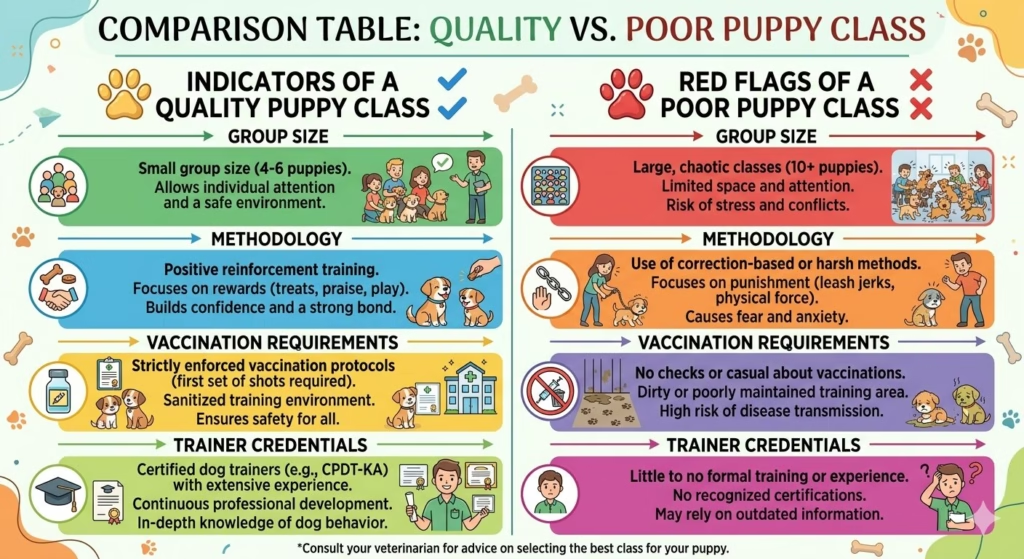
What to observe in your first class:
- Does the trainer give each puppy individual attention? Group size should not exceed 6–8 puppies for effective management.
- Are rest periods structured into the session? A puppy who is not allowed to decompress between exposures will exit the class over-aroused.
- Does the trainer support struggling puppies rather than dismissing them? Fearful or reactive puppies in a class require accommodated pacing, not removal.
- Group puppy training interacts directly with the obedience basics that underpin all confident social behaviour — a connection explored in more depth in the next section.
8. Obedience Basics That Support Socialisation
Obedience training and socialisation are frequently treated as separate projects. They are not. The basic cue vocabulary your puppy develops during the socialisation period becomes the toolkit through which you manage social encounters for the rest of their life.
A Corgi who responds reliably to their name, sits on cue, and returns on recall is a dog you can control in any social environment. A Corgi who has extensive social exposure but no obedience foundation is a dog who will make their own decisions — and a herding breed making independent decisions in social situations is rarely making the ones you want.
The five obedience foundations to establish during the socialisation period:
1. Name response
Puppy reliably orients to their name from any position within 15 metres. Foundation of all other social management
2. Sit
The most useful interruption behaviour. A sitting dog cannot simultaneously be barking, pulling, or attempting to herd
3. Down/settle
Teaches physical calm on cue; critical for managing arousal in social situations
4. Leave it
Interrupts predatory and herding behaviour toward moving stimuli; essential for Corgis in social environments
5. Recall (come)
Must be practised in gradually more distracting environments, beginning indoors and progressively moving toward social settings with other dogs and people
Positive reinforcement application:
- Keep training sessions to 3–5 minutes maximum for puppies under 12 weeks; extend to 5–10 minutes by 16 weeks.
- Use high-value food rewards for new behaviours in distracting environments; kibble is sufficient only in low-distraction, familiar settings.
- Never train to failure — end every session on a successful repetition, even if that means making the last cue easy.
- Mark behaviour with a clicker or consistent verbal marker before the food reward to create precise communication
9. Behaviour Shaping During the Socialisation Period
Behaviour shaping is the deliberate practice of reinforcing successive approximations of a desired behaviour — rewarding steps toward the goal rather than waiting for the perfect response. During the socialisation period, behaviour shaping is the most powerful tool available to a first-time owner because it works with the puppy's natural learning process rather than against it.
The concept applies not only to formal obedience cues but to social behaviour itself. You can shape calm responses to strangers, relaxed behaviour around other dogs, and settled reactions to environmental stimuli — all using the same positive reinforcement principle.
Practical shaping applications during socialisation:
Shaping calm greeting behavior
When your Corgi puppy approaches a new person without jumping or vocalising, that moment of calm is the one to reinforce. Mark it immediately with a verbal "yes" or clicker, and follow with a treat. Over repetitions, the calm approach becomes the default
Shaping relaxed body posture around other dogs
When your puppy observes another dog without stiffening or fixating, reinforce the relaxed posture. You are building the habit of noticing without reacting — one of the most valuable skills in a socially confident dog
Shaping disengagement
Teaching your Corgi to voluntarily look away from a trigger (dog, stranger, moving object) and check in with you is one of the most important social skills a herding breed can develop. Reinforce every unprompted check-in during socialisation outings
Behaviour shaping requires patience and observation. The reward moment must arrive within one to two seconds of the desired behaviour to be meaningful to a puppy. This is where a clicker or consistent verbal marker dramatically improves precision.
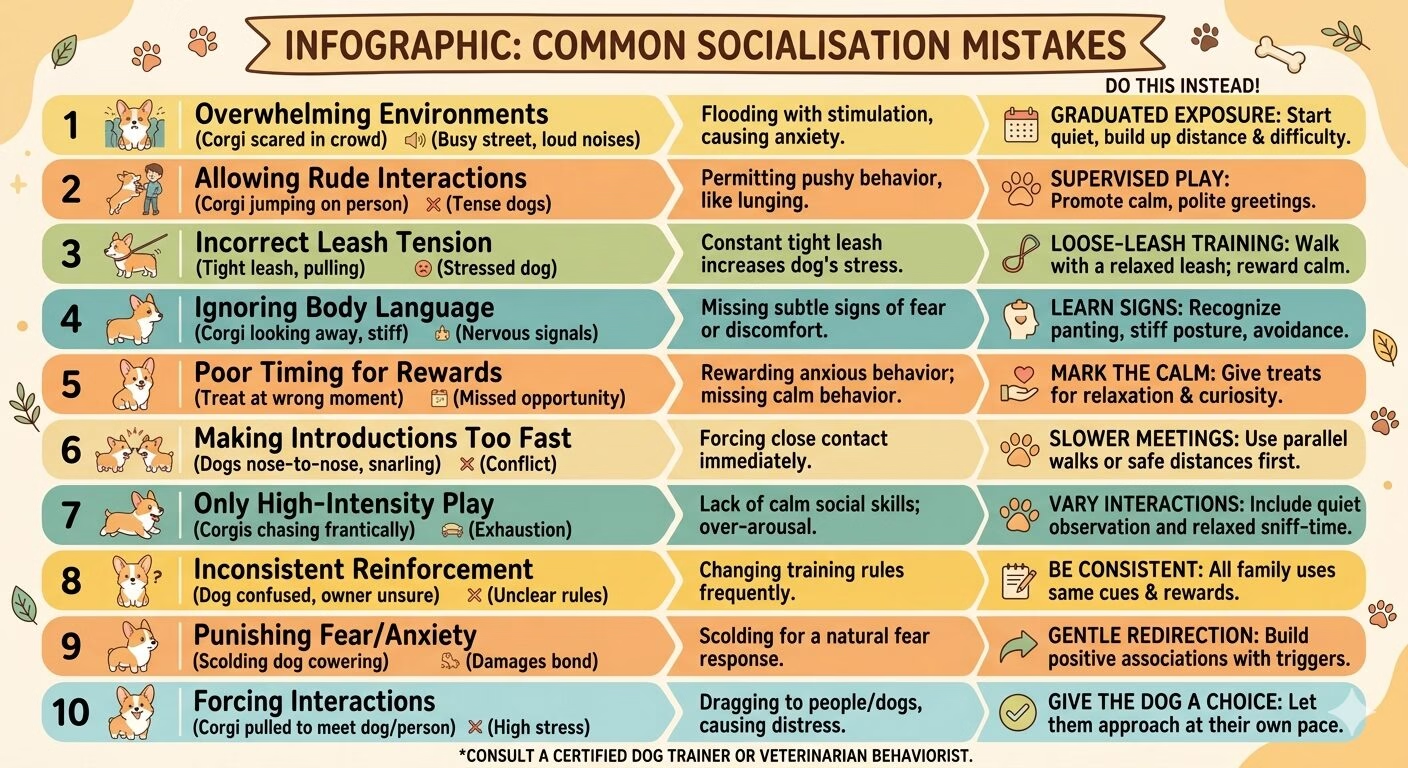
10. Common Socialisation Mistakes and How to Avoid Them
Even committed owners make predictable mistakes during the socialisation period. Identifying them in advance is far easier than correcting the patterns they create.
The ten most common Corgi socialisation errors:
EXPERT INSIGHT
"The mistake I see most consistently in Corgi socialisation is owners who conflate exposure with socialisation. They take their puppy to busy markets, farmer's markets, town squares — high-intensity environments — and believe the exposure is inherently beneficial. But a puppy who is overwhelmed is not learning to be confident around stimuli. They are learning that the world is unpredictable and that their owner places them in uncomfortable situations. The benefit of early socialisation comes from exposure at the right intensity — just above the puppy's current comfort level, with a predictable positive outcome waiting on the other side. For Corgis specifically, I always recommend beginning socialisation in environments where the puppy can observe without being approached. A café with outdoor seating, a quiet car park during low-traffic hours, a friend's garden with the gate closed. Observation before participation is how Corgi confidence is genuinely built."
— Accredited Companion Animal Behaviourist, COAPE Graduate
 FAQ SECTION
1. When should I start socialising my Corgi puppy?
Socialisation begins at the breeder's premises — from approximately week 3. As an owner, your responsibility begins the moment your puppy arrives home at eight weeks. The secondary socialisation window (weeks 8 to 12) is highly influential and should be filled with structured, positive exposures across people, environments, animals, and sounds. Do not wait until vaccination is complete to begin — safe pre-vaccination socialisation is possible and recommended.
2. Can I socialise my Corgi before they are fully vaccinated?
Yes, with precautions. Before full vaccination, avoid public areas with unknown dog traffic — dog parks, public paths frequently used by dogs. Instead, use controlled settings: vaccinated household dogs, puppy classes held in sanitised indoor environments with vaccination-verified attendees, and controlled outdoor sessions in private gardens. The socialisation window is time-limited; the disease risk, while real, is manageable with informed choices.
3. Why does my Corgi bark at strangers even after socialisation classes?
Corgis are working dogs bred to vocalise. Barking at novelty is a breed trait, not necessarily a socialisation failure. Assess whether the barking is alarm-based (decreases when the stranger is clearly neutral) or anxiety-based (escalates, accompanied by backing away or stiff posture). Alarm barking is manageable with a "quiet" cue trained via positive reinforcement. Anxiety-based barking may indicate that the socialisation window experiences were insufficient or too intense, and often benefits from work with a qualified behaviourist.
4. How do I introduce my Corgi puppy to my cat?
Begin with scent introduction — swap bedding between the cat's and puppy's spaces for 48–72 hours before any visual contact. Allow the cat to observe the puppy from an elevated, dog-free vantage point before any face-to-face meeting. First meetings should be leashed for the puppy and completely cat-initiated — the cat must always be able to escape. Never allow the puppy to chase the cat; redirect with recall and positive reinforcement immediately.
5. At what age do Corgis become harder to socialise?
The primary socialisation window closes at approximately 12 weeks, but socialisation continues to be effective through adolescence (4 to 12 months) and into adulthood — it simply requires more repetition and patience as the dog matures. Fear responses that develop during the fear imprint period (8–11 weeks) are among the most persistent; anything your puppy encounters during this window that triggers strong fear without resolution may require specific counter-conditioning later.
6. What should I do if my Corgi puppy is scared at puppy class?
Do not force participation. Bring the puppy to the edge of the action — close enough to observe, far enough to feel safe — and reinforce calm observation with high-value treats. Inform the trainer, who should accommodate the puppy's pace rather than pushing them into the group. Fear that is respected and not forced typically resolves over two to three sessions as the puppy habituates to the environment. Fear that is overridden with forced participation often worsens.
7. How many new experiences should my Corgi have each day during the socialisation window?
Quality over quantity is the governing principle. Two to three meaningfully different, positive experiences per day is more effective than ten rushed or overwhelming exposures. Keep sessions short (10–15 minutes per outset), allow recovery time between exposures, and always end while the puppy is still engaged positively. Exhausted or over-stimulated puppies do not retain socialisation benefits.
8. Is it normal for my Corgi puppy to be scared of other dogs at first?
A degree of caution around unfamiliar dogs is entirely normal at 8 to 10 weeks. The fear response is developmentally active during this period. The relevant question is whether the puppy's fear decreases over repeated positive exposures (normal, progressive socialisation) or intensifies with each encounter (fear conditioning, requiring careful counter-conditioning). If your puppy consistently shows escalating fear around other dogs beyond 12 weeks, consult a qualified animal behaviourist rather than continuing to push exposure.
9. Can Corgis socialise well with other breeds, or do they prefer Corgis?
Corgis have no strong breed-specific preference for social partners. Successful socialisation with dogs of varied sizes, energy levels, and breeds during the puppy period produces adult dogs who are generally appropriate with other dogs regardless of type. The critical variable is the quality of the early inter-dog experiences — not the breed of the playmates.
10. How do I know if my Corgi's socialisation was good enough?
A well-socialised Corgi navigates novel environments without persistent alarm, greets unfamiliar people with curiosity rather than wariness, tolerates other dogs calmly, and recovers quickly after mild startles without prolonged anxiety responses. These are not all-or-nothing outcomes — socialisation exists on a spectrum, and ongoing positive exposure throughout adolescence and adulthood maintains and builds on what was established in puppyhood.
CONCLUSION
Corgi socialisation is not a single project with a completion date — it is the ongoing practice of building your dog's confidence and social vocabulary across every developmental stage. Three things matter above all others: starting early, maintaining positive associations, and reading your dog's signals with more attention than you give your own agenda.
The socialisation window is real and time-limited. What your puppy experiences between weeks 8 and 16 shapes the adult dog you will spend years living with. Positive reinforcement applied consistently during this period — to dog introductions, stranger meetings, group classes, and daily routine exposures — produces a Corgi who can engage with the world from a foundation of genuine confidence rather than anxious compliance.
This falls squarely within the Training & Behavior category, and it's not separate from the relationship you build with your dog every day. Every calm greeting, every successful recall from a distraction, every moment you choose to end the session before your puppy reaches their limit — these are all socialisation in action.
Your Corgi is built for partnership. Give them the social foundation to show it.
CALL TO ACTION
If this guide has prompted questions about your Corgi's specific socialisation needs, the Beagle Puppy Socialisation Guide on Tamboeckey Beagles offers a complementary perspective on socialising scent hound breeds — with techniques around confidence building and environmental exposure that translate directly across breeds. Explore the full Pember Diamonds library (200+ articles) for guides on obedience foundations, managing herding behaviour, and raising a Corgi who is as well-mannered as they are spirited.
[…] content that translates directly to Beagle owners navigating the same choices. You can find their Corgi Puppy Socialisation Tips as a complementary reference, particularly the section on identifying quality group training […]
[…] this guide has shifted how you see your Corgi's behavior, your next read is waiting: Corgi Puppy Socialisation Tips covers the critical early experiences that shape the temperament and confidence you are now […]
[…] the positive reinforcement building blocks for every behavior this guide covers. And don't miss the Corgi Puppy Socialisation Tips — because strong early socialisation is the soil that everything else grows […]