
Are Corgis Good for First Time Owners?
First Time Owners, bringing a dog into your home is one of life’s most fulfilling decisions, yet for first-time owners, it can also be overwhelming. Choosing the right breed impacts your lifestyle, daily routine, and long-term satisfaction with pet ownership. Among small herding dogs, Pembroke Welsh Corgis stand out for their intelligence, loyalty, and spirited personality.
Their compact size, family-friendly temperament, and playful nature appeal to many potential dog owners. However, corgis are energetic, highly intelligent, and sometimes stubborn, requiring structured training, socialization, and consistent mental and physical stimulation. Without proper guidance, even the friendliest corgi can develop undesirable behaviors, such as excessive barking, nipping, or separation anxiety.
This comprehensive guide is designed to help first-time owners understand corgi personality traits, behavior patterns, training strategies, and health considerations. By the end, you will have a clear roadmap to prepare for, raise, and enjoy a happy, healthy corgi in your home.
Quick Answer
Corgis can be excellent first-time dogs if owners commit to daily exercise, mental stimulation, and structured training. Their friendly temperament, intelligence, and family-friendly nature make them ideal for beginners, provided realistic expectations are set for grooming, energy levels, and behavioral management.
1. Understanding Corgi Temperament
Before deciding to bring a Corgi into your home, it’s critical to understand their temperament. Unlike some breeds that are naturally calm or independent, Corgis are highly social, intelligent, and energetic dogs with strong herding instincts. Their behavior is influenced by genetics, early socialization, and the environment they grow up in.
For first-time owners, grasping these traits will help you anticipate their needs and establish routines that encourage positive behavior. By understanding how Corgis think, play, and interact with family members, you can create a stable, loving environment that nurtures their intelligence and loyalty.
Key Temperament Traits
- Intelligence - Corgis are among the smartest small dog breeds. They learn commands quickly, understand routines, and can problem-solve, making training efficient when approached correctly.
- Affectionate - These dogs are highly loyal, forming strong emotional bonds with family members and thriving on attention and interaction.
- Energetic - Despite their small stature, corgis have bursts of activity that need daily outlets to prevent boredom or behavioral issues.
- Alertness - Naturally vigilant, corgis are excellent watchdogs, alerting owners to visitors or unusual household noises.
- Independent Streak - A remnant of their herding instincts, corgis can be stubborn or independent, which requires consistent guidance and positive reinforcement.
Developmental Stages
- Puppy Stage (0–6 months) - High curiosity, socialization needs, and energy. Early exposure to people, environments, and other pets is critical.
- Adolescent Stage (6–18 months) - Energetic, may test boundaries. Reinforce consistent rules and obedience commands.
- Adult Stage (18 months+) - Emotional maturity leads to reliability, though continued mental engagement and exercise are essential for well-being.
By understanding these stages, first-time owners can anticipate behavior and provide appropriate training, socialization, and enrichment at each age.
2. Pros and Cons of Corgis for First-Time Owners
No breed is a perfect fit for every household, and Corgis are no exception. While their size, intelligence, and affectionate nature make them highly appealing, there are lifestyle considerations and challenges first-time owners must understand.
Examining the **pros and cons of Corgis** provides clarity on whether this breed aligns with your home environment, daily schedule, and long-term commitment level. Understanding both the benefits and potential difficulties allows you to make an informed decision and reduces the risk of future frustration or behavioral issues.
Pros
- Compact Size - Ideal for apartments or smaller homes without sacrificing companionship.
Intelligence - Quick learners who enjoy training and problem-solving activities. - Affectionate - Strongly bonded to family members, making them ideal for children.
- Playful and Social - Love interactive play and engagement, creating lively household energy.
- Adaptable - Can thrive in a variety of household environments when given proper exercise and mental stimulation.
Cons
- Herding Instincts - May attempt to herd children, pets, or adults, requiring guidance.
- Vocal Tendencies - Bark to alert or express excitement; may need training to manage volume.
- Moderate Grooming Needs - Double coat requires regular brushing and care, especially during shedding seasons.
- High Energy - Require daily physical activity and mental engagement to prevent boredom.
- Stubbornness - Can challenge inexperienced owners if consistency is not maintained.
Lifestyle Scenarios
- Apartment Living - Suitable if daily exercise and mental engagement are prioritized.
- Active Families - Excellent companions for hiking, running, or interactive games.
- First-Time Owners - Work best when early training routines are consistent and structured.
3. Corgi Behavior and Personality Traits
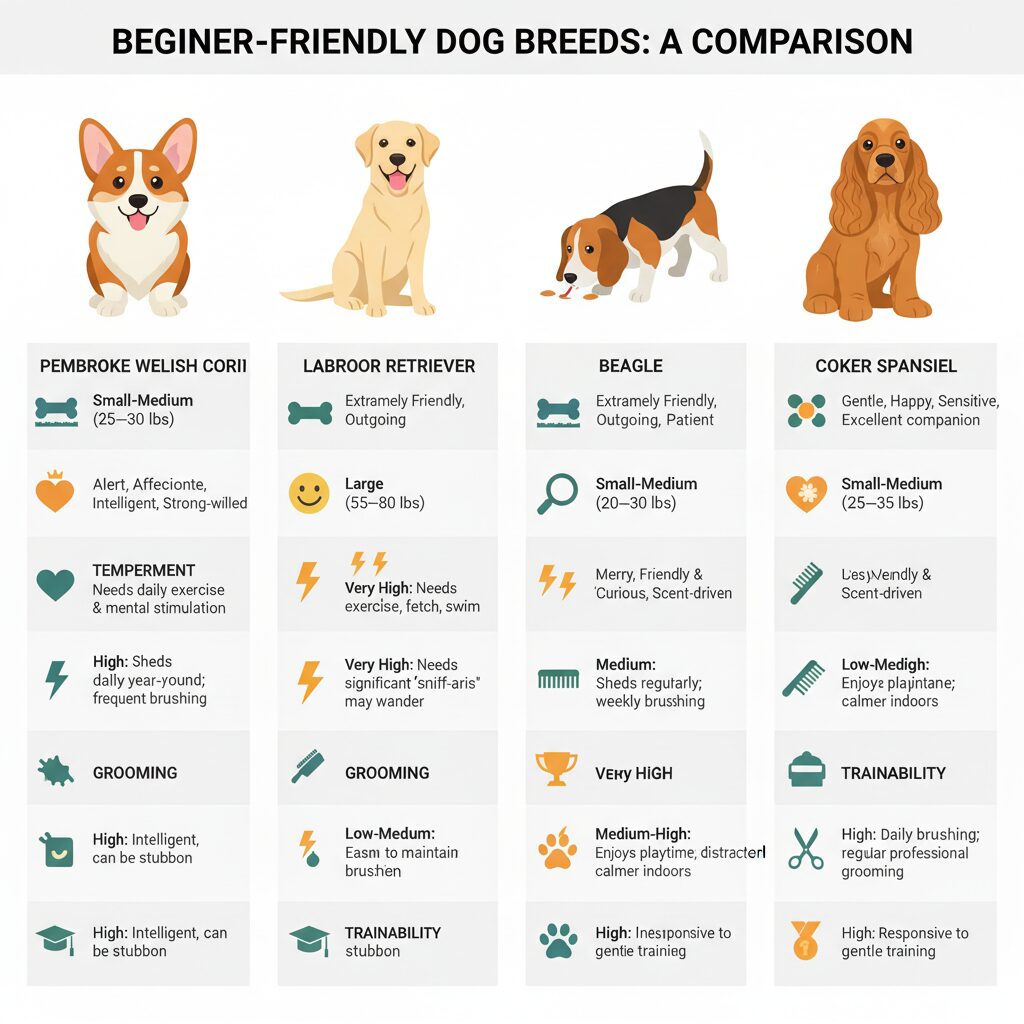
Corgis are more than cute companions—they are intelligent, active dogs with complex personalities shaped by their herding heritage. First-time owners often underestimate how their energy, attention needs, and problem-solving abilities impact daily life.
This section explores common **behavior patterns and personality traits**, explaining what makes Corgis unique and how their natural tendencies can manifest in your home. By understanding age-specific behavior and typical habits, you’ll be better equipped to guide your dog toward positive behaviors and prevent unwanted ones.
Age-Specific Behavior
- Puppies - Curious, playful, and prone to exploring, requiring socialization and training.
- Adolescents - May challenge rules, testing patience and consistency.
- Adults - More predictable, responsive, and easier to manage with established routines.
Common Behavior Patterns
- Attention-Seeking - Thrive on interaction; may develop separation anxiety if left alone.
- Playfulness - Enjoy games like fetch, tug-of-war, and short agility exercises.
- Herding Instincts - Nipping or chasing can appear, especially with children or small pets.
- Alertness - Naturally vigilant, often barking at unusual sights or sounds.
4. Training and Socialization Tips
Training a Corgi is both rewarding and necessary. Their intelligence and eagerness to please make them highly trainable, but their stubborn streak and herding instincts can present challenges if guidance is inconsistent.
This section introduces proven strategies for training and socialization, helping first-time owners set expectations and implement routines that build obedience, confidence, and strong bonds. Proper training not only prevents problem behaviors but also maximizes the joy of owning a highly intelligent and responsive dog.
Puppy Training Strategies
- Socialization - Early exposure to people, animals, and environments fosters confidence and reduces fearfulness.
- Basic Commands - Teach sit, stay, come, and leave it using positive reinforcement to build reliability.
- Crate Training - Creates a safe environment and assists with housetraining.
- Gentle Guidance - Redirect undesirable behaviors instead of punishing to encourage learning.
Adolescent and Adult Training
- Advanced Commands - Include tricks, agility exercises, and problem-solving games.
- Family Consistency - All household members should follow uniform rules to avoid confusion.
- Problem Behavior Management - Nipping, barking, and chasing are mitigated with structured routines and mental enrichment.
- Mental Stimulation - Puzzle toys, scent work, and obedience drills keep Corgis sharp and engaged.
Adolescent and Adult Training.
5. Health Considerations for Beginner Owners
A healthy Corgi is a happy Corgi, but like all breeds, they are susceptible to specific health issues that first-time owners must understand. Understanding preventive care and early warning signs ensures that your pet enjoys a long, active, and comfortable life.
Common Health Issues
- Hip Dysplasia - Can be minimized with proper exercise and maintaining a healthy weight.
- Intervertebral Disc Disease - Avoid excessive jumping and consider ramps to prevent spinal injury.
- Obesity - Portion control and daily activity are essential for joint and heart health.
- Dental Disease - Regular teeth brushing and vet checkups prevent periodontal problems.
Preventive Care Tips
- Annual veterinary checkups and vaccinations
- Balanced diet formulated for small active dogs
- Grooming routine: brushing, nail trims, and ear cleaning
Proper health management ensures that Corgis remain energetic, happy, and long-lived.
6. Exercise and Mental Stimulation for Corgis
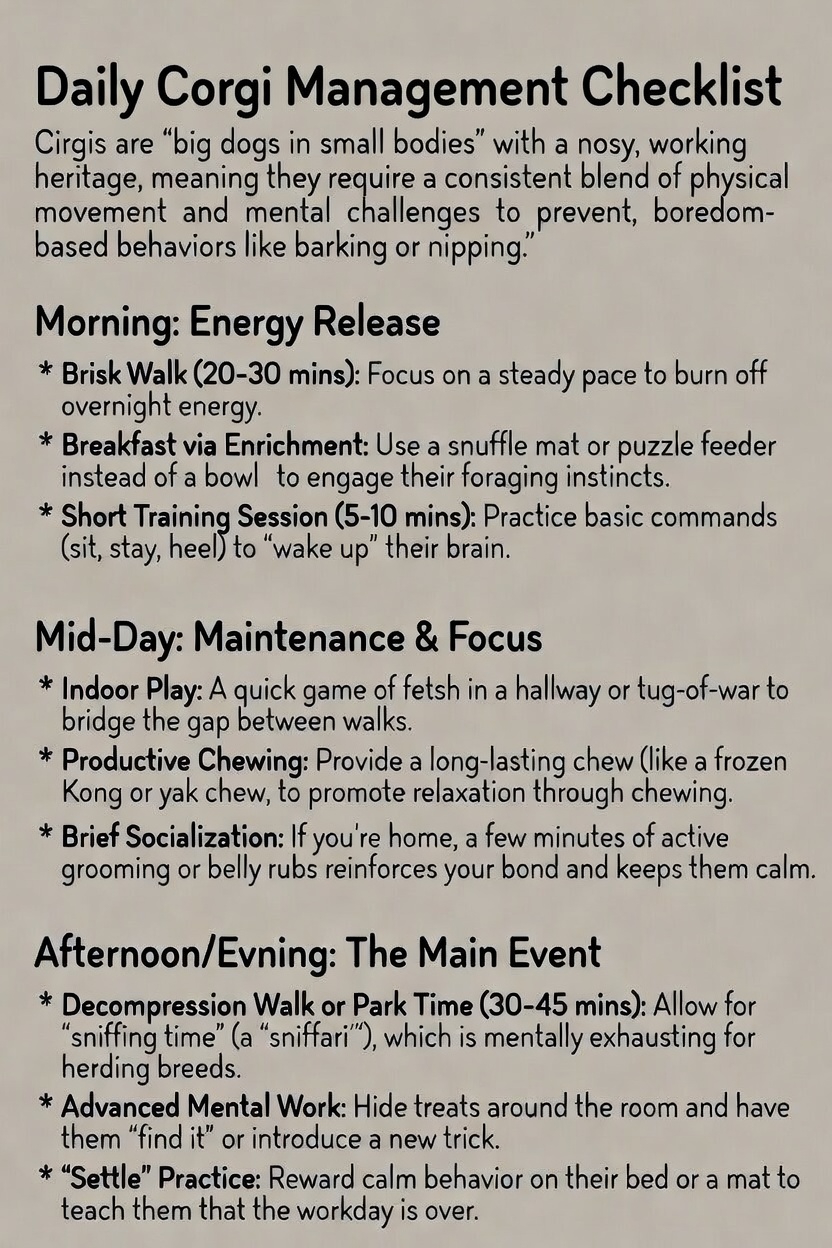
Corgis are energetic, requiring structured physical and mental activity daily. Without sufficient stimulation, intelligence can turn into boredom or destructive behaviors.
This section outlines ways first-time owners can provide **balanced exercise and enrichment** to maintain both physical fitness and mental sharpness, reducing unwanted behaviors and improving overall well-being.
Physical Activity
- Morning walk: 30–45 minutes
- Afternoon play: fetch, tug-of-war, or supervised off-leash time
- Evening walk: 15–30 minutes for calmness and routine
Mental Stimulation
- Puzzle feeders and treat-dispensing toys
- Obedience drills for 10–15 minutes daily
- Scent games and hide-and-seek activities
- Small indoor agility courses
[Internal Link: Fun Activities to Keep Your Corgi Mentally Stimulated]
7. Preparing Your Home for a Corgi Puppy
Welcoming a Corgi puppy requires a safe, organized, and stimulating environment. Puppies are curious and energetic, and the way you arrange your home can significantly impact their behavior, safety, and confidence.
Key Preparations
- Safe Space - Crate or designated area for rest and calm time
- Pet-Proofing - Remove hazards, cords, and chewable objects
- Interactive Toys - Ensure mental enrichment is always available
- Grooming Area - Dedicated spot for brushing and care
- Routine Establishment - Feeding, walking, and training schedules should be consistent
8. Nutrition and Diet Guidelines
A balanced diet supports energy, growth, and long-term health. For first-time owners, understanding nutritional needs ensures their Corgi develops properly and maintains a healthy weight.
- Balanced Diet - High-quality kibble or wet food formulated for small active breeds
- Portion Control - Avoid overfeeding; split meals into 2–3 servings per day
- Supplements - Consider omega fatty acids for coat health and glucosamine for joint support
- Treats - Use low-calorie options during training sessions to prevent obesity
9. Grooming Essentials
Corgis have a dense double coat that sheds heavily, particularly in spring and fall. Proper grooming reduces shedding, prevents skin problems, and keeps your dog comfortable.
- Brushing - At least 2–3 times per week; daily during shedding seasons
- Bathing - Every 4–6 weeks or as needed
- Nail Trimming - Every 3–4 weeks
- Ear Care - Weekly inspection and gentle cleaning
- Dental Hygiene - Brush 2–3 times per week
10. Expert Insight
First-time Corgi owners benefit from professional guidance. Breeders and canine specialists highlight that while Corgis are small, they require structured routines, mental stimulation, and socialization.
- Early socialization with children and pets prevents herding-related issues.
- Consistency in feeding, training, and exercise routines is essential.
- Positive reinforcement is far more effective than punishment.
Mental stimulation is equally important as physical exercise. - Owners who follow these recommendations consistently report highly rewarding experiences, enjoying a loyal, affectionate, and intelligent companion.
Expert Breeder Advice on Corgi Temperament
11. FAQ First-Time Corgi Ownership
Q1: Are Corgis good for beginner families?
A1: Yes. Corgis are highly social, affectionate, and intelligent, making them suitable for families new to dog ownership. Their compact size and adaptability to indoor spaces further increase their suitability for first-time owners. Early training ensures these small herding dogs develop into well-mannered companions.
Q2: How much daily exercise do corgis require?
A2: Corgis require at least **60 minutes of physical activity** daily, split into walks, play sessions, and supervised outdoor activities. They also need **mental stimulation** through training, puzzle toys, or scent games to prevent boredom and destructive behaviors.
Q3: Are corgis easy to train?
A3:Generally, yes. Corgis are intelligent and respond well to **positive reinforcement** techniques. However, their independent streak and herding instincts mean first-time owners must be consistent, patient, and maintain structured routines for training success.
Q4: Do corgis shed heavily?
A4: Yes. Corgis have a **double coat**, which sheds seasonally, particularly in spring and fall. Regular brushing, vacuuming, and proper nutrition can reduce loose hair and help maintain coat health.
Q5: Can first-time owners handle corgi behavior?
A5: Absolutely. With **structured routines, consistent training, and proper mental engagement**, first-time owners can manage herding instincts, nipping, and vocal tendencies, transforming their Corgi into a well-adjusted companion.
Q6: Are corgis suitable for apartment living?
A6: Yes, provided daily exercise and interactive play are prioritized. Corgis are adaptable, but without sufficient activity, they may develop hyperactivity, chewing behaviors, or excessive barking.
Q7: What is the ideal diet for a corgi?
A7: A high-quality small-breed dog food with controlled portions is recommended. Supplements like glucosamine and omega fatty acids support joint and coat health, especially for active first-time owners who want to optimize their Corgi’s well-being.
Q8: How often should a corgi see a veterinarian?
A8: At least once annually, with more frequent visits for puppies, senior dogs, or if breed-specific conditions like hip dysplasia or intervertebral disc disease arise. Preventive care, vaccines, and dental check-ups are crucial.
Q9: How do you prevent nipping or herding behaviors?
A9: Early socialization, structured play sessions, and redirection during herding attempts help curb these instincts. Consistent reinforcement and positive rewards for appropriate behavior minimize unwanted nipping.
Q10: What toys or enrichment work best for corgis?
A10: Puzzle feeders, treat-dispensing toys, agility equipment, and scent games are highly effective. Regularly changing toys and introducing novel challenges keeps Corgis mentally stimulated and reduces boredom.
12. Conclusion
Corgis are one of the most rewarding breeds for first-time owners, provided that realistic expectations and structured routines are in place. Their intelligence, playful temperament, and loyalty make them highly adaptable, family-friendly dogs.
Key takeaways:
- Temperament Matters - Understanding corgi behavior helps anticipate needs and prevent problem behaviors.
- Exercise and Mental Stimulation Are Crucial - Physical activity alone is not enough—mental challenges are equally important.
- Training Requires Consistency - Positive reinforcement and early socialization ensure manageable herding instincts and obedience.
- Health Management - Diet, grooming, and preventive care safeguard long-term health and well-being
- Environment Preparation - Creating a safe, stimulating home enhances confidence, reduces stress, and prevents accidents.
For first-time owners willing to commit to daily care, structured training, and enrichment, a Corgi provides years of joy, loyalty, and companionship that few breeds can match.
13. Call to Action
If you’re ready to **begin your first-time Corgi journey**, explore our guides and resources to ensure a confident and successful start:
By following expert advice and implementing structured routines, first-time owners can enjoy the full benefits of raising a healthy, well-behaved, and affectionate Corgi.
[…] first year of a Beagle's life is a period of rapid, dramatic growth. A newborn pup that weighs less than 500g will reach close to […]
[…] Many first-time owners arrive home with an eight-week-old Corgi and assume that love, routine, and a puppy class eventually booked will be enough. For some dogs it is. But Corgis are a herding breed with a strong instinct to control their environment — and an under-socialised Corgi does not simply become shy. It becomes reactive, territorial, and increasingly difficult to manage in exactly the situations you want your dog to handle calmly. […]
[…] to take your Corgi knowledge further? The Are Corgis Good for First Time Owners? guide is a warm, honest look at everything a new Corgi owner needs to know — including how the […]