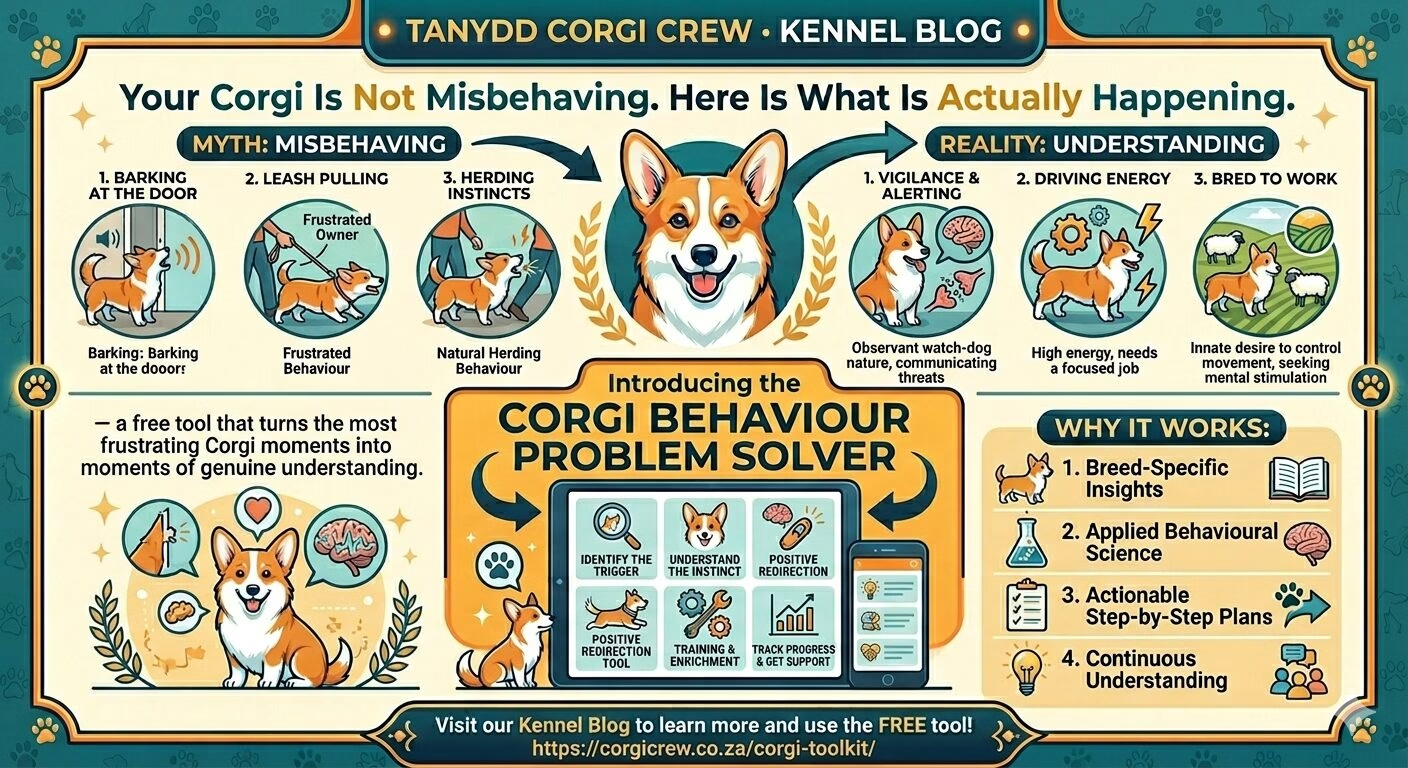
The Problem With Generic Dog Advice
Most dog training advice is breed-agnostic. It treats a Corgi like a Labrador, a Poodle, or a Beagle. The result is guidance that is technically not wrong but misses the specific context that makes Corgi behaviour make sense.
When a Labrador pulls on the lead, it is usually because walking forward is inherently rewarding. When a Corgi pulls, it is often because there is a scent trail, a moving object, or a spatial positioning instinct that has been bred in for 500 years. The training mechanics overlap, but the context — and therefore the framing of the solution — is completely different.
Corgi Chronicles
A Training Guide for Pembroke and Cardigan Welsh Corgis
by Morgan Heeler-Davies is one of the few comprehensive resources written specifically for this breed. It identifies 20 of the most common training mistakes Corgi owners make, provides specific intervention protocols for the most common behavioural challenges, and — crucially — explains the herding heritage context that makes Corgi behaviour legible rather than baffling.
The Behaviour Problem Solver puts those frameworks directly in your hands, personalised to your dog.
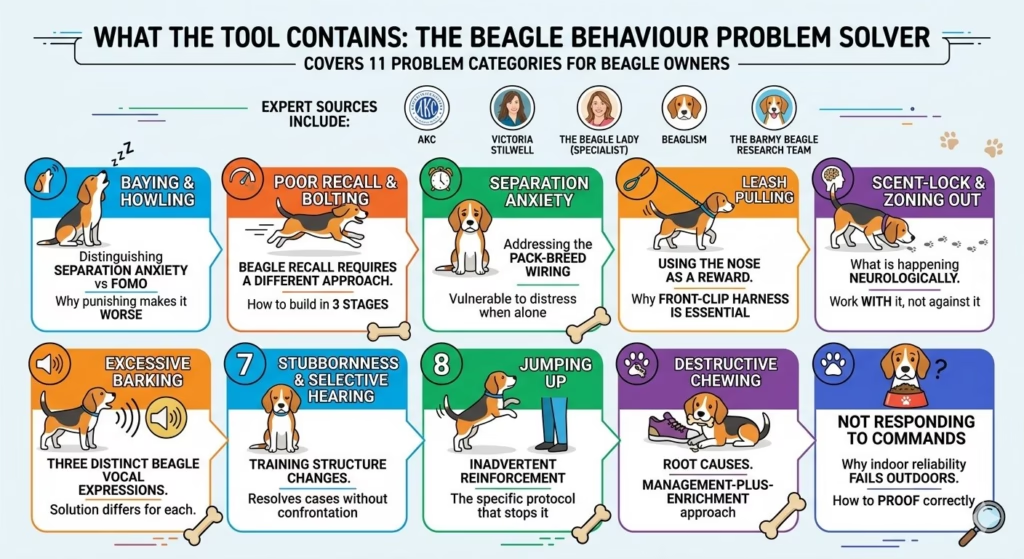
What the Tool Does
Open the tool and it asks for four things: your name, your Corgi's name, age, and gender. From that point, every explanation, every warning, and every solution is addressed specifically to you and your dog.
The main screen presents eight problem categories. Select the one that matches your situation — and then select the specific variant of that problem from a shorter list. The tool immediately presents:
- Why this behaviour is happening — the root cause in context of your Corgi's breed history and instincts.
- The most common mistake owners make when dealing with this specific problem — drawn directly from Corgi Chronicles' 20 mistakes framework.
- A numbered five-step solution — the specific intervention protocol from the book, in the right order.
Every solution names the specific Corgi Chronicles chapter and mistake it draws from, so you can go deeper in the book at any time.
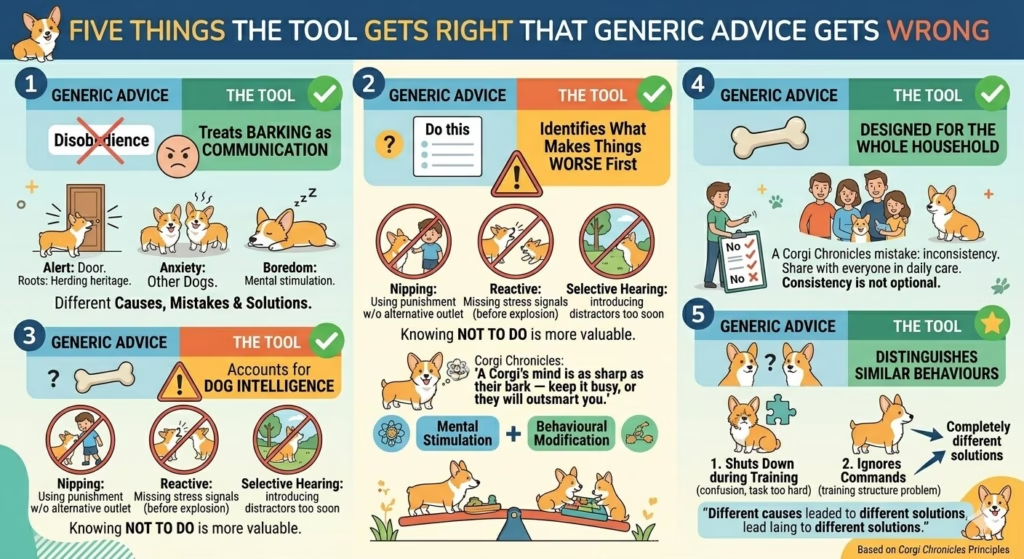
Five Things the Tool Gets Right That Generic Advice Gets Wrong
1. It treats barking as communication, not disobedience
Corgi Chronicles is explicit: 'Barking is rarely just noise — it is communication.' The tool distinguishes between barking at the door (alert behaviour rooted in herding heritage), barking at other dogs (usually stress and anxiety, not aggression), and barking from boredom (mental under-stimulation). Each has a different cause, a different common mistake, and a different solution.
2. It identifies what makes things worse before telling you what to do
Every problem in the tool opens with a warning — the Corgi Chronicles mistake most likely to make that specific behaviour worse. For nipping at children, it is using punishment without providing an alternative outlet for the herding drive. For reactive barking, it is missing the stress signals that precede the explosion. For selective hearing outdoors, it is introducing distracting environments before the behaviour is reliable. Knowing what not to do first is often more valuable than knowing what to do.
3. It accounts for the intelligence of the dog
Corgi Chronicles: 'A Corgi's mind is as sharp as their bark — keep it busy, or they will outsmart you.' The solutions in the tool consistently address mental stimulation alongside behavioural modification, because a Corgi who is cognitively under-challenged will find outlets for that intelligence that you did not plan for.
4. It is designed for the whole household
Corgi Chronicles identifies inconsistent command use — different family members using different words or applying different rules — as one of the most common reasons training breaks down. Every solution in the tool concludes with a reminder to share it with everyone involved in your Corgi's daily care. Consistency is not optional.
5. It distinguishes between similar-looking behaviours with different causes
A Corgi who shuts down during training and a Corgi who ignores commands look identical from the outside. The first is usually confusion or an ask that is too difficult; the second is usually a training structure problem. The solutions are completely different. The tool makes this distinction and routes you to the right one.
The Honest Counterpoint
We want to be clear about what the tool is and what it is not.
It is a practical guide for the common, correctable challenges that every Corgi owner encounters at some point. It is built on the frameworks of one of the best breed-specific training resources available. It is personalised, free, and designed to be used in the moment — when the behaviour is actually happening, not when you have time to sit down with a book.
What it is not is a substitute for professional help when professional help is genuinely needed. If your Corgi is showing aggression toward people that goes beyond reactive barking — biting, sustained lunging, resource guarding that involves genuine threat — that is a conversation for a qualified behaviourist, not a tool on a website. The tool will tell you this directly where relevant.
"No two Corgis are identical. What works for one dog may not work for another. This requires owners to be keen observers, willing to adapt their approach based on their individual dog's unique personality, triggers, and learning style." — Corgi Chronicles, Chapter 4
The tool provides the framework. Your observation, consistency, and willingness to adapt make it work for your specific Corgi. There is no tool that replaces patient, sustained effort — but there is a significant difference between sustained effort in the right direction and sustained effort in the wrong one. That is what the tool is for.
Who This Is For
This tool is for every Corgi owner who has Googled a behaviour problem at 11pm and found either overwhelming information or nothing specific enough to be useful. It is for new owners who want to get ahead of problems before they become entrenched. It is for experienced owners who have a specific new challenge and want the book's specific answer without re-reading the whole chapter.
It is also for anyone who has ever bought a Corgi puppy from a responsible breeder and then felt a little lost when the puppy turned into a dog with opinions, instincts, and a very clear sense of what it wants to do with its day.
The Corgi Behaviour Problem Solver is one of ten interactive tools being built from the frameworks of Corgi Chronicles. Each tool takes a specific chapter of the book and makes it immediately, practically useful in your daily life with your Corgi.
https://pemberdiamonds.co.za/corgi-chronicles/
Ready to Fix Your Beagle’s Behaviour?
The Beagle Behaviour Problem Solver is available right now. Click the button above to get instant access and start seeing results.
www.corgicrew.co.za www.beaglepuppies.co.za www.pemberdiamonds.co.za
[…] Corgi Behaviour Problem Solver […]