Without Cattle
The Case for a Structured Enrichment Plan for Your Pembroke Welsh Corgi
From the hills of Wales to your living room — understanding what your Corgi truly needs to thrive
It starts quietly. A low, insistent nudging at your ankle. A pair of enormous, improbably expressive eyes locked on yours. Then, as you ignore the first and second and third attempt, a sharp, melodious bark that somehow manages to combine reproach, demand, and absolute charm in a single syllable.
Your Corgi wants something. Not food — they have had food. Not a walk — they have had one. What they want, with every cell of their compact and purposeful body, is a job to do.
The Pembroke Welsh Corgi was forged over centuries in the upland farms and coastal valleys of Wales to be a working dog of the highest order. Small enough to duck beneath a kicking steer's hooves, quick enough to dart from heel to heel with astonishing agility, and intelligent enough to read livestock behaviour and make independent decisions in a split second — the Corgi is, in every meaningful sense, a working dog who happens to fit on your sofa.
At Tanydd Corgi Crew, our name says something about what we believe: tanydd is a Welsh word meaning flame, fire, the quality of burning brightly. It is, to us, the perfect description of the Corgi spirit: intense, warm, illuminating, and entirely capable of burning down the metaphorical furniture if not channelled correctly.
An enrichment plan is how you channel that flame. This article is our comprehensive guide to why it matters, what the science says, and how to build one that genuinely works — including an introduction to the Tanydd Corgi Crew Enrichment Planner, our free interactive tool built specifically for the Pembroke Welsh Corgi.
1. The Corgi's Inheritance
A Working Mind in a Modern World
1.1 Bred for Purpose, Living Without One
The Pembroke Welsh Corgi's history as a working dog is not merely interesting background — it is the single most important fact about the breed for anyone who wants to understand their behaviour and meet their needs. For well over a thousand years, these dogs worked full days on Welsh farms: herding cattle, reading livestock behaviour, making independent decisions, covering significant distances of rough terrain, and communicating with their handlers through a sophisticated repertoire of barks, eye contact, and body positioning.
That history did not end when the breed became a companion animal. The drives, instincts, and cognitive architecture that made the Corgi an extraordinary farm dog are still present in every animal born today — including the one currently rearranging your cushions or herding your children across the kitchen. Evolution and selective breeding work on timescales of thousands of generations. The transition from farm to family home happened in one.
The result is a fundamental mismatch between what the Corgi's brain and body are designed to do, and what most modern home environments offer without deliberate intervention. This mismatch is the root cause of the vast majority of 'problem behaviours' in the breed: the excessive barking, the heel-nipping, the destructive chewing, the inability to settle, the relentless demand for attention. These are not character flaws. They are the entirely logical output of a working brain with nowhere to direct its output.
1.2 Intelligence
 The Double-Edged Sword
The Pembroke Welsh Corgi consistently ranks among the most intelligent dog breeds in the world. In Stanley Coren's landmark research on canine intelligence, Corgis demonstrated the ability to learn new commands in fewer than five repetitions and to follow known commands on first request over 95% of the time — placing them in the top bracket of canine cognitive ability alongside Border Collies, Poodles, and German Shepherds.
This is impressive. It is also, without proper enrichment, a liability. A brain capable of learning a new command in five attempts is equally capable of inventing a new form of chaos in two. Corgi intelligence does not sit quietly waiting for something to do — it actively seeks stimulation, and if that stimulation is not provided in an appropriate form, it will be sourced from whatever is available.
| Research Insight: A 2019 study in Applied Animal Behaviour Science found that dogs receiving structured daily cognitive enrichment showed a 40% reduction in anxiety-related behaviours within four weeks. Dogs in the herding breed category showed the most dramatic improvement of any group — strongly suggesting that cognitive enrichment addresses something specifically fundamental in working-breed psychology. |
1.3 The Herding Drive
Always On, Always Looking
Perhaps the most misunderstood aspect of Corgi behaviour is the herding instinct. Owners who notice their Corgi circling children, nipping at heels, fixating on moving objects, or attempting to 'organise' other pets often interpret this as aggression, dominance, or poor temperament. In almost every case, it is none of these things.
Herding behaviour in Corgis is a motor pattern — a sequence of behaviours so deeply wired into the breed's neurology that it emerges spontaneously without training, without livestock, and without any conscious intent to cause harm. The Corgi is not attempting to hurt anyone. They are doing what every generation of their ancestry prepared them to do, in the most anatomically correct way they can manage given the absence of actual cattle.
The practical implication is significant: an enrichment plan that does not address the herding drive is an incomplete enrichment plan. Activities that allow a Corgi to express this drive safely — herding balls, flirt pole work, structured chase games — are not optional extras for this breed. They are a core psychological requirement.
2. The Body
Built for Work, Vulnerable at Rest
2.1 The Corgi's Achondroplastic Build
The Pembroke Welsh Corgi's distinctive silhouette — long back, short legs, powerful hindquarters — is the result of achondroplasia, a genetic mutation affecting cartilage and bone development. It is the same mutation responsible for dwarfism in humans, and it produces a dog of extraordinary physical capability on appropriate terrain, while simultaneously creating specific and serious vulnerability in certain movement contexts.
2.1.1. IVDD — Intervertebral Disc Disease
https://www.welshcorgi-news.ch/
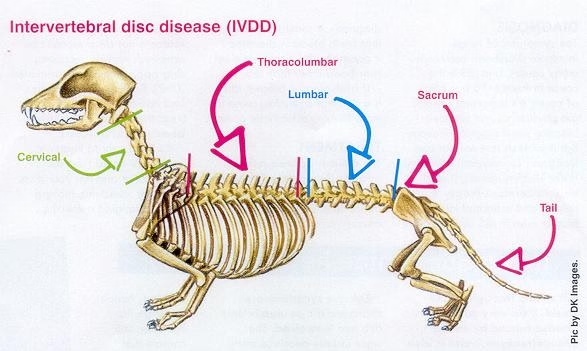
IVDD is the condition that every Corgi breeder, veterinarian, and educated owner must understand. The intervertebral discs — the cushioning pads between the vertebrae of the spine — are prone to premature degeneration and herniation in chondrodystrophic breeds. When a disc herniates, the material can press on the spinal cord, producing outcomes ranging from pain and weakness to full paralysis.
Chondrodystrophic breeds account for approximately 85% of all canine IVDD cases. For Corgis specifically, the highest risk region is the thoracolumbar junction — the mid-back area that bears the greatest mechanical load during movement. Every jumping, stair-climbing, or high-impact activity adds cumulative stress to this vulnerable region.
2.1.2 Hip and Joint Considerations
Beyond IVDD, Corgis are predisposed to hip dysplasia and degenerative joint disease. The mechanical demands placed on an elongated spine carried on short legs — particularly during jumping and explosive exercise — accelerate cartilage wear and increase the risk of chronic, painful arthritis that significantly diminishes quality of life in older dogs.
2.2 The Enrichment Paradox — and Its Resolution
Here is the challenge that makes Corgi enrichment planning genuinely complex: the breed requires significant daily activity to meet their mental and physical needs, yet the wrong kind of activity can cause irreversible harm. High-impact exercise, unsupervised jumping, stair climbing, explosive fetch that ends in skidding — these activities are not merely inadvisable for Corgis. They are dangerous, and the damage they cause is often cumulative rather than dramatic, making it easy to overlook until significant harm has been done.
The resolution to this paradox is the central insight of good Corgi enrichment: mental activity is not a substitute for physical activity — it is superior to it. A fifteen-minute puzzle feeding session followed by ten minutes of trick training will leave a Corgi more genuinely satisfied, more deeply rested, and more contentedly settled than an equivalent period of high-impact physical exercise — and it will do so without placing a single unnecessary load on their spine.
| The Tanydd Principle: A tired Corgi is not the goal — a fulfilled Corgi is. Physical tiredness achieved through high-impact exercise is a consolation prize compared to the deep cognitive satisfaction of a well-structured enrichment session. Prioritise the brain. The body will follow. |
3. Building an Enrichment Plan
The Five Categories
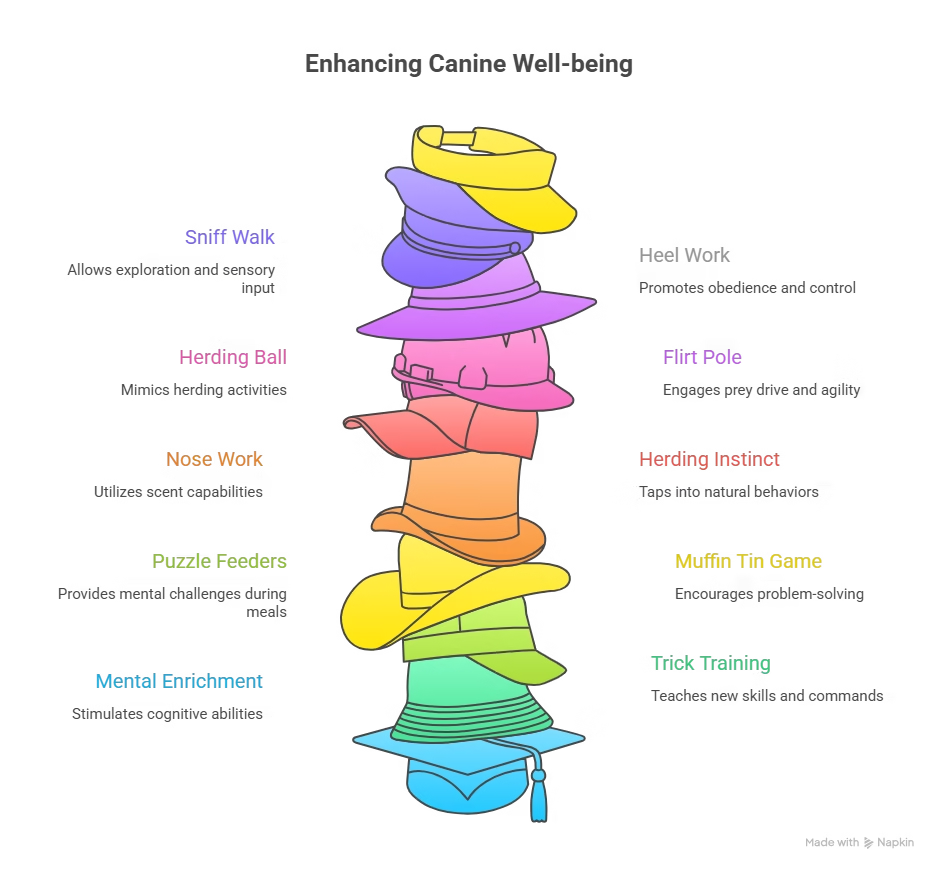
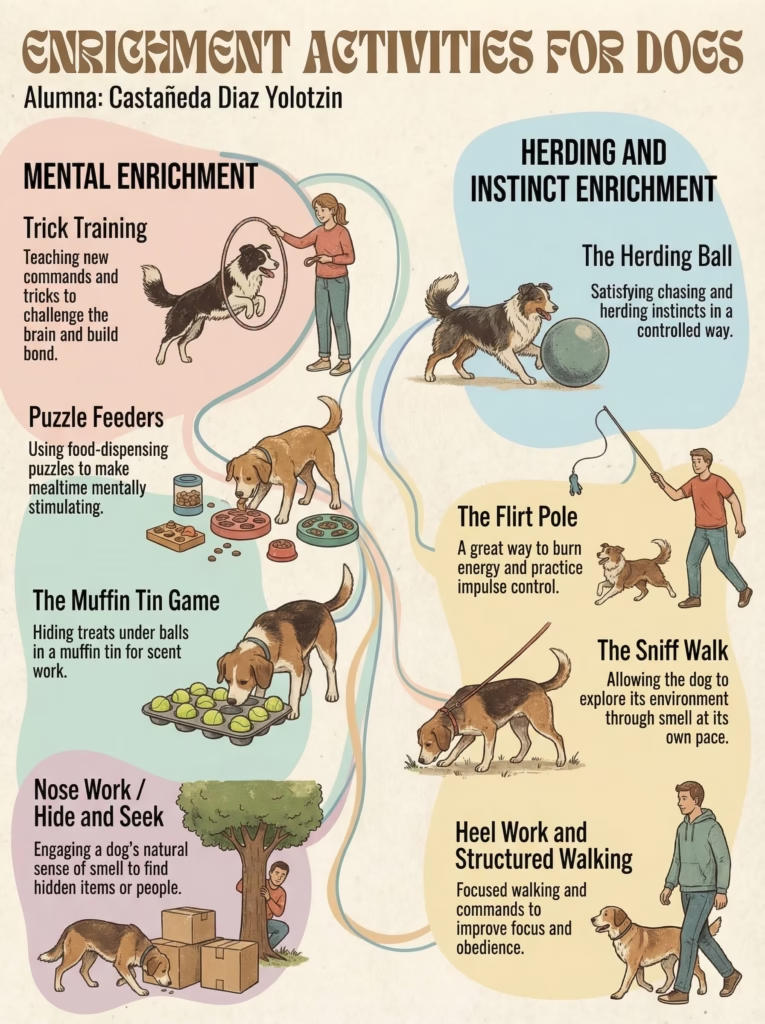
3.1 Mental Enrichment
3.1.1 Trick Training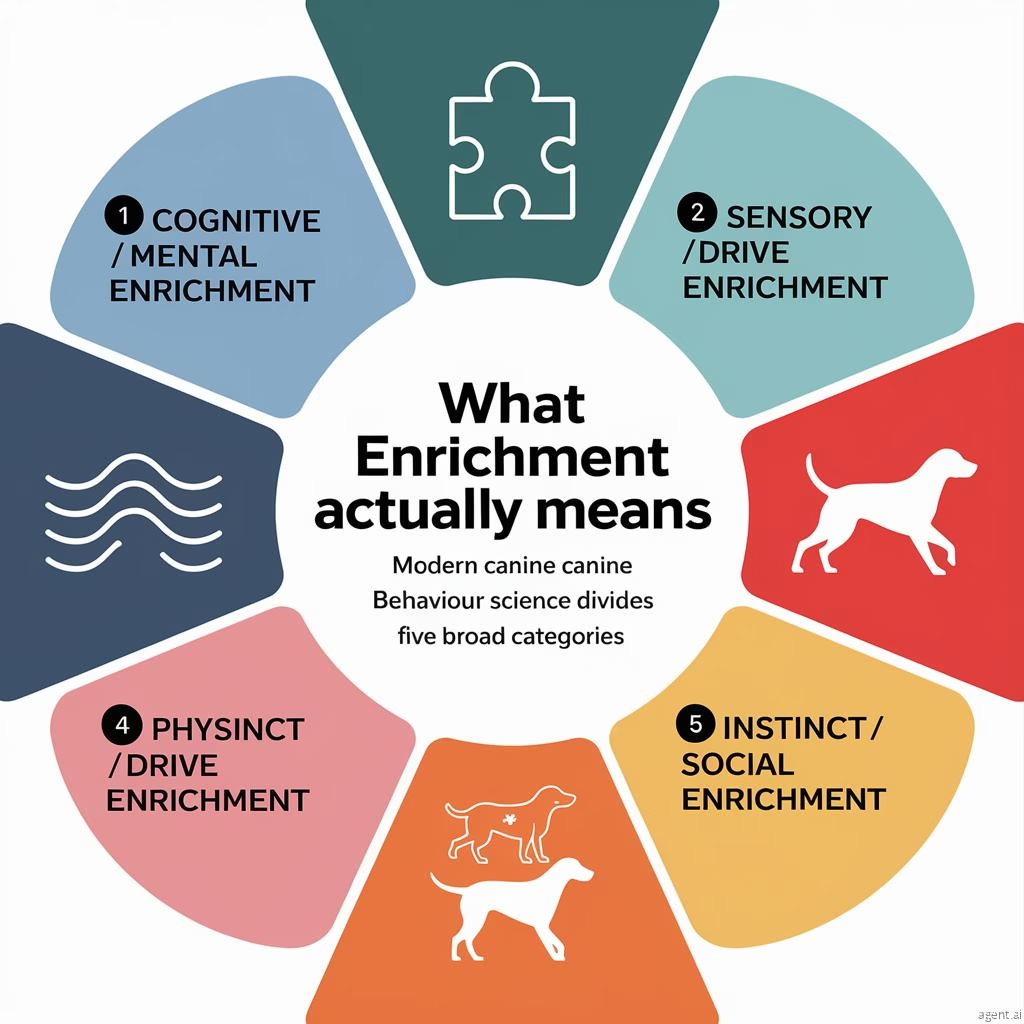
Trick training is the highest-return enrichment activity available to Corgi owners, and the one we recommend above all others as the foundation of any daily plan. It requires no equipment beyond treats and a few minutes of focused attention. It builds the impulse control, handler focus, and responsiveness that makes every other aspect of Corgi ownership easier. And it delivers something even more valuable than these practical benefits: it gives the Corgi the experience of working
with their human — a collaborative, purposeful, cognitively demanding interaction that satisfies the working partnership drive as profoundly as any physical task.
Keep sessions short — five to twelve minutes — and always end while your Corgi is still eager. Corgis who are trained to the point of disengagement begin to associate training with tedium. Corgis who are trained in sharp, energetic bursts associate it with something approaching joy, and will begin to seek it out rather than endure it.
Start with the fundamentals: sit, down, stay, leave it, come. Progress to more complex sequences and novel tricks as your dog's confidence and focus develop. The specific behaviours matter less than the daily habit of working together.
3.1.2 Puzzle Feeders and the Muffin Tin Game
Moving your Corgi's meals from a flat bowl to a puzzle feeder is one of the simplest, cheapest, and most impactful changes you can make to their daily enrichment. The transformation from a thirty-second bowl-emptying exercise to an eight to twelve minute foraging session engages the dog's problem-solving circuits, slows their eating rate (with meaningful benefit for digestive health), and provides genuine cognitive satisfaction.
For those without a formal puzzle feeder, the muffin tin game offers identical benefits: place small amounts of food in the cups of a standard muffin tin and cover each cup with a tennis ball. Your Corgi must work systematically through the tin to find each reward. It takes thirty seconds to set up and delivers ten minutes of focused, happy engagement.
3.1.3 Nose Work and Indoor Searching
Despite being a herding breed rather than a scent hound, the Corgi's nose is a remarkable instrument — and nose work activities tap into the foraging and searching behaviours that are part of any working dog's instinctive repertoire. Hiding small amounts of food in increasing complex locations around the home, or teaching formal nose work exercises, provides a qualitatively different kind of cognitive engagement from trick training — slower, more independent, and deeply calming.
Regular nose work often produces a noticeably more settled dog in the hours after a session, as the sustained concentration involved creates genuine cognitive fatigue of the productive, satisfying kind.
3.2 Herding and Instinct Enrichment
 3.2.1 The Herding Ball
A herding ball — a large, heavy ball the dog can push with their nose and chest but not pick up — is the most breed-specific enrichment tool available to Corgi owners. It allows the expression of herding drive in a controlled, safe context, and the focus and satisfaction a Corgi brings to herding ball work is remarkable to observe. Sessions should take place on flat ground, be kept to ten to fifteen minutes, and involve slow, deliberate movement rather than high-speed chasing.
3.2.2 The Flirt Pole
A flirt pole — a long-handled pole with a lure attached — allows controlled, low-impact chase and herding behaviour. Used correctly, with the lure kept on flat ground and all jumping firmly discouraged, it provides excellent instinct satisfaction with minimal physical risk. Crucially, always end flirt pole sessions with a 'catch' — allowing the dog to grab and 'defeat' the lure. A chase cycle ended without a catch leaves the predatory motor pattern incomplete and can produce frustration rather than satisfaction.
3.3. Physical Enrichment
3.3.1. The Sniff Walk
The standard brisk walk, pace set by the human with minimal sniffing allowed, is — from the Corgi's perspective — one of the least enriching forms of outdoor activity on offer. A walk of identical duration conducted at the dog's pace, following their nose, investigating every interesting smell, is neurologically equivalent to a walk three times as long at the human-paced version. Designate at least one walk daily as a sniff walk, surrender control of the agenda, and watch the quality of the experience transform.
3.3.2 Structured Heel Work
Formal heel work — maintaining precise position beside the handler — is deceptively demanding. Unlike loose-lead walking, heel work requires constant cognitive engagement: the dog must continuously monitor their position, respond to subtle handler cues, and regulate their pace and attention simultaneously. Short bursts of heel work woven into a normal walk — thirty to sixty seconds of formal position, then release, then back again — deliver a rich blend of physical and cognitive enrichment.
4. Life Stage Enrichment
Getting the Balance Right
4.1 Young Puppies — 8 to 12 Weeks
T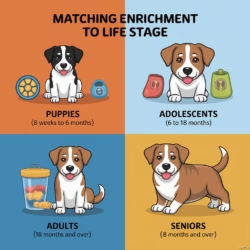 he young puppy's growth plates are entirely open, and their musculoskeletal system is at its most vulnerable. Enrichment at this stage should be almost entirely cognitive: very short (five to eight minute) trick sessions, simple puzzle work, gentle indoor searching, and calm exploration of new environments and surfaces. Physical exercise should be minimal, spontaneous, and never forced.
The most valuable investment at this stage is not physical exercise. It is socialisation: positive exposure to the sounds, surfaces, people, and situations the puppy will encounter throughout their adult life, conducted calmly and at the puppy's pace. A well-socialised Corgi puppy is the foundation of a well-adjusted adult Corgi.
4.2 Puppies — 3 to 6 Months
Training capacity increases dramatically in this window, and it is one of the most important periods for establishing the daily habit of enrichment. The five-minute-per-month-of-age rule (twice daily) applies to structured physical exercise: a four-month-old puppy should have no more than twenty minutes of deliberate physical activity per session. Cognitive enrichment — trick training, puzzle feeding, gentle nose work — can run longer, as cognitive fatigue is the limiting factor rather than joint load.
This is the ideal time to introduce the herding ball and flirt pole in very short, gentle sessions, establishing the correct movement patterns (slow, nose-led, no jumping) before high-drive habits can form.
4.3 Adolescents — 6 to 12 Months
The adolescent Corgi is a phenomenon. The rapid hormonal changes of this period produce a dog who is simultaneously more capable and more challenging than at any other life stage: a brain developing extraordinary capacity for learning, paired with a testing of boundaries that can exhaust even experienced owners. The physical envelope can begin to expand, but high-impact activities should remain firmly off the agenda until growth plate closure is confirmed, typically around 12 to 18 months.
This is the stage at which consistency in enrichment pays the greatest dividends. An adolescent Corgi with a well-established enrichment routine — who knows that training happens in the morning, that the herding ball comes out in the afternoon, that evenings include a puzzle feeder — is a dramatically more manageable animal than one whose days are unpredictable.
4.4 Adults — 18 Months and Over
The adult Corgi can engage in the full enrichment programme with intensity calibrated to their individual health, fitness, and temperament. This is the stage where the investment in early enrichment habits pays compound interest: a Corgi with two years of daily enrichment behind them is settled, confident, responsive, and genuinely easy to live with. The plan does not end here — it simply becomes second nature.
4.5 Seniors
Older Corgis benefit as much from enrichment as younger ones, even as their physical capacity diminishes. Puzzle feeders, gentle nose work, and short training refreshers maintain cognitive sharpness, provide psychological purpose, and help manage the increased risk of cognitive decline that affects all senior dogs. The enrichment plan does not retire when your Corgi does — it adapts.
5. The Tanydd Corgi Crew Enrichment Planner
5.1 Designed for This Breed
 The Tanydd Corgi Crew Enrichment Planner is a free, interactive web tool that generates personalised daily enrichment plans for Pembroke Welsh Corgis. It is built around the specific physical vulnerabilities and cognitive needs of the breed — not adapted from a generic template, but designed from the ground up with the Corgi's particular profile in mind.
The Planner takes six inputs to generate a tailored daily routine:
- Your Corgi's name: Every plan is personal.
- Age group: Young puppy through adult — the Planner adjusts durations, intensity levels, and activity types to match each developmental stage.
- Energy level: Low, medium, or high — because dogs vary, and so do days.
- Outdoor access: Apartment, small yard, or large outdoor space — the plan adapts to what you actually have available.
- Toys and equipment: Only activities matching your selected toys appear in the plan. Herding ball, flirt pole, fetch toys, puzzle feeder, snuffle mat — each unlocks its corresponding activity type.
- Mental activities: Trick training, muffin tin game, nose work, and name-that-toy — each selectable to match your preference and schedule.
The output is a structured daily routine broken into short sessions, colour-coded by type, with time allocations that reflect age-appropriate limits and IVDD-protective guidance built into every recommendation.
| Try It Free: The Tanydd Corgi Crew Enrichment Planner is available free at www.corgicrew.co.za/enrichment-planner. Enter your Corgi's details and receive a complete personalised enrichment plan in under two minutes. |
6. A Network of Like-Minded Breeders
6.1 Because Good Guidance Should Travel
At Tanydd Corgi Crew, we believe that the knowledge that keeps dogs healthy and owners happy belongs to everyone. We are proud to recommend two other kennels whose resources we consider essential reading for any Corgi or working-breed dog owner:
6.1.1 Pember Diamonds — Pembroke Welsh Corgis
Our colleagues at Pember Diamonds breed Pembroke Welsh Corgis with an exceptional commitment to health, temperament, and owner education. They have written Why Every Corgi Needs an Enrichment Plan — a comprehensive, beautifully researched article that covers the Corgi's herding instinct, IVDD risk, the science of cognitive enrichment, and the session-based approach to daily activity in excellent depth.
They have also developed the Pember Diamonds Corgi Enrichment Planner, a free interactive tool that shares the same breed-protective philosophy as our own Planner. If you are a Corgi owner looking for additional resources, or a breeder seeking a peer kennel to recommend to your puppy families, Pember Diamonds is an outstanding choice.
| Recommended Resource: Pember Diamonds — Pembroke Welsh Corgis
Enrichment article: Why Every Corgi Needs an Enrichment Plan Enrichment Planner: Pember Diamonds Corgi Enrichment Planner Update links above once published on the Pember Diamonds website. |
6.1.2 Tamboeckey Beagles — Beagle Breeders
We also warmly recommend Tamboeckey Beagles — a dedicated Beagle kennel whose approach to breed welfare and owner support mirrors our own. Their article The Nose Knows: Why Your Beagle Needs a Structured Enrichment Plan is a fascinating companion piece to this one: where the Corgi's enrichment needs are dominated by their herding drive and spinal vulnerability, the Beagle's are shaped by their extraordinary scent instinct and food motivation. Reading both together offers a rich perspective on how working-breed heritage shapes every aspect of a dog's daily experience.
They have also published the Tamboeckey Beagles Enrichment Planner — a free interactive tool built around the Beagle's specific profile, including scent tracking activities, vocal enrichment, and weight-management-aware feeding guidance.
| Recommended Resource: Tamboeckey Beagles — Beagle Breeders
Website: www.tamboeckeybeagles.co.za Enrichment article: The Nose Knows: Why Your Beagle Needs a Structured Enrichment Plan Update the article link above once published on the Tamboeckey Beagles website. |
6.2 Three Kennels, One Philosophy
The Corgi and the Beagle are very different dogs — one a herder, the other a scent hound — but the principle that runs through all three kennels' approaches is identical: understand the instinct, respect the drive, and give the brain a legitimate job to do every single day.
Whether your dog is a Pembroke Welsh Corgi from Tanydd Corgi Crew or Pember Diamonds, or a Beagle from Tamboeckey Beagles, the promise from all three kennels is the same: we will not simply place a puppy and wish you luck. We will give you the knowledge, the tools, and the ongoing support to give that puppy the life they deserve.
7. A Practical First Week
7.1 Day One
Observe Before You Plan
Before building a detailed enrichment schedule, spend a day simply observing your Corgi. When are they naturally most alert and active? When do they seek rest voluntarily? What activates their herding drive? What settles them most reliably? The best enrichment plan is one built around your specific dog's rhythms, not imposed upon them.
7.2 Days Two to Four
Introduce One Category at a Time
Introduce mental enrichment first — specifically trick training and puzzle feeding — because these have the lowest physical risk and the highest immediate return. Once these are established as daily habits, add herding activities (if you have the equipment), then physical enrichment sessions.
Keep everything short in the first week. The goal is to establish the habit and the positive association, not to maximise stimulation. A Corgi who ends each enrichment session wanting more is a Corgi who will seek it out tomorrow.
7.3 Days Five to Seven
Build the Daily Structure
By the end of the first week, you should have a rough sense of your Corgi's preferences and your own schedule. Use the Tanydd Corgi Crew Enrichment Planner to generate a daily plan that integrates both. Aim for four to six sessions across the day, with the most cognitively demanding activities (training, herding ball) when your dog is naturally most alert, and the calmer activities (snuffle mat, nose work) as wind-down sessions.
The plan will not be perfect in week one. That is entirely normal. Enrichment planning is an iterative process — each week you learn something new about your dog, and the plan improves accordingly.
8. A Final Word from Tanydd Corgi Crew
The name tanydd means flame. We chose it because it captures something we see in every Corgi we breed and every Corgi owner we support: the quality of brightness, of intensity, of warmth that these extraordinary little dogs bring to every home they enter.
That flame needs tending. It needs fuel — in the form of cognitive challenge, instinct expression, purposeful movement, and daily collaboration with the humans who love them. Without that tending, it can smoulder into frustration, anxiety, and the behaviours that make people mistakenly conclude that Corgis are 'difficult'.
With it, that flame illuminates everything around it. The Corgi who is properly enriched is one of the most rewarding companions a person can share their life with — attentive, responsive, joyful, deeply bonded, and possessed of a personality so vivid and so characterful that rooms feel different when they are in them.
Start today. Open the Tanydd Corgi Crew Enrichment Planner generate your first plan, and begin. The flame has been burning all this time, waiting for you to give it somewhere to go.
The flame burns brightest when it has a purpose.
Bred with love. Placed with care. Supported for life.
9. References & Further Reading
The following sources informed the research and recommendations in this article:
- Coren, S. (1994). The Intelligence of Dogs. Free Press. New York.
- Jensen, P. (2007). The Behavioural Biology of Dogs. CAB International. Wallingford.
- Horowitz, A. (2010). Inside of a Dog: What Dogs See, Smell, and Know. Scribner. New York.
- Berns, G. (2017). What It's Like to Be a Dog. Basic Books. New York.
- Halls, V. (2020). The Complete Guide to Canine Enrichment. Hubble & Hattie. Dorchester.
- Hansen, B.D., et al. (2019). Structured cognitive enrichment and anxiety reduction in herding breed dogs. Applied Animal Behaviour Science, 218, 104832.
- Davies, E. (2022). Intervertebral Disc Disease in Chondrodystrophic Breeds: Prevention and Management. Veterinary Times, 52(14), 18–24.
- The Kennel Club UK (2023). Pembroke Welsh Corgi: Breed Information and Health. thekennelclub.org.uk
- American Kennel Club (2023). Pembroke Welsh Corgi Breed Standard and Health Guidelines. akc.org
- Donaldson, J. (1996). The Culture Clash. James & Kenneth Publishers. Oakland.
- Tanydd Corgi Crew Enrichment Planner (2025). Free interactive enrichment planning tool for Pembroke Welsh Corgi owners. Available at: www.corgicrew.co.za
- Pember Diamonds (2025). Why Every Corgi Needs an Enrichment Plan. Available at: www.pemberdiamonds.co.za
- Tamboeckey Beagles (2025). The Nose Knows: Why Your Beagle Needs a Structured Enrichment Plan. Available at: www.tamboeckeybeagles.co.za
[…] Enrichment guide: Without Cattle […]
[…] Without Cattle structured enrichment plan on CorgiCrew provides a practical framework for meeting a Corgi's […]