
Corgi Health Screening Essentials
Your Corgi is built to work — compact, athletic, and formidably intelligent. But that same physical engineering that makes the breed so capable also makes it susceptible to a handful of well-documented hereditary conditions that every owner needs to understand. The reassuring truth is that most  of these conditions are manageable, and many are preventable with the right preventive care at the right time.
Whether you're thinking about puppy feeding and nutrition, training, or health — the foundation of a long, healthy life for your Corgi is built in the early years and maintained through consistent, informed routine vet visits. The problem is that most owners receive a puppy pack at collection, read it once, and then navigate health decisions reactively — waiting for something to go wrong before seeking guidance.
This guide gives you the proactive framework your Corgi deserves. From the first veterinary appointment through adult wellness checks and breed-specific screenings, everything here is designed to help you stay ahead of the common breed diseases that affect Pembroke Welsh Corgis — and to give you the confidence to ask the right questions at every vet visit.
 Quick Answer
What are the essential corgi health checks every owner should know about?
Essential corgi health checks include hip dysplasia screening, eye tests for hereditary conditions such as progressive retinal atrophy, degenerative myelopathy DNA testing, and routine vet visits covering vaccinations, dental care, and weight management. Early detection through scheduled wellness checks is the most effective preventive care strategy for the breed's known hereditary conditions.
Understanding Corgi Health
Breed-Specific Risks Every Owner Should Know
Pembroke Welsh Corgis are a robust breed with a median lifespan of 12–15 years, but that longevity depends significantly on how well owners understand and manage the breed's known hereditary conditions. Knowing what to screen for, and when, is the single most impactful thing a Corgi owner can do for their dog's long-term health.
The most commonly documented health concerns in Pembroke Welsh Corgis include:
- Hip dysplasia — abnormal development of the hip joint, leading to arthritis and mobility problems. Genetic predisposition combined with weight and exercise management determines outcome significantly.
- Progressive Retinal Atrophy (PRA) — a hereditary eye condition causing gradual deterioration of the retina. Affected dogs typically show early signs between two and five years of age.
- Degenerative Myelopathy (DM) — a progressive neurological condition affecting the spinal cord. The SOD1 gene mutation responsible for DM in Corgis is among the most studied in the breed.
- Von Willebrand's Disease — an inherited bleeding disorder, less common in Corgis than in some other breeds but present in the population and worth testing for in breeding candidates.
- Intervertebral Disc Disease (IVDD) — related to the breed's long-backed conformation, IVDD risk is elevated in Corgis and is managed through weight control, appropriate exercise, and avoiding high-impact jumping.
Understanding these conditions is not cause for alarm — it is the basis for informed preventive care. Many Corgis live their entire lives without experiencing serious manifestations of any of these conditions, particularly when owners maintain a consistent schedule of wellness checks and early detection monitoring.
The Corgi Vaccination Schedule
What, When, and Why
Vaccinations are the most straightforward element of preventive care, yet they remain one of the most frequently misunderstood. In South Africa, the core vaccination programme for dogs is well-established, and deviating from it carries real risk — particularly for a puppy in the critical early developmental stage.
Core vaccines protect against distemper, adenovirus (hepatitis), parvovirus, and rabies. These are non-negotiable.
Non-core vaccines — including kennel cough (Bordetella) and leptospirosis — should be discussed with your veterinarian based on your Corgi's lifestyle and exposure risk.
Recommended Vaccination Timeline
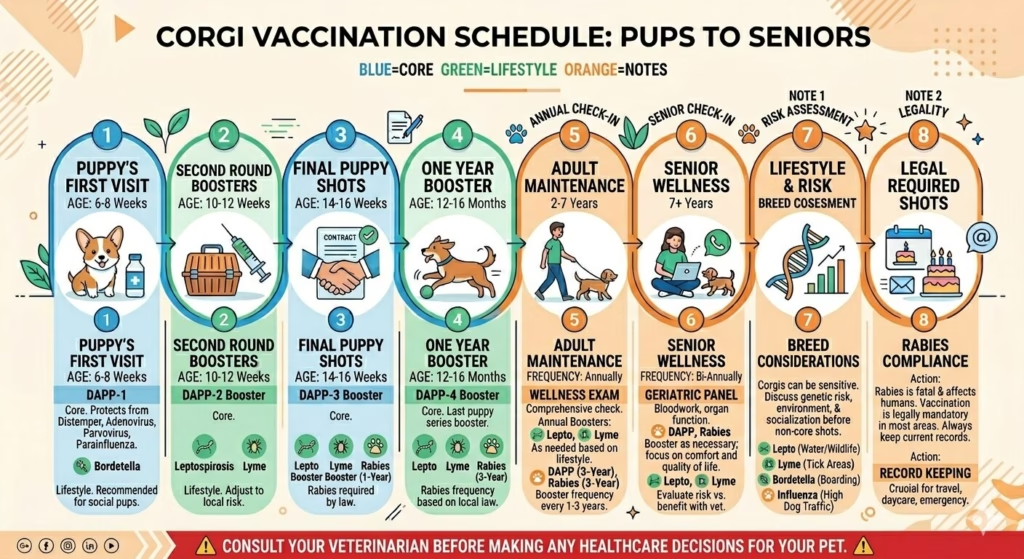
The health certificate you received at collection should document your puppy's vaccination history up to the point of placement. Bring this to your first veterinary appointment — your vet will use it to determine the correct continuation of the schedule. Do not restart vaccinations from zero without a clinical reason for doing so.
Hip Dysplasia Screening
What It Is and When to Test
Hip dysplasia is one of the most discussed hereditary conditions in dog breeding, and in Corgis it carries particular significance given the breed's low, heavy-set conformation. The condition involves abnormal development of the hip joint — the ball and socket fit imperfectly, causing friction, inflammation, and over time, degenerative arthritis.
Hip dysplasia has both a genetic component and an environmental component. Even a puppy from health-tested parents can develop the condition if diet, weight, and exercise are poorly managed in the growth phase.
Clinical signs include reduced activity, reluctance to rise from rest, abnormal gait, and sensitivity around the hindquarters. Many dogs do not show obvious signs until the condition is moderately advanced.
Formal hip scoring through an orthopaedic radiograph is typically recommended from 12 months of age when the skeletal structure is sufficiently mature.
Managing Hip Health from Puppyhood
The following practices significantly reduce the expression of genetic hip dysplasia risk:
- Maintain lean body condition throughout the growth phase — excess weight accelerates joint deterioration.
- Avoid high-impact exercise — jumping from heights, prolonged running on hard surfaces, and forced exercise before 12 months are all documented contributors.
- Provide a balanced diet appropriate for a medium-breed puppy's developmental stage requirements.
- If your puppy's parents were hip-scored, request the scores from your breeder. Scores are expressed as a total — the lower the number, the better. In the UK scheme, the breed mean score for Pembroke Welsh Corgis is approximately 12–14; scores significantly above this indicate elevated risk.
- Discuss the timing and appropriateness of a baseline hip radiograph with your veterinarian at the 12-month routine vet visit.
Eye Tests and Progressive Retinal Atrophy
The Corgi Owner's Guide
Progressive Retinal Atrophy (PRA) is a hereditary eye condition that causes progressive degeneration of the photoreceptor cells in the retina, leading ultimately to blindness. In Pembroke Welsh Corgis, the most common form is RCD3-PRA, for which a DNA test is available. This means that responsible breeders can — and should — test breeding stock before producing a litter.
If you sourced your Corgi from a health-focused breeder, the puppy's parents should have been DNA-tested for PRA. Ask your breeder for the test results and confirm their status (clear, carrier, or affected).
A puppy from two DNA-clear parents cannot be affected by RCD3-PRA. A puppy from one clear and one carrier parent cannot be affected, but may be a carrier. A carrier dog will not develop the condition but can pass the mutation to offspring.
Annual eye examinations by a veterinary ophthalmologist are recommended for any dog whose parental DNA status is unknown or who is intended for breeding. The British Veterinary Association (BVA) eye scheme provides a recognised framework for these examinations.
Signs That Warrant an Immediate Eye Examination
- Night blindness or reluctance to move in low-light conditions
- Dilated pupils that respond slowly to light changes
- Bumping into objects, particularly in dim environments
- Changes in the appearance of the retina noted by a vet during a routine examination
Early detection does not reverse PRA, but it does allow owners to manage the dog's environment proactively and make informed decisions about future breeding if applicable. Breed-specific hereditary conditions like this are exactly why routine eye tests should form part of every Corgi's adult wellness check.
Degenerative Myelopathy
The DNA Test That Every Corgi Owner Needs
Degenerative Myelopathy is among the most distressing conditions a Corgi owner can encounter — a progressive, incurable neurological disease that begins with hind-limb weakness and advances over months to complete loss of voluntary movement. The SOD1 mutation responsible for DM in Corgis is recessive, meaning a dog must inherit two copies of the mutation (one from each parent) to be at risk of developing the condition.
DNA testing for the SOD1 mutation is widely available through accredited veterinary genetics laboratories. The test requires a simple cheek swab or blood sample.
Dogs are classified as:
- Clear (no copies of the mutation),
- Carrier (one copy; will not develop DM but can pass the mutation on), or
- At Risk (two copies; at elevated risk of developing the condition during their lifetime).
Not all "at risk" dogs develop DM — penetrance is not complete — but the classification is a meaningful health indicator.
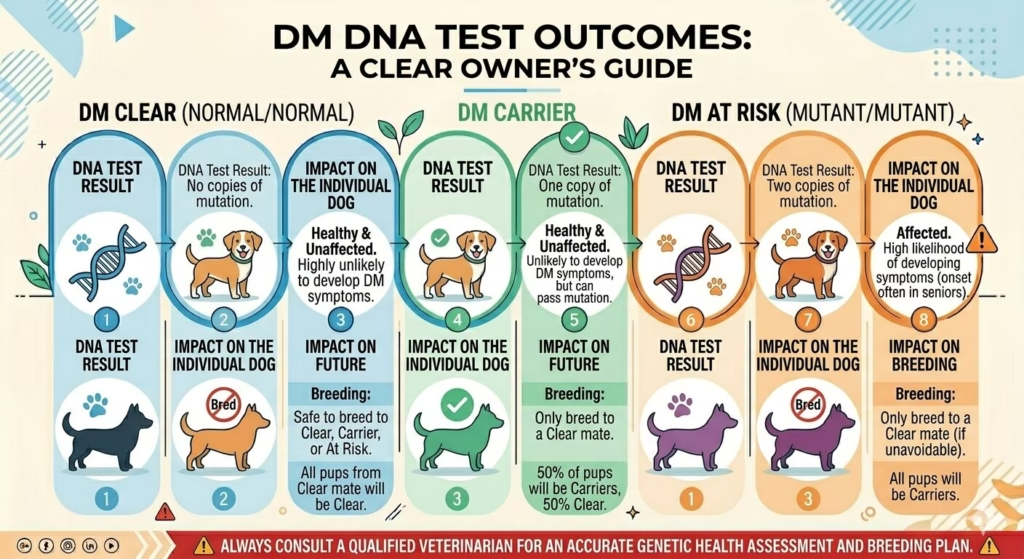
The Pembroke Welsh Corgi has a documented high prevalence of the SOD1 mutation compared to many other breeds, making this test particularly relevant for the breed.
If you did not receive DM DNA test results for your puppy's parents at collection, contact your breeder and request them. If test results are unavailable, you can test your own dog — while this does not affect their health outcome, it is essential information if you are ever approached about breeding your Corgi.
For more on how breeders approach genetic health management and what communication you should expect from them at every stage, our sister resource on Breeder-Owner Communication Best Practices outlines what a professional programme looks like from the inside — and what questions you are entitled to ask.
Routine Vet Visits
Building a Preventive Care Calendar
Routine vet visits are the scaffolding of your Corgi's long-term health. They are not just for vaccinations — they are the opportunity for your veterinarian to identify early signs of conditions that may not yet be symptomatic, to assess weight and body condition, to evaluate dental health, and to update your preventive care programme.
Annual wellness checks are the minimum standard for adult Corgis. Dogs over seven years of age benefit from six-monthly checks, as age-related conditions can develop and progress rapidly.
Every routine vet visit should include a physical examination covering eyes, ears, teeth, skin, lymph nodes, heart and respiratory function, and abdominal palpation.
Discuss parasite prevention at every visit — heartworm, tick-borne disease, and intestinal parasites are managed through a scheduled preventive programme, not reactive treatment.
Preventive Care Calendar for Corgis
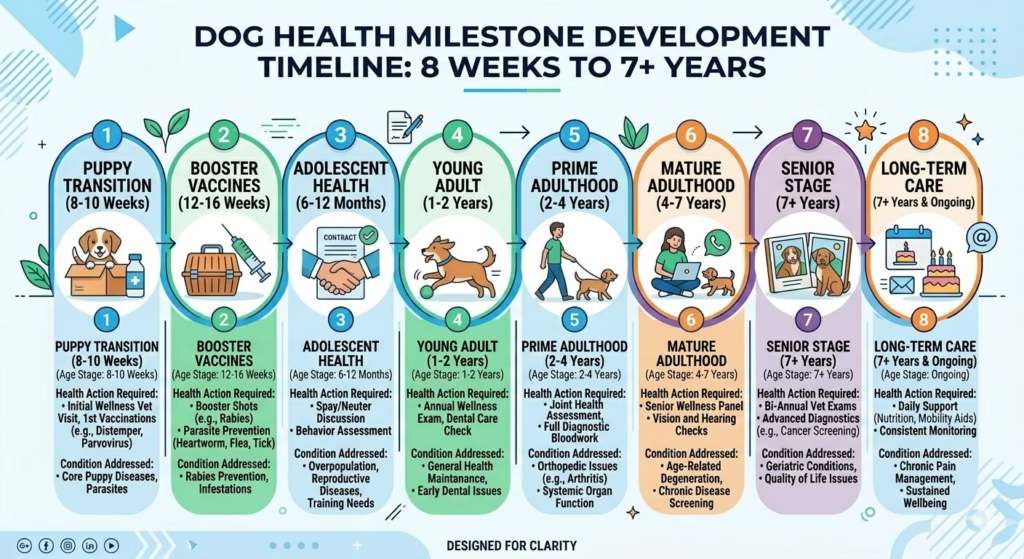
Consistency matters as much as coverage. A Corgi owner who attends every annual wellness check and maintains a record of findings over time gives their veterinarian a baseline that makes early detection far more reliable. Reactive care — visiting the vet only when something is visibly wrong — is statistically less effective at catching the hereditary conditions that affect the breed before they cause significant harm.
If you are still figuring out how to navigate life with a Corgi — from the breed's distinctive temperament to their specific needs at home — the guide Are Corgis Good for First Time Owners? provides a warm and honest overview of the breed's full character. And for structured enrichment beyond health, the Without Cattle enrichment guide offers breed-appropriate activity frameworks that support physical and mental wellness.
Weight Management and the Connection to Hereditary Conditions
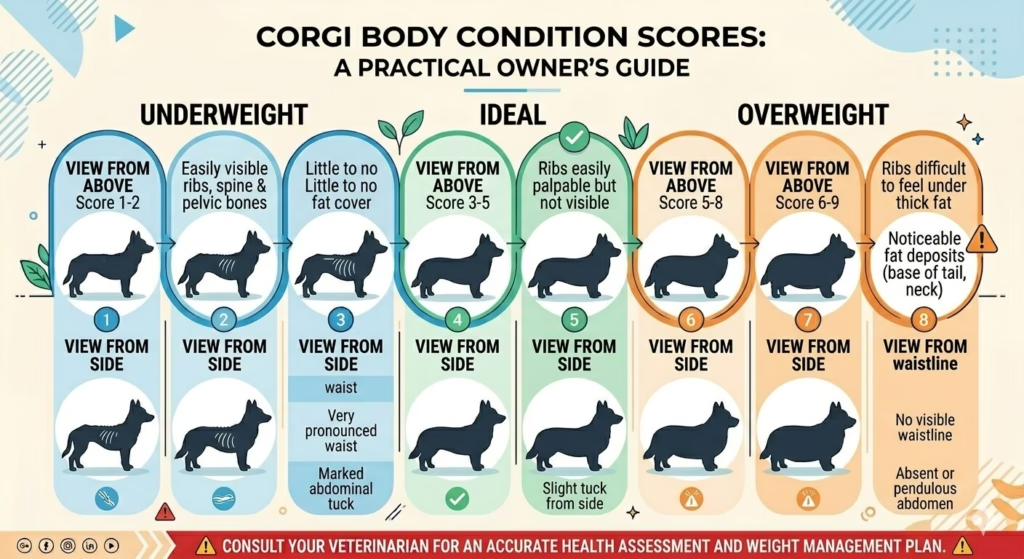
Weight management is not a cosmetic concern for Corgis — it is a direct health intervention. The breed's long-backed, low-slung conformation means that excess body weight places disproportionate load on the spine and joints, significantly worsening the expression of conditions like hip dysplasia and IVDD. A Corgi carrying excess weight is not a healthy Corgi — it is a Corgi at elevated risk of multiple common breed diseases.
The ideal body condition score for a Corgi is 4–5 out of 9. At this score, ribs are easily felt but not visible, there is a visible waist when viewed from above, and the abdomen is tucked when viewed from the side.
Male Pembroke Welsh Corgis typically weigh between 10–14 kg; females between 9–11 kg. Significant variation beyond these ranges warrants veterinary assessment.
Feeding programme choices made during the puppy's first year have lasting consequences. Overfeeding during the developmental stage accelerates skeletal growth at a rate the joints cannot always accommodate.
Practical Weight Management Strategies
Measure food portions — do not estimate by eye. Even 10% overfeeding daily accumulates to meaningful excess weight over months.
Account for training treats in the daily caloric total. A small Corgi can consume a significant proportion of their daily requirement in treats alone.
Exercise must be appropriate to the dog's age and physical condition. A healthy adult Corgi benefits from 45–60 minutes of moderate exercise daily; a puppy under 12 months should follow the five-minutes-per-month-of-age guideline for structured walks.
Discuss weight at every routine vet visit — not just when a problem is apparent. Veterinary body condition scoring provides an objective measure that removes owner subjectivity.
The intersection of puppy feeding and nutrition with long-term health outcomes cannot be overstated. What a Corgi eats in the first 12 months of life shapes their joint health, immune function, and metabolic rate for the years ahead. For Beagle owners seeking parallel guidance on weight and wellness management for their breed, the Beagle Health and Wellness Guide on BeaglePuppies.co.za addresses many of the same principles in a Beagle-specific context.
 Expert Insight
"One of the most underappreciated aspects of Corgi health management is the window between 12 and 18 months — a period when most owners feel their dog has come through the puppy stage safely and ease off proactive monitoring. In reality, this is when several hereditary conditions begin to express clinically for the first time. Hip dysplasia that was sub-clinical through puppyhood often becomes symptomatic as the dog transitions to full adult activity levels. Early-onset PRA typically presents in this age range. DM, while a later-onset condition, can have its risk profile assessed definitively through DNA testing at any age — and many owners still haven't done it by the time their dog is two. The owners who navigate these conditions best are those who treat 12–18 months as an active health checkpoint, not a coast period."
— Canine Health & Wellness, CorgiCrew.co.za
The critical non-obvious insight is the 12–18 month vulnerability window — a phase systematically underserved by standard veterinary communication because it falls between the active puppy vaccination period and the formal adult annual schedule. Owners need to be explicitly told to treat this period as a distinct health checkpoint, not a gap.
 FAQ
FAQ
1. How often should a Corgi have a vet check-up?
Adult Corgis in good health should attend a minimum of one annual wellness check. Dogs over seven years benefit from six-monthly visits, as age-related conditions can progress quickly in senior dogs. Between scheduled visits, any change in behaviour, mobility, appetite, or weight should prompt an unscheduled veterinary assessment rather than a wait-and-see approach.
2. At what age should I test my Corgi for hip dysplasia?
Formal hip scoring via radiograph is most meaningful from 12 months of age, when skeletal development is sufficiently complete. Some veterinarians recommend a preliminary assessment as early as 6–8 months if clinical signs are present. The earlier the scoring is done, the earlier preventive management strategies — primarily weight control and appropriate exercise — can be optimised.
3. Can my Corgi get PRA even if the parents were clear?
If both parents were DNA-tested and confirmed clear for RCD3-PRA, your Corgi cannot be affected by or a carrier of that form of PRA. However, eye tests are still recommended periodically, as other eye conditions unrelated to the RCD3 mutation can develop. If parental test results are unknown, testing your own dog gives you important information regardless of the outcome.
4. What are the early signs of degenerative myelopathy in Corgis?
Early DM signs are subtle and easily attributed to general ageing: slight hind-limb weakness, occasional stumbling or knuckling of the rear paws, reduced rear-end coordination, and a tendency to drag the rear feet slightly when walking. These signs typically appear between seven and fourteen years of age. Any of these observations warrants immediate veterinary assessment.
5. What corgi health issues are most affected by weight?
Hip dysplasia, intervertebral disc disease, and early-onset arthritis are all directly worsened by excess body weight. A Corgi even modestly above their ideal weight is placing disproportionate load on their long spine and shallow hip joints. Weight management is arguably the highest-impact health intervention available to an owner, and it costs nothing beyond consistent portion control.
6. Are there hereditary conditions specific to Pembroke Welsh Corgis that I should know about?
The most significant hereditary conditions in Pembrokes are degenerative myelopathy (SOD1 mutation), progressive retinal atrophy (RCD3-PRA), and hip dysplasia — all of which have either DNA tests or scored assessments available. Von Willebrand's Disease and exercise-induced collapse (EIC) are less common in the breed but documented. A responsible breeder should have tested for the first three at minimum.
7. What should I bring to my Corgi's first vet appointment?
Bring your puppy's health certificate from the breeder, the vaccination record (usually included in or attached to the health certificate), any feeding or medication records, and a list of specific questions about breed-specific screenings and timeline. Your vet will use the health certificate to determine the appropriate continuation of the vaccination schedule and to establish a baseline health record.
8. How do I know if my Corgi's vaccinations are up to date?
Your health certificate and vaccination record are the primary references. If there is any uncertainty, your veterinarian can perform a titre test — a blood test that measures the level of immunity to specific diseases — to determine whether booster vaccination is required. Titre testing is particularly useful for owners who are uncertain about a dog's vaccination history.
9. Can preventive care reduce the impact of hereditary conditions in Corgis?
Yes, meaningfully so. While DNA-based conditions cannot be eliminated through lifestyle interventions alone, their clinical expression — the severity and timing of symptoms — is significantly influenced by management factors including weight, exercise type and intensity, diet, and early detection through routine screenings. An "at risk" DM dog managed proactively is not the same as an "at risk" dog whose condition is detected only once symptoms are advanced.
10. How do corgi health checks differ from routine vet visits for other breeds?
The core structure of a wellness check is similar across breeds, but the specific screening priorities differ. For Corgis, the emphasis on hip scoring, DM DNA testing, ophthalmological examination, and spinal health monitoring reflects the breed's documented hereditary conditions. A veterinarian familiar with the breed will prioritise these assessments; if yours does not, it is appropriate to raise them proactively.
Conclusion
Caring for a Corgi's health is not complicated — but it does require intention. The three most important takeaways from this guide are: first, that the breed's known hereditary conditions are manageable when detected early through scheduled wellness checks and breed-specific screenings; second, that weight management is not optional — it is one of the most direct interventions an owner can make for their Corgi's joint and spinal health; and third, that the 12–18 month window is a critical health checkpoint that many owners underestimate and that deserves specific veterinary attention.
This guide delivers on its opening promise: you now have a proactive framework that puts you ahead of the conditions most likely to affect your Corgi, rather than behind them. Health and Wellness decisions made in the early years echo throughout a Corgi's life — and the owners who make those decisions from an informed position give their dogs every advantage.
The Corgi community at CorgiCrew exists precisely to make that kind of informed ownership accessible. You are not navigating this alone.
 Call to Action
If this guide has raised questions about your Corgi's day-to-day experience at home — their behaviour, their energy management, their mental enrichment needs — the Without Cattle structured enrichment guide is a natural next read. And if you are newer to the breed and still finding your footing, Are Corgis Good for First Time Owners? will give you the honest, warm overview the community is here for. CorgiCrew is built by Corgi owners for Corgi owners — and every article here is designed to make your dog's life better.