Advanced Corgi Training Techniques
Your Corgi sits, stays, and comes on command. You have done the foundational work. And now — almost predictably — you have a dog who is bored, creative about finding trouble, and increasingly confident in testing exactly where the limits are. This is not a training failure. It is a success that has outgrown its container.
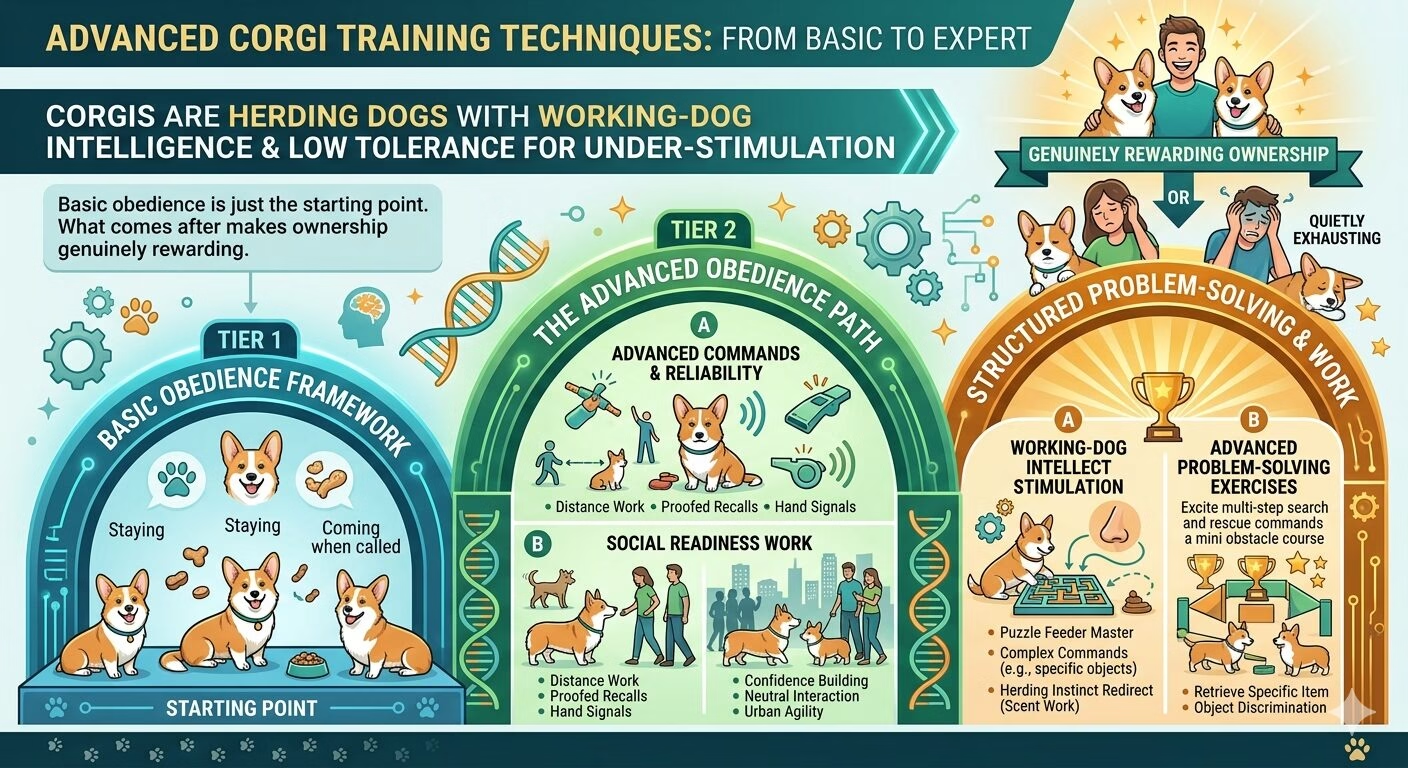
Corgis are herding dogs with working-dog intelligence and a low tolerance for under-stimulation. The basic obedience framework that serves most companion breeds for years is, for a Corgi, a starting point. What comes after — the advanced obedience, the structured problem-solving, the social readiness work — is where Corgi ownership either becomes genuinely rewarding or quietly exhausting.
This guide covers the advanced corgi training techniques that move you and your dog past the plateau. From trick training and clicker training systems to multi-dog integration, dog-park readiness, and the adolescent socialisation gaps that catch even experienced owners off guard. If you have a Corgi who is ready for more, so is this guide.
 What are the most effective advanced Corgi training techniques?
The most effective advanced corgi training techniques build on a solid obedience foundation by introducing structured trick training, clicker training for precision behaviours, problem-solving exercises, and controlled social environments like dog parks. Mental stimulation through training games is as important as physical exercise for managing Corgi intelligence and reducing challenging Corgi behaviours at home.
Understanding Corgi Intelligence Before You Advance
Before introducing any advanced corgi training techniques, it helps to understand what you are actually working with. Stanley Coren's canine intelligence research ranks the Pembroke Welsh Corgi 11th out of 138 breeds for working and obedience intelligence — meaning most Corgis understand new commands in under five repetitions and comply in 95% or more of attempts once a behaviour is learned. That is a working-dog baseline, not a companion-dog one.
This intelligence cuts both ways. A Corgi who is trained consistently and given genuine cognitive challenge is one of the most rewarding dogs to work with. A Corgi who is under-stimulated will train itself — in directions you probably will not enjoy.
What Corgi intelligence means in practice. Your dog is actively problem-solving in every environment. Advanced training channels that problem-solving. The alternative is a dog who applies it to rearranging your furniture, herding your children, or establishing who actually runs the household.
The role of positive reinforcement
All advanced training on this site is built on positive reinforcement — reinforcing the behaviours you want with rewards your dog values. This produces faster learning, stronger recall under distraction, and a dog who is engaged rather than compliant.
The advancement readiness check
Before moving to advanced techniques, confirm your dog has reliable sits, downs, stays (30 seconds minimum with handler movement), recall in a low-distraction environment, and leash manners on a standard lead. Missing foundations will not be papered over by advanced work — they will be exposed by it.
Clicker Training for Precision and Complex Commands
Clicker training is the most effective tool for teaching complex corgi commands and multi-step behaviours. The clicker's function is precise event-marking. It tells the dog exactly which behaviour — down to the millisecond — earned the reward. When you are teaching a behaviour that has multiple components (a sustained position, a directional cue, or a chained sequence), that precision matters more than in basic obedience.
Setting up clicker training correctly:
- Charge the clicker before using it in training. This means pairing 20–30 clicks with small, high-value treats in a low-distraction environment until the click itself produces a visible anticipatory response from the dog.
- Keep sessions to 3–5 minutes maximum, two to three times daily. Corgis retain short, intense sessions better than long ones. The goal is to end while the dog is still actively engaged.
- Use a clicker with consistent mechanical resistance — your dog will distinguish a double-click or a slow click from a clean single click, and inconsistency undermines the marker's precision.
Applying clicker training to advanced behaviours:
- Shaping - Reward successive approximations toward a target behaviour. If you are teaching a spin to the right, click and treat any rightward head movement first, then a quarter turn, then a half turn, and so on. Shaping produces behaviours a dog would never offer spontaneously because it builds them incrementally.
- Chaining - Link two or more behaviours into a sequence triggered by a single cue. A Corgi capable of sit-down-sit-stand in one fluid chain is ready for more sophisticated command sequences. Build backward chains (teach the last behaviour first, then add preceding steps) for the most reliable performance under distraction.
- Duration building - Once a behaviour is established, build duration by delaying the click. Increase duration in small increments — adding 2–3 seconds at a time — before raising the criterion again.
Advanced Trick Training
Building a Working Vocabulary
Trick training is not simply entertainment. For a Corgi, it is cognitive work, impulse control practice, and relationship building in one package. A dog who knows 20 or more named behaviours has a significantly larger working vocabulary than one who knows the basic five commands — and that vocabulary is the currency of advanced obedience.
High-value tricks for Corgi intelligence
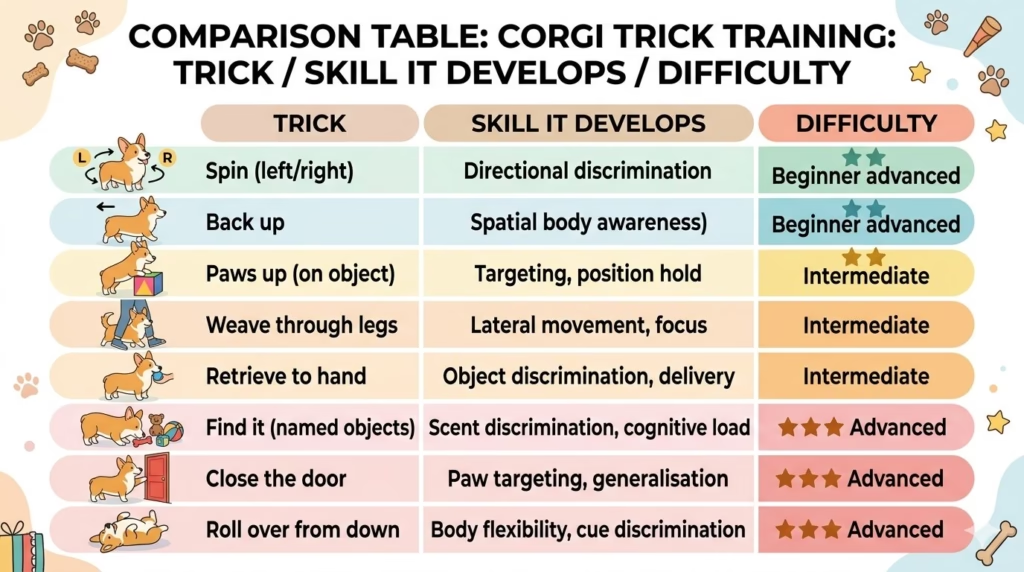
Managing Corgi enthusiasm in trick training
Corgis will frequently anticipate cues during trick training — offering behaviours before being asked because the reward history for those behaviours is strong. This is intelligent behaviour, not disobedience, but it must be managed. Use a clear release cue ("free" or "break") to signal when the dog is not in an active training loop, and avoid rewarding unsolicited offered behaviours during training sessions. Consistency here builds impulse control — one of the most valuable advanced skills a Corgi can develop.
Leash Training Beyond the Basics
Control in Real Environments
The gap between a dog who walks nicely in a quiet street and one who maintains leash manners past a squirrel, a running child, or another dog is where most intermediate training programmes stop. Advanced leash training addresses precisely that gap.
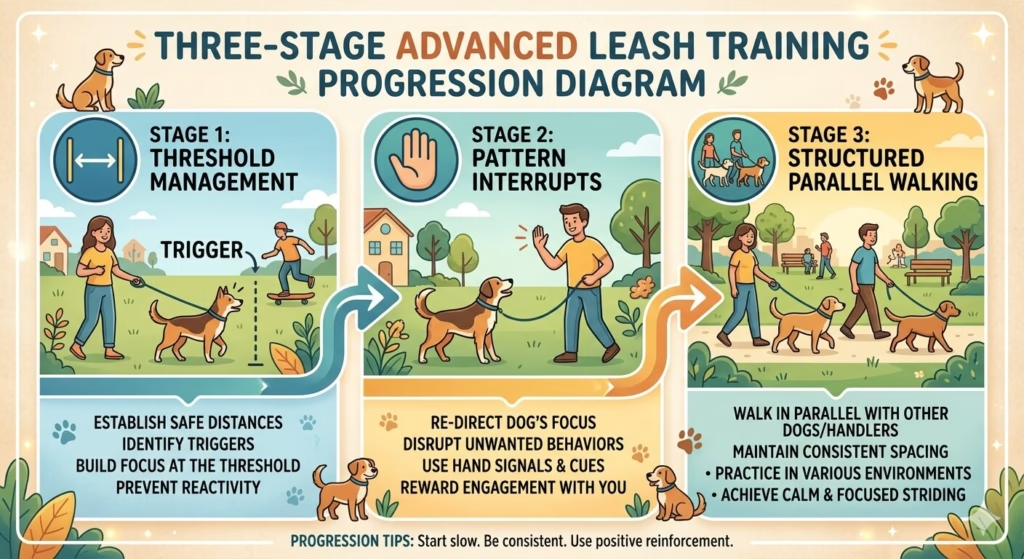
The three stages of advanced leash work:
Stage 1 — Threshold management. Every Corgi has a reactivity threshold — a distance from a trigger at which they can still make good decisions, below which they cannot. Advanced leash training begins with identifying your dog's current threshold for the key triggers in your environment (other dogs, fast-moving objects, bicycles). Work at threshold distance, not inside it. Clicking and rewarding attention back to you at threshold distance builds the associative override that makes closer proximity manageable over time.
Stage 2 — Pattern interrupts. Teach a specific cue — often "watch me" or a hand touch — that redirects the dog's attention to you on cue, before the threshold is breached. Proof this in progressively more distracting environments. The cue is not useful if it only works at home.
Stage 3 — Structured parallel walking. Before expecting your Corgi to walk calmly past or alongside other dogs in a public setting, practise parallel walking — two dogs walking in the same direction with sufficient distance between them, gradually closing that distance over multiple sessions. This is the correct preparation for dog-park environments, not hoping that on-leash introductions at the gate will go well.
Equipment note. A well-fitted front-clip harness reduces pulling mechanics for dogs still building leash manners in high-distraction environments. Head halters are effective for high-drive pullers but require a careful introduction period to avoid aversion. Aversive tools — prong collars, shock collars — are not part of the positive reinforcement methodology this site recommends.
Mental Stimulation and Problem-Solving Exercises
Physical exercise is necessary but not sufficient for a Corgi. A dog who has had a 45-minute walk and no cognitive engagement is still under-stimulated. Training games and problem-solving exercises address the cognitive need that physical exercise does not.
Training games for Corgi intelligence:
101 things to do with a box.
Place a cardboard box in the middle of the room and click and reward any interaction. This open-ended shaping exercise teaches the dog that offering novel behaviours is rewarding — which accelerates learning in all future training contexts.
Find it (scent discrimination)
Start with a known toy or item, cue "find it," and reward the dog for locating it. Progressively increase hiding complexity. This is particularly transferable as cross-breed enrichment — the principles are directly relevant to the scent work covered in Beagle training contexts.
Muffin tin puzzle
Hide treats under tennis balls in a muffin tin. The dog must remove balls to find rewards. Simple to set up, cognitively demanding at first, and scalable in difficulty.
Named toy retrieval
Teach names for 3–5 specific toys, then ask the dog to retrieve the named one from a group. This builds object discrimination and working memory simultaneously.
Cognitive load targets - A Corgi in advanced training should receive a minimum of two structured mental stimulation sessions per day — typically 5–10 minutes each — in addition to physical exercise. Dogs in an active trick training programme often show marked reductions in problematic home behaviours within 2–3 weeks of consistent engagement. The mechanism is not exhaustion — it is satisfaction.
Dog-Park Readiness and Advanced Social Skills
Dog-park readiness is one of the areas where Corgi owners most frequently overestimate their dog's preparation. A dog who is friendly and social in controlled settings is not automatically ready for the unpredictable social dynamics of an off-leash park environment.
The readiness criteria
Before a Corgi enters an off-leash dog park environment, they should demonstrate:
- Reliable recall in a high-distraction environment (minimum 90% success rate in training contexts with distractions present).
- Appropriate greeting behaviour — sniffing without mounting, jumping, or resource-guarding.
- Clear disengagement response — the ability to be called away from another dog mid-interaction.
- No resource-guarding history with high-value items in multi-dog settings.
Managing herding instinct in social settings
The Corgi's herding instinct — nipping at heels, circling, and chasing — can manifest in dog-park environments in ways that escalate conflict with other dogs. This is not aggression, it is breed behaviour expression in an inappropriate context. The management approach is. Interrupt the herding sequence at its earliest observable sign (focused attention with low body posture), redirect to you with a trained cue, and reward disengagement. Practise this pattern consistently enough that the interrupt becomes automatic.
A note on adolescent social regression
Dogs between 6 and 18 months — the adolescent developmental stage — frequently show apparent regressions in previously solid social skills. Fear periods, increased reactivity to novel dogs, and what looks like "forgetting" established social behaviours are all developmentally normal at this stage. The correct response is not to push through with exposure but to temporarily increase threshold distance, return to controlled parallel walking, and reduce off-leash social environments until the dog's confidence restabilises. This is covered in greater depth in Section 8 below.
Multi-Dog Household Integration
Introducing a second or third dog into a Corgi household requires a structured integration process — not a supervised meeting and a hopeful attitude. Corgis are socially confident dogs, but that confidence can tip into resource competition and space-guarding with insufficient management.
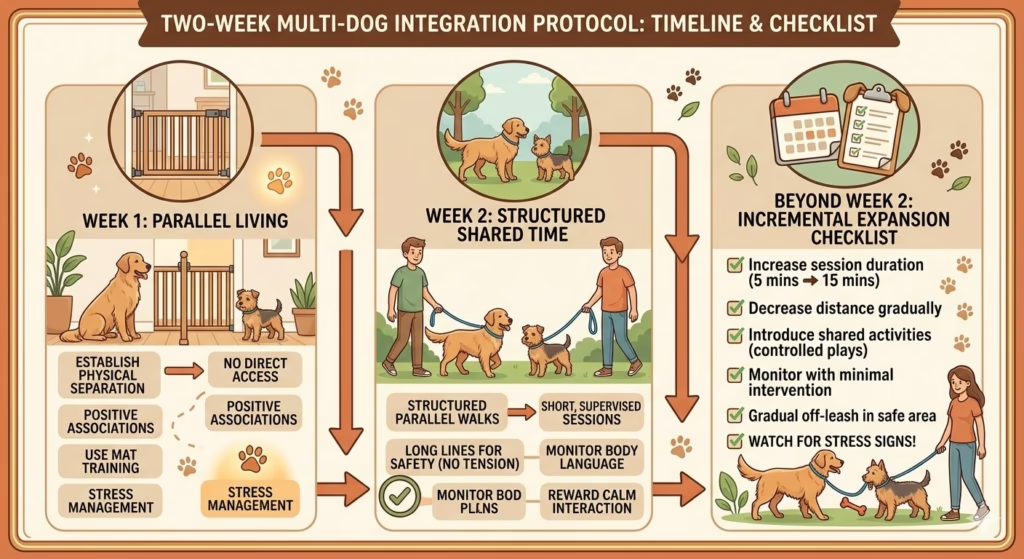
The two-week integration protocol
Week 1 - Parallel living. The new dog and the resident Corgi share no direct access. They see each other through a baby gate, smell each other's bedding, and eat in adjacent spaces. This phase builds familiarity without requiring social negotiation.
Week 2 - Structured shared time. Brief (10–15 minute) supervised shared sessions in a neutral space with no high-value resources present. Both dogs on long lines initially. Reinforce calm behaviour in the other dog's presence with high-value treats. End sessions before either dog shows arousal escalation.
Beyond week 2 - Expand shared time incrementally. Feed separately for the first three to four weeks — food is the most common trigger for early integration conflict. Introduce toys one at a time, monitoring for resource-guarding signals. A resident Corgi who shows sustained arousal, hard staring, or stiff-body posture in the new dog's presence needs more time in the parallel stage, not a faster integration.
Corgi-specific integration notes
Corgis do well with dogs of similar or slightly higher energy levels. Very low-energy dogs can become targets for herding behaviour.
Same-sex pairings in Corgis have a higher conflict risk than opposite-sex pairings; this is not universal but is worth factoring into the integration intensity planning.
Two Corgis together often form a highly cohesive pair — which can reduce individual handler focus if not actively managed through one-on-one training time for each dog separately.
Navigating the Adolescent Socialisation Gap
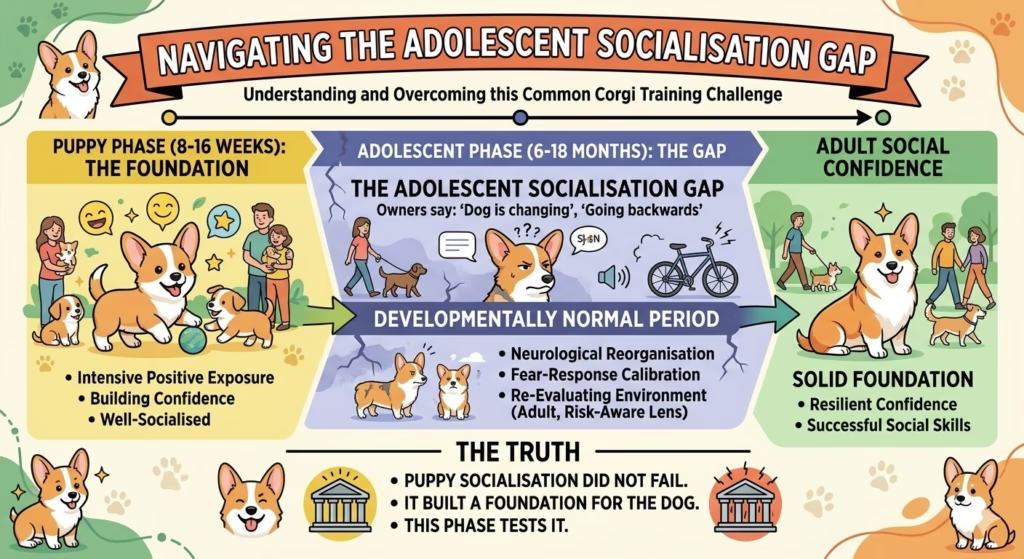
The adolescent socialisation gap is one of the most common — and most consequential — training challenges Corgi owners face. Between the well-socialised puppy phase (typically 8–16 weeks of intensive positive exposure) and adult social confidence, there is a period — roughly 6 to 18 months — where previous socialisation gains appear to degrade. Owners often describe this as the dog "changing" or "going backwards."
What is actually happening is developmentally normal. The adolescent brain is undergoing significant neurological reorganisation, fear-response systems are recalibrating, and the dog is re-evaluating its environment with a more adult, risk-aware lens. The puppyhood socialisation did not fail — it built a foundation. The adolescent phase tests it.
Managing the adolescent phase
- Do not flood. If your adolescent Corgi is showing increased reactivity to previously neutral stimuli, increasing the intensity of exposure will not accelerate resolution. It will entrench the reactive response. Return to threshold work.
- Maintain training frequency, not complexity. This is not the time to introduce highly challenging new tasks. Keep practising known behaviours in progressively more distracting environments. Reliability is the goal, not novelty.
- Increase one-on-one time. Dogs in this phase need more handler connection, not less. Short, frequent, positive training sessions reinforce the handler as a safe reference point in an environment that is feeling less predictable to the dog.
Track the pattern. Fear periods in adolescent dogs are typically transient — lasting 2–4 weeks. If reactivity is sustained beyond 6–8 weeks and is intensifying rather than resolving, consult a qualified positive reinforcement trainer or veterinary behaviourist.
Many of the advanced training challenges Corgi owners encounter — excessive reactivity, stubborn recall, herding behaviours that seem to appear from nowhere — have roots not just in training history but in breeding. The temperament of the sire and dam, the socialisation environment in the whelping box, and the puppy's early developmental experiences all contribute. For a deeper understanding of how breeding decisions shape Corgi behaviour, Selecting the Right Breeding Pair on PemberDiamonds is an illuminating read for any owner who wants to understand why their Corgi is wired the way it is.
For foundational obedience skills that underpin everything covered in this guide, Basic Corgi Training Techniques for Beginners is the recommended starting point — and Corgi Training 101 from PemberDiamonds offers a professional breeder's perspective on the same foundational phase.
Managing Challenging Corgi Behaviours with Advanced Technique
Some Corgi behaviours that look like training problems are actually breed characteristics expressed in an unmanaged context. Understanding the difference changes the management approach completely.
Heel nipping and herding behaviour
This is instinctive breed behaviour, not aggression. The management approach is interrupt-and-redirect, as described in Section 6, applied consistently enough to extinguish the pattern in household contexts. Punishment is counterproductive — it suppresses the observable behaviour without addressing the underlying drive, and tends to produce anxiety alongside suppression. Instead, channel the herding drive into appropriate outlets, tug games with clear rules, fetch, and herding-specific sport activities (Treibball is particularly well-suited to Corgis).
Excessive barking
Corgis are vocal dogs. Advanced bark management is not about eliminating barking — it is about establishing an "off" cue that the dog responds to reliably. Train a "quiet" or "enough" cue using the following sequence. Allow the dog to bark 2–3 times (do not reinforce prolonged barking), deliver the cue at a calm volume, and mark and reward the first moment of silence, however brief. Build duration of silence incrementally. Never shout — it is perceived as barking with you, not a correction.
Selective recall
A Corgi with selective recall has learned that "come" predicts the end of something enjoyable. The solution is consistent recall-and-release, call the dog, reward generously, then release them back to what they were doing. This breaks the association between recall and fun ending. Recall should be the best thing that happens in any given moment, reliably, across thousands of repetitions before it is ever tested in a high-distraction environment.
 "The most common mistake I see with owners who have done the foundation work really well is that they stop training once their Corgi is 'good enough.' But for a herding breed, 'good enough' is not a stable state — it's a temporary equilibrium that depends on the dog not being significantly bored. The advanced training techniques matter not just for what they teach, but for what they prevent. A Corgi who is in active cognitive engagement for 15–20 focused minutes a day is a fundamentally different household experience from one who is not. People come to me with what they describe as behaviour problems — barking, nipping, reactivity — and in most cases, the first thing we do is not address the specific behaviour at all. We fix the cognitive diet first. Within two weeks of consistent problem-solving exercises and structured training games, most of those 'problems' are already diminishing."
— Professional Canine Trainer, CorgiCrew contributor
The insight here is not about technique — it is about framing. Most advanced training challenges in Corgis are not dominance or disobedience issues. They are boredom and under-stimulation presenting as behaviour. The training is the treatment.
 1. How do I know if my Corgi is ready for advanced training?
Your Corgi is ready for advanced training when they have reliable sits, downs, and stays with handler movement; recall in a low-distraction environment; and leash manners on a standard lead. If any of these is inconsistent, return to foundation work first — advanced training will expose, not paper over, missing basics.
2. How long should advanced Corgi training sessions be?
Keep sessions to 3–5 minutes of focused work, repeated two to three times daily. Corgis are sharp learners who benefit from short, intense engagement rather than extended sessions. Ending before the dog disengages maintains enthusiasm and makes them eager for the next session.
3. What is the best way to teach a Corgi to stop nipping at heels?
Heel nipping is herding behaviour, not aggression. The most effective approach is interrupt-and-redirect. Identify the earliest observable sign of the herding sequence (focused body posture, low crouch), deliver your interrupt cue, and redirect to a toy or a trained behaviour. Consistently rewarding the redirect extinguishes the nipping pattern without suppressing the underlying drive inappropriately.
4. Can clicker training fix selective recall in Corgis?
Clicker training combined with a recall-and-release protocol is highly effective for selective recall. The key is to break the association between "come" and "fun ending" by recalling the dog, rewarding generously, and releasing them back to the activity. Over hundreds of consistent repetitions, recall becomes the most rewarding cue in the dog's vocabulary.
5. At what age can I start advanced trick training with my Corgi?
Most Corgis are ready for structured advanced trick training from around 12–14 months — once the foundational obedience is solid and the puppy's attention span and impulse control are sufficiently developed. Some confident, high-drive puppies begin earlier; the criterion is foundation reliability, not age specifically.
6. How do I manage my Corgi's herding instinct at a dog park?
Interrupt the herding sequence at the earliest observable sign — focused low-body attention toward another dog — using a practised pattern interrupt cue. Reward disengagement. If the herding behaviour is frequent and intense, the dog may not yet be ready for off-leash group environments; return to controlled parallel walking and on-leash socialisation first.
7. What is the adolescent fear period and how long does it last?
The adolescent fear period is a developmentally normal phase, typically between 6 and 18 months, during which previously social and confident dogs show increased reactivity, apparent regressions in social skills, and heightened sensitivity to novel stimuli. Individual fear periods within this window typically last 2–4 weeks. The correct response is to reduce exposure intensity, return to threshold work, and maintain handler connection through frequent short positive sessions.
8. How many dogs can a Corgi household comfortably manage?
Most Corgi households manage well with two dogs when the integration is properly structured. Three dogs introduce more complex social dynamics — particularly around resource competition and pack hierarchy. Each additional dog multiplies the management complexity non-linearly. The specific temperaments and energy levels of all dogs involved matter more than the number alone.
9. What are the best problem-solving exercises for a Corgi who is destructive at home?
Start with two structured cognitive engagement sessions daily — muffin tin puzzles, 101 things to do with a box, or named toy retrieval (all described in Section 5). Simultaneously review physical exercise quantity and quality. Destructive behaviour in Corgis is almost always under-stimulation presenting as problem-solving — directed at whatever is available. The goal is to provide a richer cognitive diet before the dog creates its own.
10. Are there Corgi-specific sport activities that use advanced training skills?
Corgis excel at agility, rally obedience, Treibball (a herding sport using exercise balls), and competitive obedience. These activities provide structured outlets for herding drive, high intelligence, and the physical energy of the breed. They also dramatically accelerate advanced training progress because the sport context creates genuine motivation that transfers back into everyday training situations.
CONCLUSION
Advanced Corgi training is not a separate project from good Corgi ownership — it is what good Corgi ownership looks like when the foundational work has been done. The three most important takeaways from this guide are:
- understand that Corgi intelligence demands cognitive engagement, not just physical exercise;
- build advanced techniques on verified foundations, not around gaps in them; and
- approach challenging Corgi behaviours as breed characteristics requiring management and redirection, not suppression.
The promise at the opening of this guide was a path past the plateau — from a well-trained but bored dog to one who is genuinely partnered with you in an active, evolving working relationship. The techniques here deliver that, but only if applied consistently and with the patience the adolescent developmental stage specifically demands.
Advanced training is where the breed's genuine character emerges. The Corgi who clears an agility course, retrieves a named object from across the room, or walks calmly past a dog park without a second glance is not a different dog from the heel-nipper and the counter-surfer. It is the same intelligence, given somewhere worth going.
 If you are just beginning this journey, Basic Corgi Training Techniques for Beginners is the place to start — it builds everything the advanced techniques here depend on. Already past the basics and want to go deeper into the professional training framework? Corgi Training 101 from PemberDiamonds gives you a breeder's perspective on the same foundations. This community is built for Corgi owners who take their dogs seriously — welcome to the advanced level.
[…] enrichment is a powerful tool across many breeds — the general mental stimulation and confidence-building principles translate well beyond scent hounds, as explored in the training […]