
Puppy Feeding and Nutrition
Getting Corgi nutrition right is one of the most important things you will do for your dog — and one of the most confusing, given how much contradictory advice exists online. Puppy feeding and nutrition decisions made in the first year directly shape your Corgi's weight, coat quality, energy levels, bone structure, and long-term health outcomes.
The difficulty isn't a lack of information. It's that most guides are written for generic dogs, not a breed with a low-slung, long body, a powerful appetite, and a genuine predisposition to obesity that can cause serious orthopaedic problems over time.
Whether you are in the middle of puppy feeding and nutrition decisions for the first time, or you are reassessing what your adult Corgi should be eating, this guide gives you clear, breed-specific answers grounded in canine nutritional science — without the filler, and without the overwhelm.
 What Should I Feed My Corgi Puppy?
Corgi nutrition starts with a complete, life-stage-appropriate food — ideally a puppy-formulated kibble or wet food meeting AAFCO or FEDIAF nutritional standards. Look for a named protein source (chicken, salmon, lamb) as the first ingredient, a minimum 28% crude protein on a dry matter basis, and DHA for neurological development. Avoid foods with excessive fillers or artificial preservatives.
Understanding Corgi Nutrition
Corgi nutrition is not simply "small-to-medium dog nutrition." The breed's distinctive build — long body, short legs, heavy bone — creates specific nutritional requirements that differ meaningfully from other dogs of similar weight. A Corgi weighing 11 kg has a very different skeletal load distribution than a Beagle of the same weight, and the dietary choices that maintain one at a healthy weight may not be appropriate for the other.
The most important breed-specific considerations for Corgi nutrition are:
- Obesity risk is elevated. Corgis were bred as working cattle-herding dogs with high energy expenditure. The modern pet Corgi often has a fraction of that activity level but the same caloric appetite. Research into herding breeds consistently shows that Pembroke Welsh Corgis are among the breeds most prone to owner-driven overfeeding.
- Spinal health is weight-sensitive. The long spine of the Corgi is vulnerable to intervertebral disc disease (IVDD). Excess body weight places additional compressive load on the discs — maintaining lean body condition is a direct intervention in spinal health.
- Coat quality is diet-responsive. The Corgi's double coat reflects nutritional status clearly. Dull outer coat, excessive shedding, and poor undercoat density are frequently dietary in origin.
Understanding these factors is the starting point for every feeding and nutrition decision you will make.
Puppy Diet Essentials
What to Feed and When
A Corgi puppy's diet must support rapid growth without overcorrecting into excess caloric intake that drives accelerated bone development — a significant risk in breeds prone to developmental orthopaedic conditions. Choosing the right food at the puppy stage is therefore not just about growth; it's about controlled, appropriate growth.
What to look for in a puppy diet:
- Named protein source first. Chicken, salmon, turkey, lamb — the first ingredient should be an identifiable protein, not "meat meal" or "animal by-product"
- DHA inclusion. Docosahexaenoic acid, sourced from fish oil, supports neurological development during the critical developmental stages of puppyhood. Look for it specifically on the ingredient panel.
- Calcium and phosphorus within range. As discussed in the show-puppy context on PemberDiamonds.co.za's guide to Raising Show-Quality Puppies, the Ca:P ratio matters enormously in growing dogs. The FEDIAF guidelines recommend a Ca:P ratio of 1:1 to 1.8:1 for growing puppies — verified on the food's guaranteed analysis.
AAFCO or FEDIAF compliance statement. The packaging should state "complete and balanced for growth" or "for all life stages." If it does not, it is a supplemental food, not a complete diet.
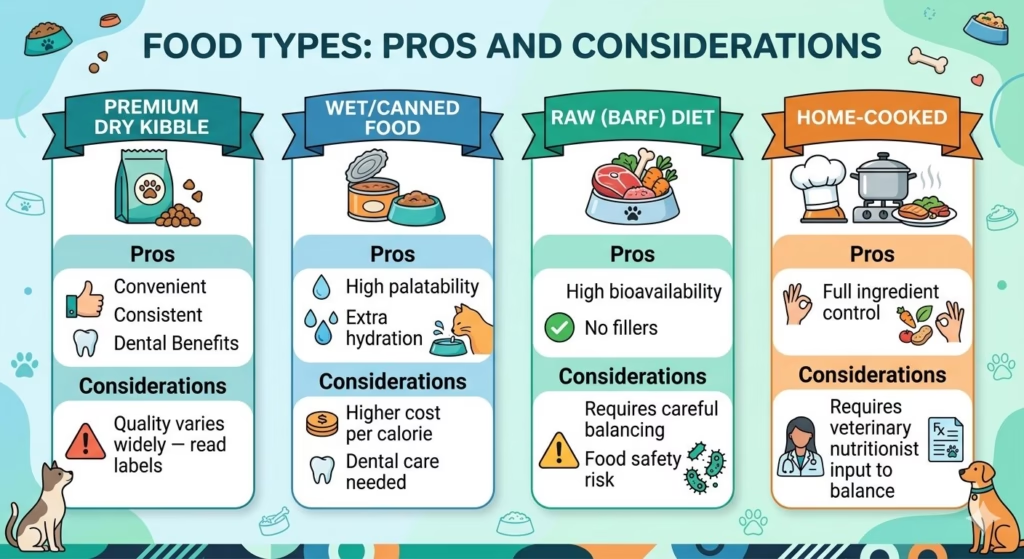
For most first-time owners, a premium dry kibble formulated specifically for puppies — from a brand with FEDIAF-compliant production standards — is the most reliable, consistent choice. If you are considering a raw or home-cooked diet, consult a registered veterinary nutritionist before transitioning.
Feeding Schedule
How Often Should a Corgi Puppy Eat?
Frequency matters as much as quantity in puppy feeding. Young puppies have small stomachs and fast metabolisms — they need regular, smaller meals to maintain stable blood glucose and support consistent energy through their developmental stages.
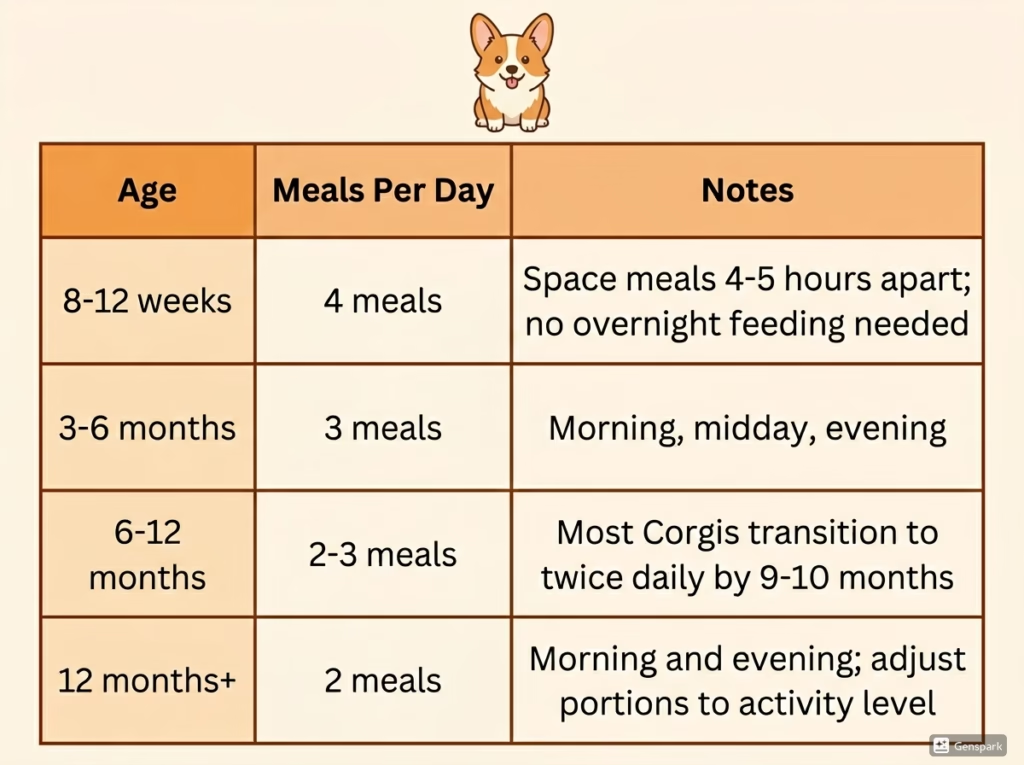
Consistency matters
Feed at the same times each day. Irregular feeding schedules contribute to digestive sensitivity, anxious food-guarding behaviours, and begging — all more common in food-motivated breeds like Corgis. Set the routine early, and your Corgi will adapt to it quickly.
Timed feeding vs. free-choice feeding. Free-choice (leaving food out all day) is strongly discouraged for Corgis. Given the breed's predisposition to obesity, unrestricted access to food creates an almost inevitable weight problem over time. Timed feeding with a clear end point is the recommended approach across veterinary nutrition guidelines.
Portion Control
How Much Is Enough?
Portion control is arguably the single most important daily habit in Corgi nutrition. The breed's appetite does not self-regulate reliably — your Corgi will eat more than it needs if given the opportunity, and it will do so enthusiastically and without visible discomfort until the long-term consequences become apparent.
Starting-point portion guidelines
- Packaging guidelines are a starting point only — they are frequently set conservatively higher to encourage faster consumption of product.
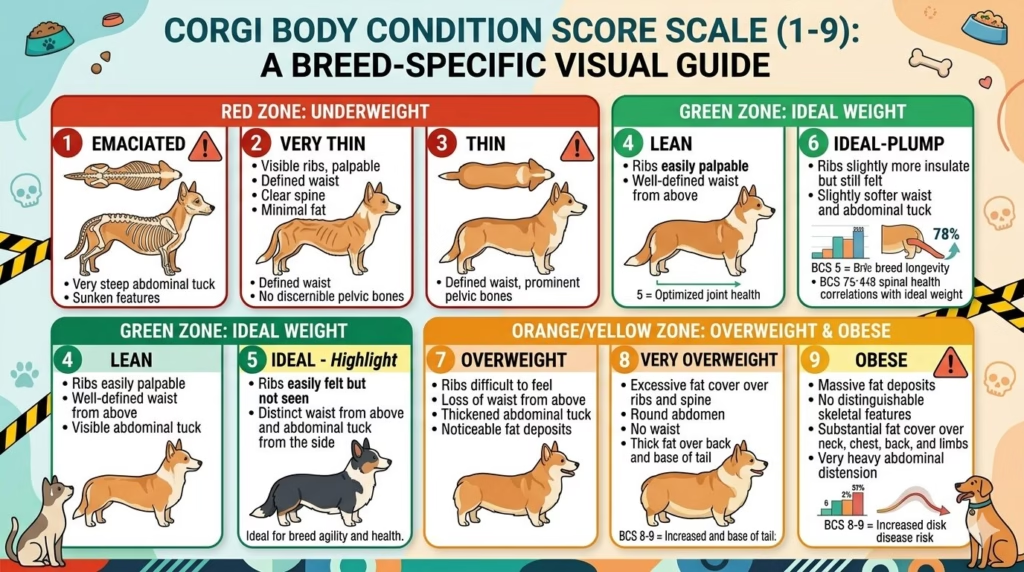
- Real portions should be calibrated to your individual dog's body condition score (BCS).
- Ribs should be easily felt but not visibly prominent
- A waist should be visible from above
- The abdomen should tuck up slightly when viewed from the side
Run your hands over your Corgi's ribs weekly. If you cannot feel them without pressing firmly, your dog is carrying excess weight. Adjust portions down by 10% and reassess in two weeks.
Weight Management
Keeping Your Corgi Healthy for Life
Weight management in Corgis is not a vanity concern — it is a structural health imperative. A study published in veterinary internal medicine literature found that dogs maintained at lean body condition lived an average of 1.8 years longer than their overweight counterparts from the same litters. For a breed already predisposed to IVDD and joint problems, the case for proactive weight management is particularly strong.
Key contributors to Corgi weight gain:
- Treats used as primary training rewards — treats typically contribute 10–15% of daily caloric intake without the owner accounting for them
- "Table food" supplements — even small additions of human food dramatically increase caloric intake in a small dog
- Activity reduction without caloric adjustment — when exercise decreases (illness, weather, age), portions must decrease proportionally
- Multiple-person households — Corgis are expert communicators of apparent hunger, and in households where more than one person feeds the dog, double-feeding is extremely common
Practical weight management habits:
- Use a kitchen scale to measure food — volume measurements (cups) are inaccurate
- Log treats in the daily food total — reduce kibble by an equivalent caloric amount
- Weigh your Corgi monthly, not by eye
- If your Corgi is on a weight-loss programme, transition to a lower-calorie "light" formula rather than simply reducing standard food (this preserves protein and micronutrient intake)
Treats
The Good, the Bad, and the Dangerous
Treats are a legitimate, useful part of Corgi nutrition — they support positive reinforcement training, provide enrichment, and are an important tool in a first-time owner's relationship-building toolkit. The problem is quantity and quality, not the concept of treats itself.
Safe and useful treats:
- Cooked chicken breast (no skin, no seasoning) — high protein, low fat
- Carrot sticks — low calorie, good crunch, dental benefit
- Blueberries — antioxidant-rich, low sugar
- Commercial training treats — choose treats under 5 kcal per piece for everyday use
Treats to limit:
- Cheese — high fat; effective for training but should be used sparingly
- Peanut butter — verify it does not contain xylitol (highly toxic to dogs); use sparingly due to fat content
- Commercial treat sticks and chews — read calorie information carefully; many are surprisingly high
Foods that are toxic to dogs — no exceptions:

Hydration
The Overlooked Cornerstone of Good Nutrition
Water is a nutrient — frequently overlooked in feeding guides but directly implicated in kidney health, digestion, coat condition, and energy levels. A Corgi puppy requires approximately 60–80 ml of water per kilogram of body weight per day. A 10 kg Corgi therefore needs 600–800 ml daily as a baseline, more in hot weather or following exercise.
Hydration best practices:
- Fresh water should be available at all times — change it at least twice daily
- Wash water bowls daily — biofilm accumulates quickly and affects palatability
- If your Corgi is on a dry food diet exclusively, consider adding a small amount of water or low-sodium broth to meals to increase fluid intake
- Puppies on kibble drink more than puppies fed wet food — account for this when assessing intake
- Stainless steel or ceramic bowls are preferred over plastic — plastic bowls harbour bacteria and some Corgis develop contact allergies to plastic that manifest as chin or lip rashes
Signs of dehydration in puppies to watch for: sunken eyes, skin that doesn't spring back quickly when gently pinched, dark urine, and lethargy. Any of these warrants veterinary attention promptly.
Supplements
What Corgis Actually Need
The supplement market for dogs is enormous and frequently oversells its benefits. For Corgis fed a complete, balanced commercial diet, most supplements are unnecessary. However, there are evidence-supported exceptions:
- Supplements with genuine benefit for Corgis:
Omega-3 fatty acids (fish oil). Unless the diet already contains high-quality fish as a primary ingredient, an omega-3 supplement benefits coat quality, skin health, and joint lubrication. Dose at 20–55 mg EPA/DHA per kg body weight daily. - Joint support (glucosamine and chondroitin). Relevant for adult and senior Corgis given the breed's predisposition to IVDD and hip issues. Not needed for healthy puppies under 12 months.
- Probiotics. Useful during periods of dietary transition, after antibiotic treatment, or for Corgis with sensitive digestion. Choose a veterinary-grade formulation with documented CFU counts.
Supplements to avoid without veterinary direction:
- Calcium. Supplementing calcium in puppies fed a complete diet is one of the most common and dangerous owner interventions in canine nutrition. It disrupts the Ca:P balance and can cause developmental orthopaedic disease.
- Multivitamins on top of complete food. Creates excess of fat-soluble vitamins (A, D, E, K) which accumulate in tissue and can cause toxicity.
For Beagle owners navigating similar supplement decisions, the Beagle Feeding and Nutrition guide on www.beaglepuppies.co.za covers breed-specific supplementation in detail — a useful comparison for owners managing multiple breeds or considering the same products for different dogs.
Transitioning from Puppy to Adult Diet
The transition from puppy diet to adult diet is a meaningful dietary shift that should be managed carefully rather than made abruptly. For Corgis, the transition typically occurs at 12 months, as this breed reaches nutritional maturity earlier than large or giant breeds.
Transition schedule:
Day Ratio (Old:New)
Days 1–2 75% puppy food : 25% adult food
Days 3–4 50% : 50%
Days 5–6 25% : 75%
Day 7+ 100% adult food
What changes in the adult diet:
- Protein targets shift slightly — adult maintenance requires approximately 18–25% crude protein (dry matter), lower than the 28–30% recommended during growth
- Caloric density is typically lower in adult formulas — portions may need adjustment
- DHA supplementation becomes less critical as neurological development is complete
- Joint-support ingredients become more relevant as the dog ages
A smooth transition reduces gastrointestinal upset (loose stools, flatulence) which is common when diet changes are made too quickly. If digestive disruption occurs despite a slow transition, a probiotic supplement for 1–2 weeks can support gut flora stabilisation.
 Expert Insight
From a registered veterinary nutritionist with a specialist focus on toy and herding breeds:
"The most consistent error I see in Corgi feeding is the calibration of 'maintenance' intake for a breed that was historically a high-energy working dog. Owners look at their Corgi's enthusiasm and energy in the garden and assume their activity needs are being met. In most cases, they are not — the average pet Corgi is significantly under-exercised relative to its genetic expectation, which means its caloric intake should be lower than a naive activity-level estimate suggests.
The practical correction is straightforward: assess your Corgi's actual daily movement using a simple step-count or activity tracker, and set food intake accordingly — not based on your perception of how active the dog is, but on the data. A Corgi that takes 3,000 steps a day is a different nutritional proposition to one that takes 12,000. I've seen the same breed, same weight, same age, requiring 30% different caloric intake based on activity levels alone. Measure, don't guess."
 Puppy Feeding and Nutrition for Corgis
1. How do I know if I am feeding my Corgi puppy the right amount?
Use the body condition score as your primary guide rather than the packaging instructions alone. A puppy at ideal condition will have ribs that are easily felt but not visibly prominent, a visible waist from above, and an abdominal tuck from the side. Weigh your puppy monthly and adjust portions by 10% if weight gain is too rapid or too slow.
2. Can Corgi puppies eat adult dog food?
Not as their primary diet. Adult dog food does not meet the caloric density, protein content, or DHA levels required for puppies during developmental stages. Puppy formulas are specifically balanced for growth requirements. Feeding adult food to a growing puppy risks nutritional shortfalls that can affect bone development, coat quality, and neurological development.
3. What is the best food for a Corgi puppy with a sensitive stomach?
Look for a limited-ingredient diet (LID) with a single novel protein source (e.g. duck, venison) and minimal additives. Introduce new foods slowly over 7–10 days. If sensitivity persists despite dietary management, consult your vet to rule out underlying conditions such as food allergy or inflammatory bowel disease.
4. How do I stop my Corgi from begging for food?
Consistency and routine are the most effective tools. Feed at set times, remove uneaten food after 20 minutes, never feed from the table, and ensure all members of the household follow the same rules. Corgis are intelligent and persistent — one exception teaches them that persistence works.
5. Are raw diets safe for Corgi puppies?
Raw diets can be nutritionally appropriate when correctly formulated, but they carry genuine risks: bacterial contamination (Salmonella, Listeria), nutritional imbalance if not properly formulated, and choking or intestinal injury from bone fragments. Puppies with developing immune systems are particularly vulnerable to bacterial pathogens. If you choose a raw diet, work with a veterinary nutritionist and source from a reputable, tested supplier.
6. When should I transition my Corgi puppy to adult food?
Corgis typically transition to an adult diet at 12 months. Unlike large breeds that benefit from puppy food until 18–24 months, Corgis reach nutritional maturity earlier. The transition should be gradual — over 7 days — to minimise digestive disruption.
7. Can I give my Corgi puppy milk?
No. Most dogs, including Corgis, are lactose-intolerant after weaning. Cow's milk causes digestive upset, including diarrhoea and gas. Water is the only necessary fluid for a weaned puppy. Occasional small amounts of natural (no-additive) yoghurt are sometimes tolerated due to lower lactose content, but are not nutritionally necessary.
8. What is the best way to structure treats within the daily food budget?
Treats should account for no more than 10% of your Corgi's daily caloric intake. Calculate your dog's daily target caloric intake, take 10% of that figure, and use it as the treat budget for the day. Reduce kibble by the equivalent calorie amount. Use low-calorie treats (under 5 kcal) during training sessions where multiple rewards are needed.
9. Is it normal for my Corgi puppy to seem hungry all the time?
Corgis are food-motivated by breeding — it is a characteristic of the herding instinct that uses food reward effectively. Constant apparent hunger does not mean the puppy is underfed. If body condition score is ideal, the behaviour is normal. If your puppy is consuming appropriate portions but appears truly distressed or is losing weight, veterinary investigation of gastrointestinal absorption is warranted.
10. How does hydration affect my Corgi's coat condition?
Chronic mild dehydration — often undetected by owners — manifests in the coat as dullness, increased shedding, and dry, flaky skin. The Corgi's double coat is particularly responsive to hydration status because the undercoat's condition depends on healthy skin. Ensuring fresh water is consistently available and considering wet food inclusion or water added to meals during hot months supports coat quality alongside omega-3 supplementation.
Conclusion
Corgi nutrition done right comes down to three fundamentals: feeding a complete, life-stage-appropriate diet; controlling portions with real measurement rather than estimation; and managing treats as part of the total daily intake rather than as extras. These three habits, applied consistently from puppyhood, will keep your Corgi at a healthy weight, maintain coat quality, and reduce the risk of the weight-related joint and spinal conditions that shorten lives in this breed.
The feeding schedule and portion principles in this guide are not restrictive — they are the framework that gives your Corgi the best possible chance of a long, energetic, pain-free life. The Nutrition category exists on CorgiCrew because we know that the daily act of feeding is where most health outcomes are made or missed.
Feed with knowledge, and your Corgi will thrive for it.
 Call to Action
Ready to take your Corgi knowledge further? The Are Corgis Good for First Time Owners? guide is a warm, honest look at everything a new Corgi owner needs to know — including how the breed's food drive affects training, behaviour, and daily routines.
For enrichment ideas that work alongside a healthy feeding programme, explore the Without Cattle: Structured Enrichment for Corgis guide — because a mentally stimulated Corgi is a happier, healthier, and better-regulated one.
[…] that underpin these guidelines are explored in depth in the Puppy Feeding and Nutrition guide at corgicrew.co.za, which covers BCS methodology and caloric management applicable across breeds — worth reviewing […]