What Makes the Pembroke Welsh Corgi Truly Unique
Why does a dog barely twelve inches at the shoulder carry the herding instincts of breeds three times its size? Why do Pembroke Welsh Corgis suffer from back problems at rates that seem disproportionate to their sturdy appearance? And why, when you examine a Corgi's DNA, can you trace a single retrogene insertion that fundamentally reshaped its skeleton — and with it, every behavioral and health consequence the breed experiences today?
These questions converge on a single reality, the Pembroke Welsh Corgi is a case study in how intense selection for specific traits can reorganize a genome, producing both defining charm and characteristic vulnerability. Understanding what makes this breed unique is not breed trivia. It is essential for anyone making health decisions, breeding choices, or simply trying to understand why this particular dog carries the risks and behaviors it does.
What's Different About This Breed
The Pembroke Welsh Corgi diverges from the general companion dog in four genetically and historically significant ways. A specific molecular mechanism producing dwarfism, a Spitz-family ancestry distinct from its Cardigan cousin, a heeling herding style that reshaped its entire behavioral repertoire, and a body plan that makes health management inseparable from breed identity.
The FGF4 Retrogene
Precision Dwarfism
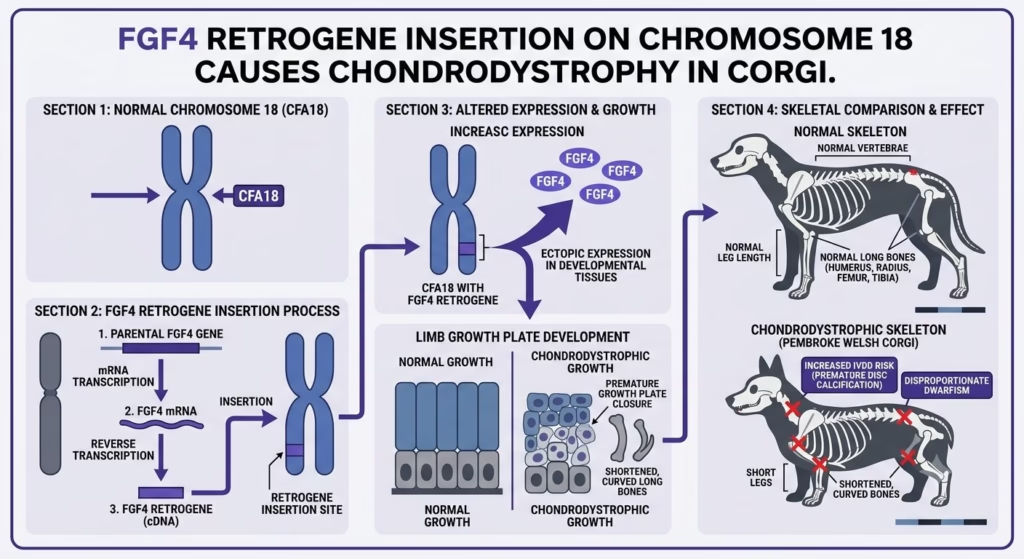
Most dog breeds achieve their size through quantitative variation in growth genes — polygenic architecture where many genes each contribute small effects. The Pembroke Welsh Corgi does not. Its short legs result from a specific, identifiable molecular event: the insertion of a fibroblast growth factor 4 (FGF4) retrogene on chromosome 18.
Parker et al. (2009) — An Expressed FGF4 Retrogene Is Associated with Breed-Defining Chondrodysplasia in Domestic Dogs** identified this mechanism across multiple chondrodystrophic breeds, including the Pembroke Welsh Corgi, Dachshund, Basset Hound, and Scottish Terrier. A retrogene is a processed messenger RNA that has been reverse-transcribed back into DNA and inserted into a new genomic location. This insertion drives ectopic expression of FGF4, a growth factor that alters cartilage development during embryogenesis.
Key findings from Parker et al. (2009)
- The FGF4 retrogene is present in at least 19 modern breeds showing chondrodysplasia
- The trait stems from a single evolutionary retrotransposition event, meaning all affected breeds share this ancient genetic accident
- The mutation is dominant — it breeds true and defines the entire breed rather than appearing sporadically
- Growth plates in long bones calcify early and abnormally, halting leg growth while the rest of the skeleton develops normally

Research Spotlight
The FGF4 Retrogene and Canine Dwarfism
Study: Parker et al. (2009), Science — An expressed fgf4 retrogene is associated with breed-defining chondrodysplasia in domestic dogs"
Sample & Method: Candidate gene analysis across 40+ breeds, with sequencing of the FGF4 locus and association testing in chondrodystrophic versus non-chondrodystrophic breeds, confirmed by expression analysis showing ectopic FGF4 transcript in developing limb buds.
Key Finding: The FGF4 retrogene insertion on chromosome 18 causes chondrodystrophy through altered chondrocyte proliferation in growth plates — not through normal size-reduction pathways — producing the disproportionate limb shortening that defines breeds like the Pembroke Welsh Corgi.
Why it matters here: This explains why Corgi literally means dwarf dog (Welsh cor + gi) — and why this is not a cute nickname but a precise genetic description. It also explains why Corgis cannot be "bred taller" by selecting longer-legged individuals: the dwarfism mechanism is essentially fixed in the breed. For Guardians, this means IVDD prevention is not optional husbandry but breed-specific genetic management. For breeders, it means understanding that the trait defining the breed also creates its greatest health vulnerability.
The FGF4 retrogene does not merely shorten legs. It alters the entire skeletal proportions of the Corgi, including vertebral body shape and intervertebral disc composition. Chondrodystrophy — the abnormal cartilage development that produces short limbs — also produces chondroid degeneration of intervertebral discs, making them prone to herniation. This is not a back problem in the general sense; it is a predictable consequence of the same genetic variant that makes a Corgi look like a Corgi.
Spitz Ancestry
The Pembroke's Distinct Lineage
The Pembroke Welsh Corgi is often conflated with its cousin, the Cardigan Welsh Corgi. They are not variants of the same breed — they are genetically distinct with entirely separate origins.
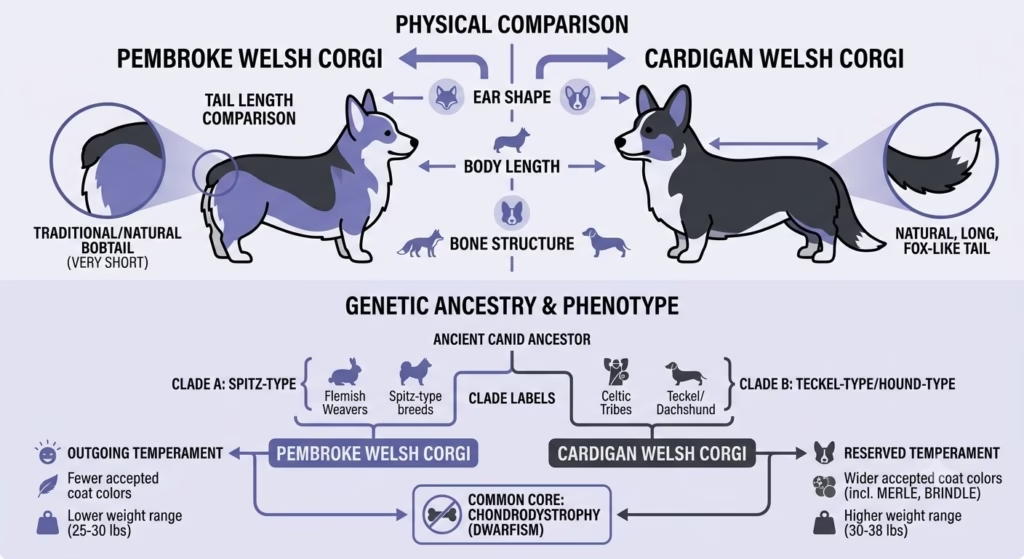
Parker et al. (2017) — Genomic Analyses Reveal the Influence of Geographic Origin, Migration, and Hybridization on Modern Dog Breed Development** placed the Pembroke in the Spitz family clade — the same lineage as Pomeranians, Keeshonds, Samoyeds, and Swedish Vallhunds. The Cardigan, by contrast, descends from teckel-type dogs (related to Dachshunds) brought by Celtic settlers.
Historical evidence
- The Pembroke lineage traces to approximately AD 1107, attributed to Flemish weavers who settled in Pembrokeshire following the Norman invasion, bringing continental Spitz-type dogs
- A competing theory credits Norse/Viking settlers and links the Pembroke to the Swedish Vallhund
- The Cardigan is the older breed, with roots extending roughly 3,000 years to Celtic settlement of Wales
The two breeds were shown together under UK Kennel Club rules from 1925 until their formal separation in 1934. Prior to that point, breeders could freely cross them, creating genetic overlap that complicates modern distinction.
Phenotypic consequences of Spitz ancestry
- Fox-like facial structure with erect, proportionally large ears
- Double coat with coarse outer layer and dense undercoat
- Alert, vocal temperament — Spitz breeds were often farm watchdogs as well as workers
- Natural bobtail or short tail (discussed below) — a trait linked to Spitz-family genetic background
Research Spotlight
Phylogenetic Distinction Between Pembroke and Cardigan Welsh Corgis
Study: Parker et al. (2017), Cell Reports — "Genomic analyses reveal the influence of geographic origin, migration, and hybridization on modern dog breed development"
Sample & Method: Whole-genome sequencing of 161 breeds (1,346 individual dogs), with phylogenetic tree construction, admixture analysis, and comparison of ancestral haplotypes between putatively related breeds.
Key Finding: Pembroke Welsh Corgis clustered within the Spitz family clade with genetic affinity to Nordic breeds, while Cardigan Welsh Corgis showed affinity to the teckel/Dachshund-related lineage — confirming distinct ancestral origins despite convergent selection for similar herding morphology in neighboring Welsh counties.
Why it matters here: This genetic distinction explains why Pembrokes and Cardigans differ in more than coat color. The Pembroke's Spitz ancestry contributes its fox-like face, erect ears, alert vocal temperament, and potentially its natural bobtail trait — characteristics that would be mysterious if the breeds shared common ancestry. For Guardians choosing between breeds, this means expecting "a Corgi" is insufficient; the two breeds have different behavioral tendencies, health profiles, and care requirements rooted in distinct genetic histories.
Heeling Behavior
Form Following Function
The Pembroke Welsh Corgi was developed as a cattle drover — specifically, a **heeler**. This working style fundamentally shaped its behavioral genetics.
Bergknut et al. (2012) — Incidence of Intervertebral Disc Degeneration-Related Diseases and Associated Mortality Rates in Dogs** documented breed-specific working classifications, but the behavioral literature on heeling is less extensively studied than eye-stalk herding (Border Collie style). However, breed club documentation and applied animal behavior research consistently identify these heritable behavioral patterns in Pembrokes:
- Heel-nipping - Low stance allows the dog to dodge cattle hooves while nipping at heels to drive animals forward. This persists as a behavioral trait in modern pet Pembrokes, often redirected toward human ankles, other pets, or moving objects.
- Vocalization as working tool - Barking was used to move cattle and alert farmers. This is not "yappiness" but inherited job behavior — a Spitz-family watchdog tendency amplified by herding selection.
- Independent decision-making - Heelers worked at close quarters with livestock, making split-second decisions without constant handler direction. This produces the breed's characteristic intelligence paired with independent (sometimes stubborn) judgment.
- Chase drive - Selection for pursuing moving animals creates persistent pursuit behavior toward anything that moves — children, bicycles, other animals.
Wilsson & Sundgren (1998) — Behaviour Test for Eight-Week Old Puppies established that behavioral traits measured at 8 weeks show moderate heritability and predict later adult behavior. In Pembrokes, heel-nipping and vocalization typically emerge during the transitional period (weeks 2–3) and intensify through adolescence.
Research Spotlight
Heritable Behavioral Traits in Working Dog Puppies
Study: Wilsson & Sundgren (1998), Applied Animal Behaviour Science
Behaviour test for eight-week old puppies — heritabilities of tested behaviour traits and its correspondence to later behaviour
Sample & Method: Standardized behavioral testing of 630 German Shepherd and 576 Rottweiler puppies at 8 weeks, with follow-up behavioral assessments at 12–18 months, estimating heritabilities for activity level, exploration, playfulness, and fear-related behaviors.
Key Finding: Behavioral traits measured at 8 weeks showed moderate heritability (h² = 0.20–0.50 depending on trait) and significant prediction of adult temperament, demonstrating that breed-typical behavioral tendencies are observable and measurable early in development.
Why it matters here: This validates what Corgi breeders and experienced Guardians observe: heel-nipping, vocalization, and independent decision-making are not training failures but genetically heritable behavioral patterns that emerge early and persist. For Guardians, this means management and channeling (treibball, herding trials, structured outlets) are more effective than suppression. For breeders, it means selecting for temperament requires observing puppies during the transitional period, not just evaluating adult dogs.
The Tail
Genetics and Controversy
Natural bobtail in Pembroke Welsh Corgis is caused by a mutation in the T-box gene (*TBXT*), specifically a heterozygous mutation that shortens tail development. Dogs homozygous for the mutation (two copies) typically die in utero, so all naturally bobtailed Pembrokes are heterozygotes.
Historical context
Pembrokes were historically docked to achieve the breed standard's short-tail appearance. The UK's 2006 Animal Welfare Act banned cosmetic tail-docking, creating controversy and a temporary decline in Pembroke registrations as breeders and buyers adjusted to naturally short-tailed dogs.
Current status
Undocked, naturally short-tailed Pembrokes are increasingly common and fully within breed standard in most countries. The Cardigan Welsh Corgi does not carry the *TBXT* mutation and should have a full, fox-brush tail — making tail length the single most reliable visual distinction between the breeds.
Life Stage Notes (Breed-Specific Only)
This section covers where Pembroke Welsh Corgi development and trait expression diverge from the general companion dog pattern.
Neonatal to 8 Weeks
Biomechanical Vulnerability
Corgi puppies are born with the chondrodystrophic skeleton already determining their body plan. **Fox (1964) — The Development of Socially Facilitated Behaviour in Dogs** documented that achondroplastic breeds show altered motor development sequences — delayed galloping onset but earlier forelimb strength development.
Breed-specific implications
- Nursing posture requires wider limb splay for stability
- Early weight-bearing stress on forelimbs due to low-slung body
- Handling must support the entire spine, not just chest or abdomen, to protect developing intervertebral discs
Adolescence (6–18 Months)
Behavioral Intensification
Herding behaviors — heel-nipping, circling, vocalization — typically intensify during adolescence as hormonal changes activate genetically programmed behavioral circuits. This is the period when many Guardians first seek behavioral help, interpreting herding drive as aggression or disobedience.
Adulthood (1.5–7 Years)
IVDD Surveillance Peak
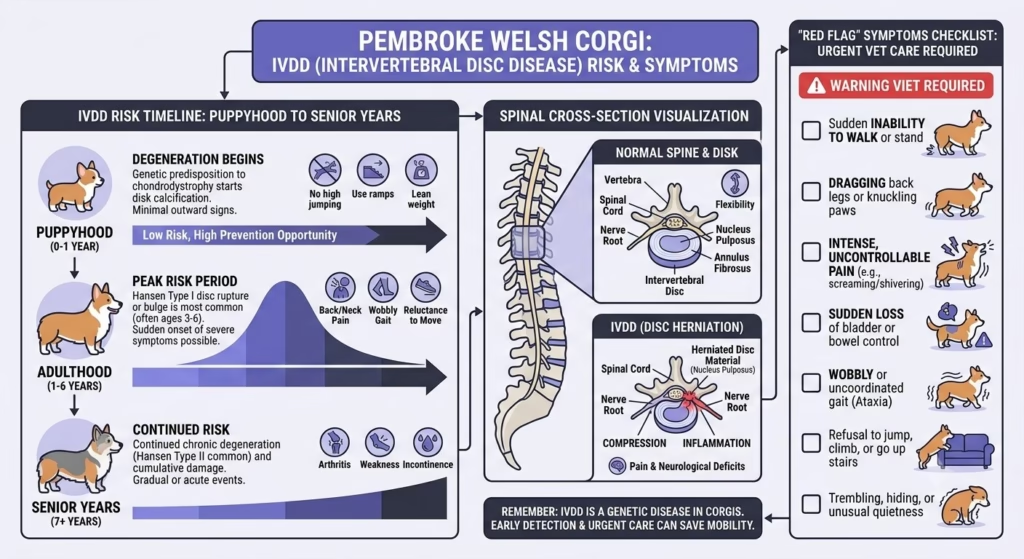
The peak incidence of intervertebral disc disease in Pembrokes occurs during adulthood, typically ages 3–7. Early signs are often subtle: reluctance to jump, stiffness after rest, or minor gait changes attributed to normal aging or minor injury.
Red Flags — consult a veterinarian immediately
- Sudden onset of back pain or yelping when touched
- Reluctance to climb stairs or jump (in a dog previously willing)
- Knuckling of hind paws or dragging of rear limbs
- Urinary or fecal incontinence
- Any combination of back pain with neurological signs (weakness, ataxia)
These signs may indicate disc herniation with spinal cord compression — a veterinary emergency. Delay increases risk of permanent paralysis.
Senior Years (7+ Years)
Degenerative Myelopathy Risk
Pembrokes carry elevated risk for **degenerative myelopathy (DM)**, associated with a mutation in the *SOD1* gene. Affected dogs typically develop hind limb weakness and ataxia after age 8, progressing to paralysis. Genetic testing identifies risk but not certainty; environmental factors and modifier genes influence expression.
Practical Application for This Breed
IVDD Prevention
Daily Management
The FGF4 retrogene cannot be removed from the Pembroke genome, but its consequences can be mitigated:
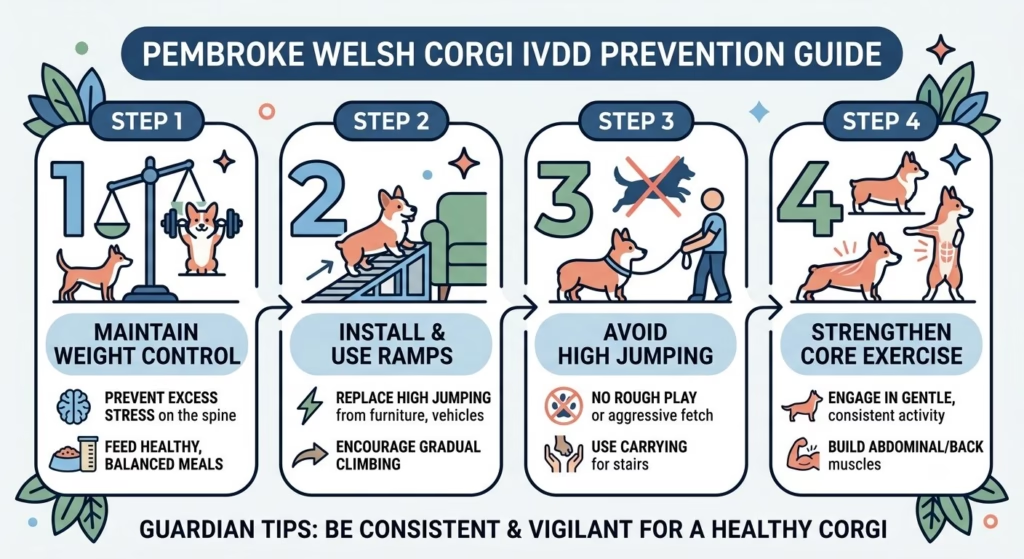
Weight Management
-
-
- Maintain body condition score of 4–5/9 (ribs palpable with slight fat covering)
- Weigh monthly; adjust portions proactively
- Treats ≤10% of daily caloric intake
-
Activity Modification
-
-
- Ramps or steps for furniture access — jumping down is particularly stressful
- Avoid twisting jumps and repeated stair climbing
- Core-strengthening on stable, low surfaces
-
Environmental Design
-
-
- Raised feeding stations reduce neck flexion Non-slip flooring prevents falls
- Car ramps for vehicle access
-
Success Criteria
Your Pembroke maintains full, pain-free mobility into middle age; you can identify early signs of back discomfort before neurological deficits develop.
Behavioral Management
Channeling Herding Drive
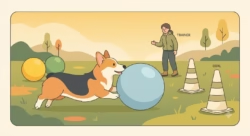
Worked Example
Milo, a 2-year-old Pembroke Welsh Corgi, lives in an apartment with two children. He nips at children's heels when they run, barks excessively at the vacuum cleaner, and circles guests. His Guardian initially interpreted this as aggression and considered rehoming.
Assessment: These are classic heeling drive expressions — not aggression, but historically functional behavior in a non-functional context.
Intervention
- Substitution: Treibball (pushing large balls into goals) twice weekly channels herding drive into structured activity
- Management: Children run in designated areas with Milo separated; vacuuming occurs when Milo is in another room with a puzzle toy
- Training: "Settle" on a mat using positive reinforcement; reward calm guest presence
- Exercise: Two 30-minute walks with sniffing opportunities; mental engagement over physical exhaustion
Outcome: Heel-nipping reduced 80% with redirection; vacuum barking resolved with management; Milo could remain on mat during guest visits. Herding drive was not eliminated — genetics preclude that — but redirected.
Breeding Decisions
Minimum Genetic Testing
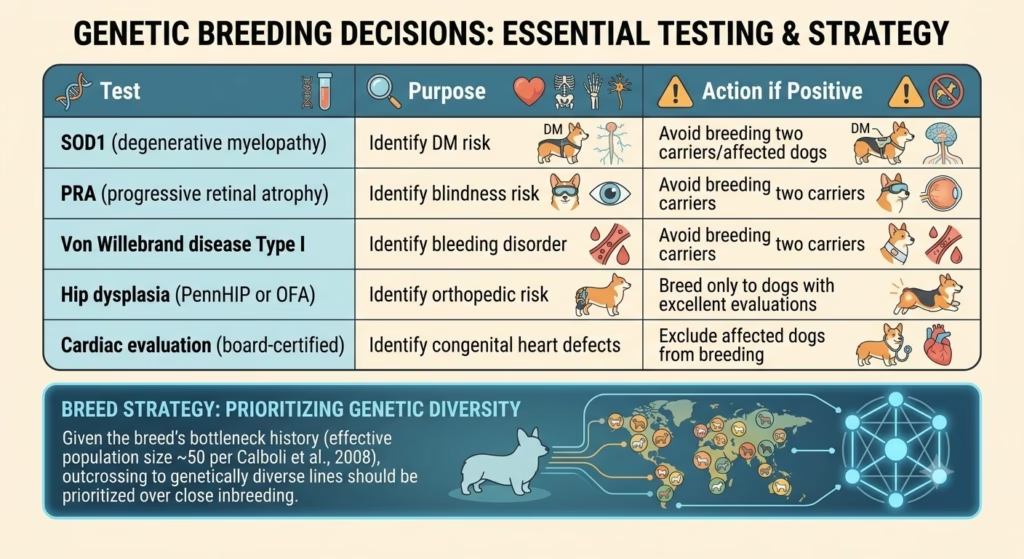
Genetic diversity Given the breed's bottleneck history (effective population size ~50 per Calboli et al., 2008), outcrossing to genetically diverse lines should be prioritized over close inbreeding.
Common Misconceptions
Misconception 1. Pembroke and Cardigan Welsh Corgis are the same breed with different coats.
Correction: They are genetically distinct breeds with separate origins. The Pembroke descends from Spitz-type dogs (Nordic ancestry); the Cardigan from teckel-type dogs (Celtic ancestry). They were only shown as one breed from 1925–1934. Tail length is the most reliable visual distinction: Pembrokes have naturally short/bobbed tails; Cardigans have full, fox-brush tails.
Misconception 2. Corgis are just small dogs with short legs — their dwarfism is cosmetic.
Correction: The FGF4 retrogene produces true chondrodysplasia, a skeletal dysplasia with significant health consequences. It is not a "small dog" gene but a dominant mutation that alters cartilage development throughout the skeleton, creating elevated IVDD risk. This is structural biology, not cosmetic variation.
Misconception 3. A Corgi's heel-nipping and barking are bad behavior that training should eliminate.
Correction: These are genetically heritable working behaviors — heel-nipping from cattle heeling, barking from herding/watchdog function. Suppression without substitution creates frustration and anxiety. Channeling into appropriate outlets (treibball, herding trials) produces well-adjusted dogs; suppression alone often produces behavioral problems.
Related Reading
- Genetics and Inheritance in the Companion Dog — foundational science of inheritance patterns and genetic testing that explains the FGF4 retrogene mechanism in depth.
- What Makes the Beagle Truly Unique — compare the Pembroke's chondrodystrophic dwarfism and heeling behavior with the Beagle's olfactory specialization and pack-hunting genetics.
- Common Corgi Behaviour Problems and Solutions. Predictable expression of a working breed's instincts in a domestic environment.
- Canine Personality and Temperament — explore how breed-specific behavioral genetics interact with individual variation and environmental shaping.

Self-Check Questions
-
-
- Can you explain why the FGF4 retrogene makes the Pembroke both uniquely shaped and uniquely vulnerable to spinal disease?
- If a breeder claims their Pembrokes are "healthier because they have longer legs," what is the genetic reality?
- Why might a Pembroke nip at children's heels despite never having seen cattle — and why is suppression alone an inadequate response?
- What are the three specific red-flag signs that distinguish an IVDD emergency from normal aging stiffness?
-
 1. What does "Corgi" actually mean?
The word comes from Welsh *cor* ("dwarf") and *gi* ("dog") — literally "dwarf dog." This is not a nickname but a precise genetic description. The Pembroke's short legs result from a dominant FGF4 retrogene insertion that produces chondrodysplasia, a true skeletal dysplasia shared with Dachshunds, Basset Hounds, and at least 16 other breeds.
2. Why do Pembroke Welsh Corgis have such short legs?
A duplicated copy of the FGF4 gene, inserted at an unusual location on chromosome 18, causes early calcification of growth plates in long bones. Leg growth halts while the rest of the skeleton develops normally, producing the characteristic disproportionate dwarfism. This is the same mechanism (chondrodysplasia) found in Dachshunds and Basset Hounds, all stemming from a single ancient retrotransposition event.
3. Are Pembroke and Cardigan Welsh Corgis the same breed?
No. They are genetically distinct with entirely separate origins. The Pembroke descends from Spitz-type dogs brought by Flemish weavers or Vikings around AD 1107. The Cardigan descends from teckel-type dogs brought by Celtic settlers around 1200 BCE. They were shown as one breed only from 1925–1934. Genetically, they cluster in different phylogenetic clades.
4. What's the easiest way to tell a Pembroke from a Cardigan?
The tail. Pembrokes carry a *TBXT* gene mutation producing naturally short or bobbed tails. Cardigans do not carry this mutation and have full, fox-brush tails. Additional differences: Pembrokes have more pointed, closely-set ears and lighter bone; Cardigans have rounder, more splayed ears and heavier bone structure.
5. Are Pembroke Welsh Corgis born without tails?
Most are born with naturally short or low-set tails due to the heterozygous *TBXT* mutation. Historically, breeders docked tails further for show standard, but cosmetic docking is now banned or restricted in many countries. Dogs homozygous for the *TBXT* mutation typically die in utero, so all naturally bobtailed Pembrokes are heterozygotes.
6. What is the "fairy saddle" on a Corgi's coat?
Welsh folklore claims Pembrokes were once mounts for fairy warriors, and faint shoulder markings are said to be "fairy saddle" marks. This is cultural legend, not biological fact, though it reflects the breed's deep integration into Welsh rural tradition. Some Pembrokes do show subtle variations in shoulder coat patterning, but these have no known genetic significance distinct from general coat color genetics.
7. Why do Corgis nip at heels?
They were bred as cattle heelers — low enough to dodge hooves while nipping at heels to drive animals forward. This is genetically heritable working behavior, not aggression or misbehavior. Modern Pembrokes redirect this drive toward available moving targets: children, other pets, vacuum cleaners. Channeling through treibball or herding trials is more effective than suppression.
8. Are Pembroke Welsh Corgis good with children?
Generally yes — they are often affectionate and playful. However, their herding instinct means they may attempt to "herd" children by heel-nipping, especially when children run. Early socialization and structured outlets for herding drive are essential. Supervision is recommended with young children until the dog learns appropriate interaction patterns.
9. How intelligent are Pembroke Welsh Corgis?
Pembrokes consistently rank among the most trainable working breeds, but this intelligence is paired with independent decision-making selected for heeling work. They learn quickly but may choose when to comply based on motivation. Mental stimulation is essential — an under-stimulated Pembroke will invent destructive or nuisance behaviors.
10. Why do Corgis bark so much?
Barking was a working tool for moving cattle and farm watchdog alerting. Combined with Spitz-family alertness and excellent hearing, this produces naturally vocal dogs. It is not arbitrary "yappiness" but inherited job behavior. Management requires adequate mental and physical exercise, not just bark suppression.
11. What is a "fluffy" Corgi?
A recessive mutation in the *FGF5* gene produces long-haired "fluffy" Pembrokes. This is a cosmetic difference only — fluffies carry no additional health risk from the coat mutation itself but require more grooming. They are not eligible for show standard but are popular in pet contexts
12. What health problems are Pembroke Welsh Corgis prone to?
- IVDD: Direct structural consequence of FGF4 chondrodysplasia; lifetime risk ~15–25%
- Degenerative Myelopathy: SOD1 mutation; adult-onset progressive spinal cord disease
- Obesity: Exacerbates spinal strain due to body proportions
- Von Willebrand disease Type I: Bleeding disorder
- Exercise-Induced Collapse: Neuromuscular condition
13. Why were Pembroke Welsh Corgis chosen by the British royal family?
Queen Elizabeth II owned more than 30 Pembrokes (and "dorgis," a Corgi-Dachshund cross) from childhood through her reign. This decades-long association elevated the Pembroke from regional Welsh farm dog to global recognition. A 34% surge in UK Pembroke registrations in 2015 was attributed to Instagram-driven popularity — the second major cultural inflection point.
14. Do Pembroke Welsh Corgis do well in apartments?
They can, given sufficient daily exercise and mental stimulation. Their working-dog instincts (barking, chasing, digging) require consistent outlets regardless of living space. A bored Pembroke in a small space is more likely to develop nuisance behaviors than one with adequate enrichment. Ramps for furniture access are essential in any setting to protect spinal health.
15. What's the difference between a Pembroke's personality and a Cardigan's?
Both are intelligent and loyal, but general trends reflect their distinct genetic backgrounds: Pembrokes (Spitz ancestry) tend toward higher energy, more vocalization, and more independent decision-making. Cardigans (teckel ancestry) tend toward calmer, quieter demeanor. Individual temperament varies; these are population-level tendencies, not individual predictions.
[…] genetic testing principles that explains why Beagle health risks resist simple Mendelian testing. What Makes the Pembroke Welsh Corgi Truly Unique — compare the Beagle's olfactory specialization and pack-hunting genetics with the Corgi's […]
[…] history, and the deliberate (and sometimes accidental) choices humans have made over millennia. Canine genetics is not merely a veterinary specialty or a breeder's concern. It is the invisible architecture […]