Common Corgi Behaviour Problems and Solutions
You knew the corgi came with personality. What you might not have anticipated was the barking at 6am, the nipping at your children's heels, or the sofa corner that no longer has a corner. These are not random quirks. They are the predictable expression of a working breed's instincts in a domestic environment — and the gap between what people expect from a corgi and what they actually get is where most of these problems take root.
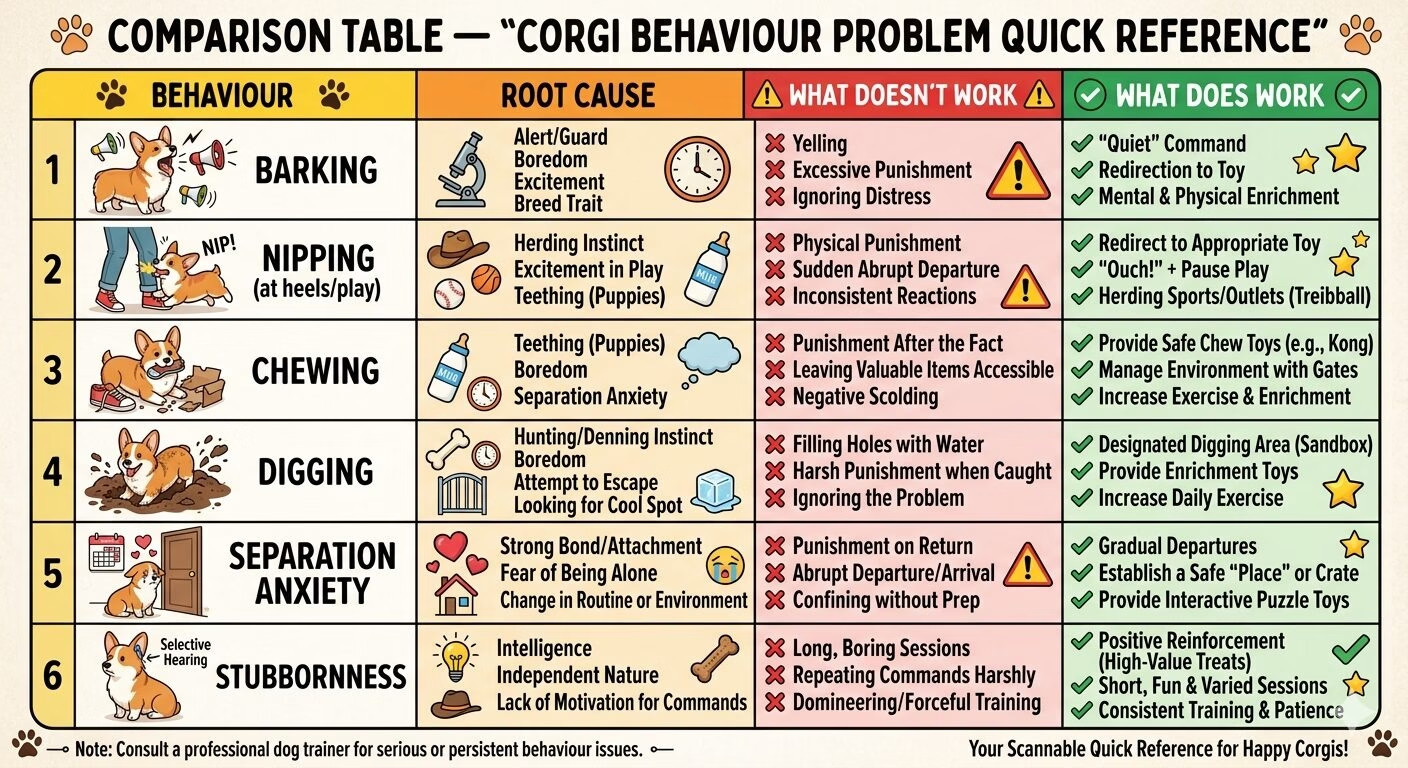
This article is for corgi owners who love the breed but are living with one or more behaviours that are making daily life harder than it should be — and want real solutions, not just reassurance. It is written with the assumption that you have already tried the obvious things and found them insufficient, and that what you need now is an honest, breed-informed explanation of what is actually happening and why.
Corgi behaviour problems are rarely random. Understanding that principle — and applying it consistently — is what makes the difference between an owner who manages their dog and one who is managed by it.
 QUICK ANSWER
What are the most common corgi behaviour problems?
The most common corgi behaviour problems are excessive barking, nipping and herding behaviour, destructive chewing, digging, separation anxiety, and stubborn selective listening. Each behaviour has its roots in the corgi's herding breed instincts. Effective solutions focus on redirecting the instinct rather than suppressing it — using positive reinforcement, consistent structure, and sufficient daily exercise and mental stimulation.
1. Understanding the Corgi Before Addressing the Behaviour
Every corgi behaviour problem covered in this guide has a reason. Not an excuse — a reason. The behaviour is not defiance, and it is not a character flaw. It is a working dog's instincts and psychological needs expressing themselves in an environment they were never designed for. Before any behaviour modification technique will work reliably, you need that framework in place.
Corgis — both Pembroke Welsh and Cardigan Welsh — were bred to herd cattle. Animals larger, heavier, and more stubborn than themselves. This required persistence, independence, vocal communication, and willingness to use their body to move livestock. None of those traits disappear when the dog moves into a suburban home. They redirect. And the direction they take is determined almost entirely by how much structure, stimulation, and consistent guidance the owner provides.
Key traits that underpin every behaviour problem in this guide:
- Intelligence with independence. Corgis learn quickly. They also identify inconsistency quickly and exploit it with impressive efficiency. An owner who enforces a rule seven times out of ten is, from the corgi's perspective, an owner who has negotiated that rule.
- Vocality as a working tool. Herding dogs use sound to communicate and move livestock. The corgi that barks at the postman is using the same instinct that moved cattle. It is not misbehaving — it is doing its job in the only context available to it.
- Physical assertiveness. Nipping and herding are not aggression — they are the physical expression of a task the dog is neurologically primed to perform.
- Social dependency. Corgis are people-oriented and pack-focused. Isolation is genuinely distressing for them in a way it is not for more independent breeds.
- The Pembroke vs. Cardigan distinction. Pembrokes tend to be more energetic, reactive, and vocal. Cardigans are generally slightly more measured and adaptable, though the behavioural differences are of degree rather than kind — both are herding dogs and both exhibit the full range of behaviours covered here.
The single most important reframe for this entire guide, almost every corgi behaviour problem is a case of the right instinct in the wrong context. The solution is almost never punishment. It is redirection, structure, and consistency.
2. Excessive Barking
Causes and Correction Methods
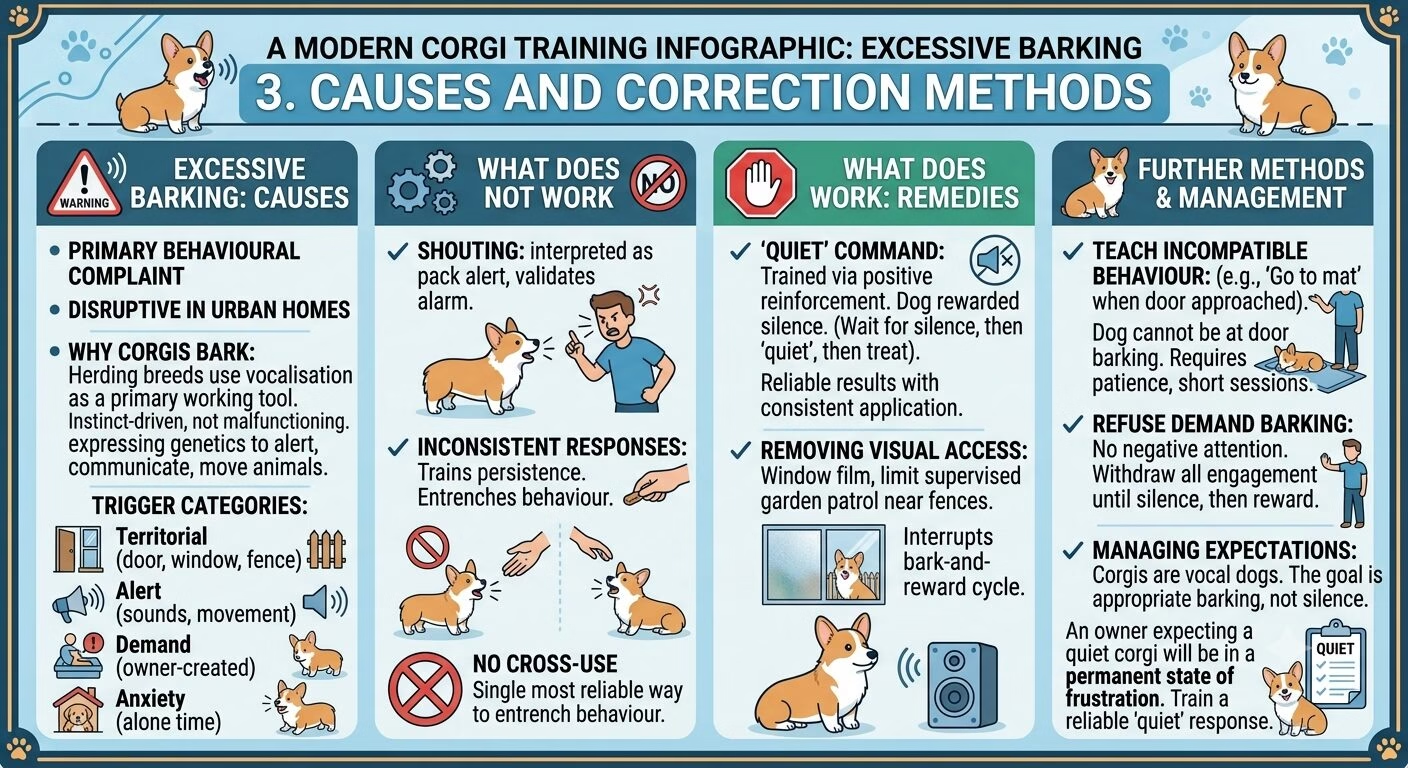
Barking is consistently the most reported behavioural complaint among corgi owners and one of the most disruptive in an urban or semi-urban home. It is also the most commonly mishandled — because the instinctive response (shouting at the dog to stop) reliably makes it worse.
Why corgis bark
Herding breeds use vocalisation as a primary working tool — to alert, to communicate, to move animals. A corgi that barks at the postman, the garden gate, a passing dog, or the sound of the neighbour's car is not malfunctioning. It is expressing exactly what its genetics were designed to express.
Trigger categories
- Territorial barking, directed at the door, windows, fence line, or any perceived boundary intrusion. This is the most instinct-driven category and the hardest to eliminate entirely.
- Alert barking, reactive to sounds and movement — a car door, a distant dog, a bin lorry. Common in corgi breeds with high reactivity levels.
- Demand barking, used to obtain attention, food, play, or access. This category is owner-created and owner-solvable.
- Anxiety barking, vocalisation when left alone, often continuous, often accompanied by other separation-related behaviours.
What does not work
- Shouting. The corgi frequently interprets this as the owner joining in — the pack is now also alarmed, which validates the original alert.
- Inconsistent responses. Responding to demand barking sometimes and ignoring it other times trains the dog that persistence pays off. This is the single most reliable way to entrench the behaviour.
What does work
- The "quiet" command, trained through positive reinforcement. The dog is rewarded for silence, not punished for barking. This takes time to build but produces reliable results with consistent application.
- Removing visual access to trigger points — lower-pane window film, limiting unsupervised garden patrol time near fence lines. If the dog cannot see the trigger, the bark-and-reward cycle is interrupted.
- Teaching an incompatible behaviour. A dog that has been trained to go to a specific mat when someone approaches the door cannot simultaneously be at the door barking. This requires patience and multiple short training sessions but is one of the most effective long-term interventions for territorial barking.
- Refusing to reward demand barking under any circumstances, including negative attention. The only response is withdrawal of all engagement until silence is achieved, followed by immediate reward.
Managing expectations
Corgis will always be vocal dogs. The goal is appropriate barking — alert behaviour that resolves within a reasonable period — not silence. An owner expecting a quiet corgi will be in a permanent state of frustration. An owner who has trained a reliable "quiet" response has solved the problem that actually matters.
Nipping and Herding Behaviour
This is the behaviour that most surprises new corgi owners, particularly those with young children. It is also the behaviour most frequently misunderstood — which leads to responses that make it worse rather than better.
Why corgis nip
Herding cattle requires physical contact. Corgis nip at heels to move livestock. In a domestic setting, this instinct redirects immediately onto moving targets — children running, joggers in the park, cyclists, and adults moving quickly through the house. This is not aggression. It is work.
Recognising the pre-nip sequence
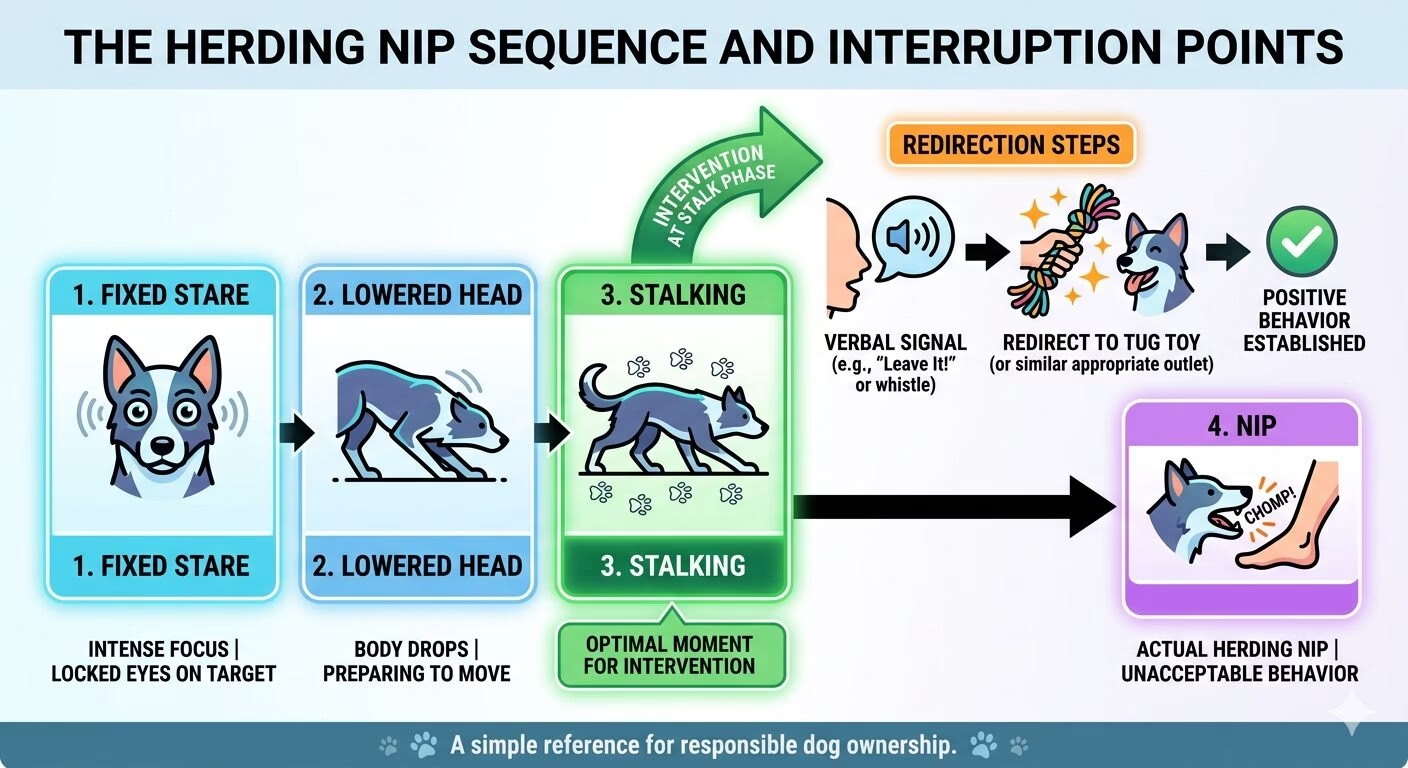
Most corgi herding nips are preceded by a recognisable circuit: a fixed stare at the target, a lowered head, and a stalking movement. Owners who learn to identify this pre-nip behaviour can interrupt the sequence before contact occurs. Interruption at this stage — a clear verbal signal followed by redirection to an appropriate outlet — is significantly more effective than responding after the nip.
The distinction from aggression
Herding nips are typically inhibited (not full-force bites), targeted at movement, and unaccompanied by growling, raised hackles, or stiff body posture. Misidentifying herding behaviour as aggression leads to inappropriate responses that escalate rather than resolve the problem. If the behaviour includes any of those aggression indicators, it warrants professional assessment — but for the vast majority of corgi nipping incidents, this is not the case.
What does not work
- Yelping, which can excite rather than deter a herding-motivated corgi, particularly in puppies.
- Physical punishment, which damages trust without disrupting the instinct.
Tolerating puppy nipping on the assumption they will grow out of it. They will not. - The behaviour becomes more physically significant as the dog grows and the habit becomes entrenched.
What does work
- A firm, immediate verbal signal — a clear, single-syllable sound — followed by complete withdrawal of attention. The dog learns that nipping ends the interaction.
- Redirecting onto a tug toy or chew as a legitimate physical outlet for the same impulse. A corgi that has an appropriate outlet for its herding drive has significantly less incentive to use humans.
- Teaching children to stand still rather than run when the corgi enters herding mode. Running amplifies the drive. Stillness removes the trigger.
- Consistent interruption of the stalking sequence before contact occurs — this is the most efficient intervention point.
Adult nipping that has been tolerated through puppyhood
This is a materially harder problem to resolve and warrants professional trainer involvement. The instinct is the same, but the habit is now deeply reinforced and the dog is physically larger. Do not attempt to manage adult nipping that involves regular contact through internet-based advice alone.
Destructive Chewing
Chewing peaks during puppyhood but can persist into adulthood in under-stimulated dogs. Understanding what the chewing is communicating is more useful than focusing on what has been chewed.

Why corgis chew
- Teething discomfort in puppies (approximately 3–6 months, with the most aggressive phase between 4–5 months as adult teeth come through).
- Boredom and insufficient mental stimulation — a corgi with unspent cognitive energy will create its own occupation.
- Anxiety, particularly in dogs with emerging separation-related distress.
- Natural behaviour that in a working context would be expressed through sustained physical activity.
What typically gets targeted
Items with strong human scent — shoes, remote controls, spectacle frames, clothing, furniture items near the owner's regular seating position. This is not spite. It is comfort-seeking behaviour. The dog is drawn to objects that carry the reassuring scent of its owner.
The stimulation connection
A corgi that is adequately exercised, regularly trained, and mentally engaged chews significantly less. Before treating destructive chewing as a behavioural problem requiring correction, assess whether the dog's daily physical and cognitive needs are being met. In most cases, destructive chewing is a symptom of unmet need, not a standalone problem requiring its own intervention.
What does not work
- Punishing after the fact. Dogs cannot connect retrospective punishment to the behaviour — they connect it to the owner's arrival, which increases anxiety and can paradoxically increase chewing.
- Providing excessive soft toys that mimic the texture of household items. This creates ambiguity: the dog cannot reliably distinguish between the squeaky toy and the child's soft toy of the same texture.
What does work
- Management first. Remove access to chewable items when the dog is unsupervised. This is not a solution, but it prevents the behaviour from being practised and reinforced while the longer-term approach is implemented.
- Providing appropriate, durable chew outlets: rubber Kongs (frozen with stuffing for extended engagement), Nylabones, bully sticks. These provide the physical satisfaction of chewing without the household casualty list.
- Crate training as a containment tool during unsupervised periods in the early months. A dog in a secure, familiar crate cannot destroy the living room. This is management, not punishment, and it is a legitimate and effective part of the toolkit.
- Increasing daily mental stimulation — short training sessions (5–10 minutes, twice daily), puzzle feeders that replace some portion of the daily food allocation, and scent-based games that engage the dog's primary cognitive drive.
Digging
Less universally reported than barking or nipping, but a significant source of frustration for corgi owners with gardens — particularly those who have invested in planting.
Why corgis dig
- Boredom and excess energy are the most common drivers. A physically under-exercised corgi will find its own aerobic outlet.
- Seeking cool ground in warm weather — digging to the cooler soil layer is a self-regulating behaviour.
- Attempting to escape under fencing, typically triggered by an external stimulus (a scent, a sound, another dog).
- Burying high-value items — food, bones, favoured toys — which is instinctive resource-conservation behaviour.
The garden destruction pattern
Corgis that dig tend to return to the same locations repeatedly. Fence lines, soft soil areas near planting beds, and shaded corners are common targets. If one hole is filled without addressing the underlying cause, a new hole appears within days.
What does not work
Filling holes and punishing after the fact — neither connects the consequence to the behaviour in a way the dog can use. Physical punishment in the garden context also risks creating anxiety around outdoor time generally.
What does work
- Increasing physical exercise to reduce the excess energy that drives habitual digging. Two thirty-minute walks per day, or one longer session with active play, is a reasonable minimum for an adult corgi.
- Providing a designated digging zone — a sandbox or clearly demarcated garden area — where digging is not only permitted but actively encouraged with buried toys and treats. Many owners find this redirects the instinct effectively within two to three weeks.
- Physical deterrents for fence-line digging: buried wire mesh (horizontal, not vertical) along the base of fencing, or concrete edging, prevents tunnelling without punishment.
- Supervision during the initial training phase. An unsupervised corgi in a garden during the period when the digging habit is being redirected will dig. Supervised access, with redirection to the designated zone, is more productive than hoping the problem resolves independently.
Separation Anxiety
Given the corgi's strong social bonding and pack orientation, separation anxiety is among the more emotionally distressing issues a corgi owner can face — for both the dog and the household. It ranges from mild vocalisation in the first few minutes after departure to sustained destructive behaviour and self-distress in severe cases.

Why corgis develop separation anxiety
Corgis are bred to work alongside humans and other animals. Isolation runs counter to their core social wiring. Dogs that have been over-attached to one person from puppyhood, those that have never been exposed to graduated alone time, and those that have experienced an abrupt change in household routine (a return to work after a period of extended home presence) are most vulnerable.
Behavioural indicators
- Vocalisation (howling, sustained barking) that begins immediately or within a few minutes of the owner's departure.
- Destructive behaviour concentrated near exits — doors, windows, gate-adjacent areas.
- Toileting accidents in a house-trained dog, particularly in the exit zone.
Signs of distress visible on camera during absence: pacing, repetitive behaviour, refusal to settle. - In severe cases, self-harm behaviours (excessive paw licking to the point of lesion, flank biting, hair loss from stress).
The common mistake
Owners who make departure and return highly emotionally charged — long, consoling goodbyes; excited, effusive reunions — inadvertently amplify the dog's anxiety around their absence. The dog learns that departures are significant events worth becoming distressed about, and that returns are followed by high-value social reward. Both patterns reinforce the anxiety cycle.
What does work
- Graduated desensitisation to departure cues. Pick up keys, put on shoes, pick up a bag — without leaving. Repeat until the dog stops responding to these cues as reliable predictors of absence. This takes days to weeks depending on the dog's current anxiety level.
- Building alone time incrementally. Start with absences of two to three minutes, returning before distress begins. Extend duration gradually, always returning before the dog reaches the threshold of visible anxiety.
- Departure enrichment. A stuffed, frozen Kong given only when the owner leaves creates a positive association with departure. The dog begins to anticipate the Kong rather than the absence.
- Low-key departures and returns. Leave without ceremony. Return calmly and withhold greeting until the dog is settled.
- In moderate to severe cases, referral to a veterinary behaviourist — not a general trainer — is the appropriate next step. Separation anxiety at the more significant end of the spectrum does not resolve through training techniques alone. A combined behavioural and pharmacological approach is often required and is nothing to be reluctant about.
Stubbornness and Selective Listening
Corgis have a well-earned reputation for doing exactly what they want, exactly when they want to do it. Most owners describe the experience as less like having a disobedient dog and more like negotiating with a small, opinionated colleague who has done their own cost-benefit analysis of your request.
Why corgis are stubborn
Herding dogs were required to make independent decisions in the field. Waiting for handler instruction was not always an option. This independence is functional intelligence in a working context. In a training context, it presents as a dog that knows exactly what is being asked of it and is actively calculating whether compliance is worth the effort.
The compliance calculation
A corgi's compliance is directly proportional to the perceived value of the reward on offer and the reliability of the reinforcement history. A command that has been reinforced inconsistently, or rewarded with low-value treats, will be selectively ignored. A command with a strong reinforcement history and a high-value reward will be performed reliably — even by a corgi who would otherwise prefer not to.
What does not work
- Repetitive commands without reinforcement. Asking "sit, sit, sit, sit" without consequence trains the dog to wait for the fourth or fifth iteration. The command word becomes meaningless.
- Training sessions that exceed the dog's engagement window (typically 5–10 minutes per session). A disengaged corgi is not stubborn — it is bored, and boredom looks identical to stubbornness from the owner's perspective.
- Dominance-based approaches. These erode trust without improving compliance in a breed that is both sensitive and strategic. A corgi that has learned to be wary of its owner is not a more obedient dog — it is a less engaged one.
What does work
- Short, high-value, varied training sessions. Five to ten minutes, twice a day, using the most motivating reward available — for most corgis, small pieces of high-quality protein significantly outperform dry kibble.
- Building a strong reinforcement history for core commands. Sit, recall, and stay practiced hundreds of times in varied contexts become habitual responses rather than situational choices.
- Using the corgi's intelligence as a training asset rather than treating it as an obstacle. Corgis respond well to puzzle-based training, trick training, and agility-style sequences that give them a job to engage with.
- Accepting that compliance is a relationship outcome. A corgi that trusts its owner, finds training sessions rewarding, and has its physical and cognitive needs consistently met is a substantially more responsive dog than one that does not.
Behaviour Modification Principles That Apply Across All Problems
Rather than repeating the same methodological advice across each section, the following principles apply universally. They are the foundation on which every specific technique in this guide depends.
Consistency is non-negotiable
Corgis are exceptionally good at identifying and exploiting inconsistency. Every person in the household must apply the same rules, responses, and boundaries, in the same way, every time. A rule enforced by one family member and ignored by another is not a rule from the dog's perspective — it is a variable that the dog will probe until it finds the exception.
Positive reinforcement over punishment
Punishment-based training creates anxiety and erodes trust in a breed that is both sensitive and strategically minded. Positive reinforcement — marking and rewarding the behaviour you want, removing all reward (including attention) for the behaviour you don't — is both more effective and less damaging to the relationship that makes training possible in the first place. This is not a soft approach. It is the approach that produces reliable, durable behaviour change in corgis.
Timing
Reinforcement or interruption must occur within approximately two seconds of the behaviour to be meaningfully associated with it by the dog. Retrospective correction — reacting to something that happened while you were out of the room — is not behaviour modification. It is punishment without context, and it produces anxiety without learning.
Management is not failure
Using crates, baby gates, leads, and environmental controls to prevent unwanted behaviour while training is in progress is responsible ownership, not a shortcut. You cannot train a behaviour you cannot manage. Preventing the dog from practising the unwanted behaviour while the replacement behaviour is being established is part of the process.
Exercise and mental stimulation as a baseline
A significant proportion of corgi behaviour problems reduce materially when the dog's physical and cognitive needs are consistently met. An adult corgi requires at minimum one hour of exercise per day — ideally in a combination of structured walking and off-lead running — and regular mental engagement through training, puzzle feeding, or scent work. This is not a treatment for specific problems; it is the condition under which all other interventions work.
When to seek professional help
Persistent aggression, severe separation anxiety, resource guarding with a history of biting, and any behaviour that feels genuinely unsafe should be referred to a qualified canine behaviourist — not managed through online advice. A qualified behaviourist (look for membership of COAPE, APBC, or an equivalent accredited body) will conduct an assessment and develop a programme tailored to the dog and household. Internet guides, including this one, have limits.
Working With Corgi Personality, A Long-Term View
The most useful reframe for everything covered in this guide is this: corgi behaviour problems are not character defects to be eliminated. They are breed characteristics to be managed and channelled. The corgi that barks, nips, digs, and argues with you is the same corgi that is devoted to you, responsive to you, and capable of impressive obedience when the relationship supports it.
Owners who approach corgi ownership as a partnership — understanding what the dog needs, providing appropriate outlets for its drives, and maintaining clear and consistent boundaries — consistently report fewer behavioural problems and more satisfaction with the relationship.
Practical daily habits that prevent problems from developing or recurring
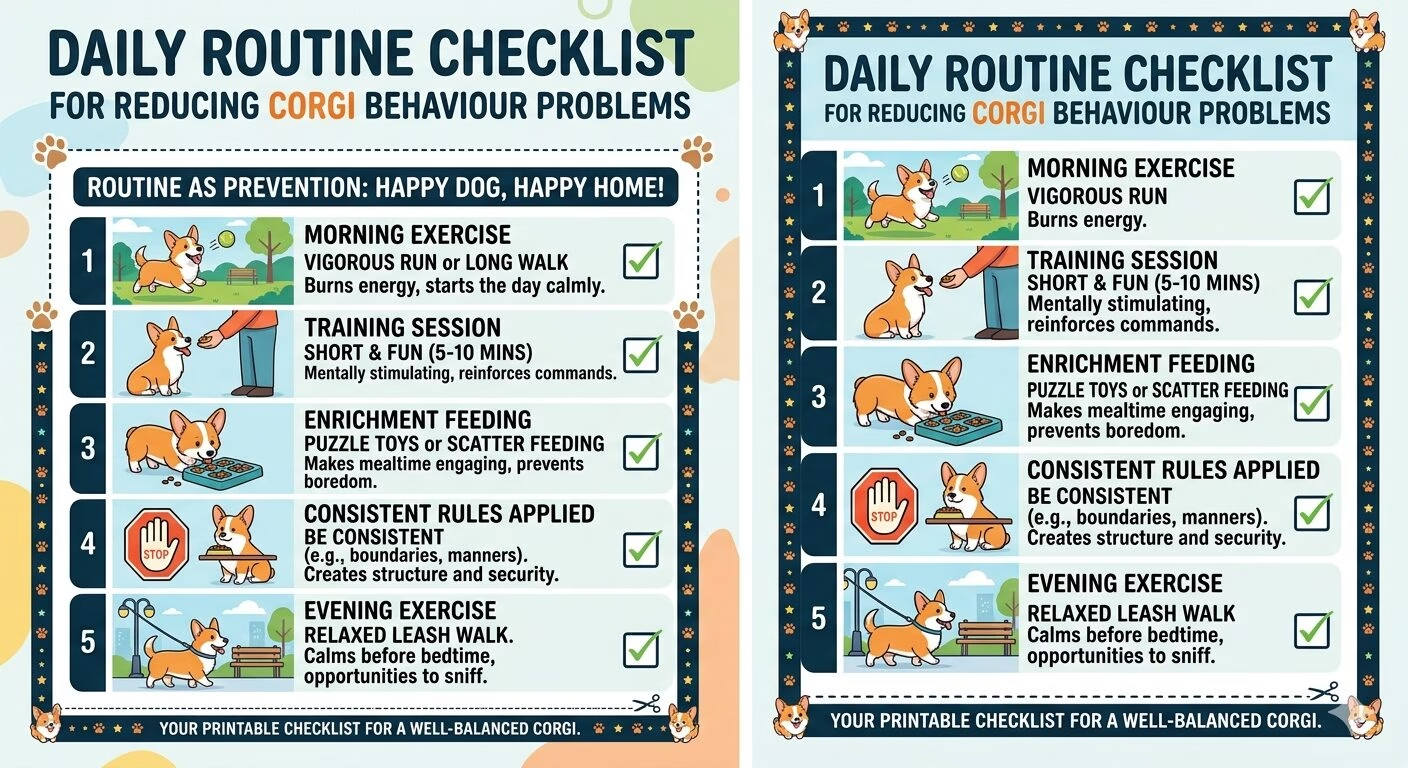
- A minimum of one hour of physical exercise, daily, regardless of weather or schedule.
- At least one short training session (5–10 minutes), daily — not as a performance exercise but as a relationship and mental engagement tool.
- Enrichment feeding, at least one meal per day delivered through a puzzle feeder, snuffle mat, or Kong rather than a bowl.
- A predictable daily routine. Corgis are time-oriented dogs and routine reduces low-level anxiety that, over time, amplifies into the behavioural problems covered in this guide.
- Clear, consistent household rules applied by everyone in the home.
Many of the behavioural patterns owners encounter were either shaped or missed during the puppy's critical developmental weeks — a process that begins in the whelping room, long before the dog arrives in your home. Managing Multiple Litters Simultaneously on PemberDiamonds explores the breeder's role in that foundation in detail, and provides useful context for understanding why some dogs arrive better prepared for domestic life than others.
 EXPERT INSIGHT
From a canine behaviourist specialising in herding breeds:
"The pattern I see most consistently in corgi cases referred to me is not a dog with a behaviour problem — it is a dog with an unmet need that has found a way to meet it that the owner finds unacceptable. The barking is meeting the need for self-expression and territory management. The nipping is meeting the need for physical engagement and movement. The chewing is meeting the need for cognitive occupation in a dog that has nothing else to do with its brain.
What owners rarely expect is that the single most reliable predictor of a corgi's behaviour in the home is not the training they have received, but the regularity and quality of the owner's daily routine. I can work with a corgi for six weeks and produce significant improvement — and then watch that improvement erode within a month if the household routine destabilises. Corgis do not generalise well from session to session unless the underlying conditions are consistent.
The question I ask every corgi owner at intake is not 'What is the dog doing wrong?' It is 'What does the dog's Tuesday look like?' Because nine times out of ten, the answer to the first question is contained within the answer to the second."
 FAQ
FAQ
1. Why does my corgi bark at everything?
Corgis use vocalisation as a working tool — herding breeds communicate with sound instinctively. Territorial, alert, demand, and anxiety barking all have different triggers and require different responses. The most effective long-term approach is training a reliable "quiet" command through positive reinforcement, removing visual access to key trigger points, and teaching an incompatible behaviour (such as going to a mat) as the default response to arrivals and boundary alerts.
2. Is corgi nipping a sign of aggression?
In most cases, no. Herding nips are instinct-driven behaviours targeted at movement, typically inhibited in force, and unaccompanied by growling or stiff body posture. The distinction matters because the correct response to herding behaviour (firm verbal signal, withdrawal of attention, redirection to an appropriate outlet) is very different from the response required for genuine aggression, which warrants professional behavioural assessment.
3. How do I stop my corgi from nipping children?
The most effective strategy combines teaching children to stand still rather than run when the corgi enters herding mode, interrupting the pre-nip stalking sequence with a clear verbal signal, and redirecting immediately to a tug toy. Consistent interruption before contact occurs, applied by all members of the household, typically produces clear improvement within two to four weeks. Adult nipping that has been tolerated through puppyhood requires professional trainer involvement.
4. Why does my corgi ignore commands it clearly knows?
Corgis apply their own cost-benefit analysis to every command. If the reward on offer is insufficient — or if the command's reinforcement history is inconsistent — the dog calculates that compliance is not worth the effort. Practical solutions: use higher-value rewards (small pieces of cooked chicken consistently outperform dry kibble for most corgis), keep training sessions short and high-engagement, and build a strong reinforcement history by practicing core commands daily in varied contexts until compliance becomes habitual.
5. How do I manage separation anxiety in a corgi?
Begin with graduated desensitisation to departure cues — practising the actions associated with leaving (picking up keys, putting on a coat) without actually leaving, until the dog stops responding to those cues as reliable predictors of absence. Build alone time incrementally from very short absences. Use departure enrichment (a stuffed Kong given exclusively when you leave) to build a positive association with your absence. For moderate to severe cases, refer to a veterinary behaviourist rather than a general trainer.
6. What is the best way to manage a corgi's digging?
Provide a designated digging zone — a sandbox or defined garden area — where digging is actively encouraged with buried toys and treats. This redirects the instinct constructively rather than attempting to suppress it entirely. Simultaneously, increase daily physical exercise to reduce the excess energy that typically drives habitual digging. Physical deterrents (buried wire mesh along fence lines) address escape-motivated digging at the source.
7. How long does behaviour modification take with a corgi?
Consistent daily reinforcement of a new behaviour typically produces visible improvement within two to four weeks for most of the problems covered here. Complete replacement of an entrenched habit — particularly nipping or separation anxiety that has been present for months or years — takes significantly longer and requires professional input in many cases. Improvement is almost always non-linear: expect some regression during household disruptions or routine changes.
8. When should I seek professional help for my corgi's behaviour?
Seek professional help for: persistent aggression of any kind, resource guarding that has involved biting or near-biting, separation anxiety that is not responding to owner-led desensitisation after four to six weeks of consistent effort, and any behaviour that feels genuinely unsafe. A qualified canine behaviourist (accredited through COAPE, APBC, or equivalent) is the appropriate referral, not a general obedience trainer.
9. Does breed line affect how severe these behaviour problems are?
Yes, meaningfully. Corgis from working lines tend to show more intense herding drive, higher reactivity, and greater physical assertion than those from show or companion lines. A corgi purchased from a breeder who has selectively bred for temperament suitability in domestic settings will typically present with less extreme expressions of the behaviours covered here. This is one of the strongest arguments for sourcing from a breeder who prioritises temperament alongside conformation.
10. Do all corgis have these behaviour problems?
Not all corgis exhibit all of these behaviours at a problematic level. A corgi with adequate daily exercise, regular mental stimulation, consistent household rules, and early socialisation training may show mild or entirely manageable versions of each. The behaviours become problems primarily when the dog's physical and cognitive needs are chronically unmet, when household rules are applied inconsistently, or when instinctive behaviours have been inadvertently reinforced over time. The corgi is not a difficult breed — it is a demanding one.
CONCLUSION
The three most important things to carry forward from this guide are these. First, corgi behaviour problems are not random — each one has a root in breed instinct or unmet need, and understanding that root is what makes the solution stick. Second, consistency across the entire household is not optional — a rule enforced by one person and ignored by another does not exist in a corgi's world. Third, the daily baseline of exercise, training, and routine is not a supplement to behaviour management — it is the foundation on which everything else depends.
The promise of this guide was not a quick fix. It was an honest, breed-specific framework for understanding what is happening and why your previous approaches may not have worked. Corgi behaviour problems respond well to informed, consistent ownership — and the owners who put in the structured daily effort consistently report that the relationship on the other side of it is worth considerably more than the effort cost.
In the First-Time Owner Guides category, this article represents the beginning of a longer conversation about what it means to live well with a herding breed. The behaviours covered here are manageable — not by working around the corgi's nature, but by working with it.
 CALL TO ACTION
If you are ready to go deeper on any of the topics covered here, Your Corgi Is Not Misbehaving. Here Is What Is Actually Happening. offers an expanded look at the psychological framing behind corgi behaviour that many owners find genuinely useful as a companion read.
For the family dynamics side of corgi ownership — how your household setup affects the behaviour you are living with — Corgi Behavior Guide is the next natural step.
The CorgiCrew community is built for owners who take their dog's wellbeing seriously. Keep reading.
[…] Common Corgi Behaviour Problems and Solutions. Predictable expression of a working breed's instincts in a domestic environment. […]