Understanding Dog Communication
Dogs are communicating constantly. Every shift in posture, every ear position, every flicker of eye contact is part of a continuous conversation — one that most owners are only partially reading at any given moment. For families considering a Corgi or already raising one alongside young children, learning to read that conversation accurately is not a pleasant extra. It is the difference between a harmonious household and a series of preventable incidents.
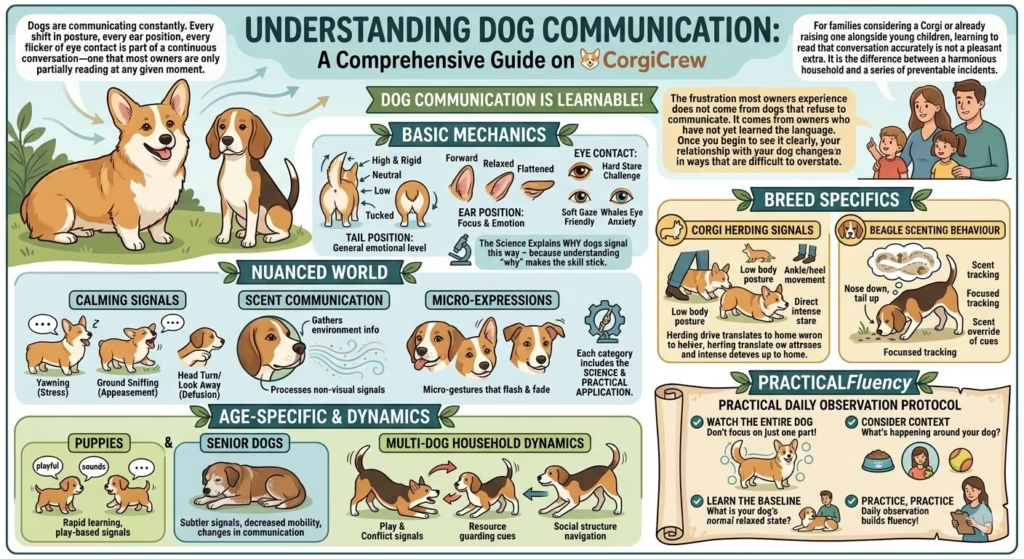
The frustration most owners experience does not come from dogs that refuse to communicate. It comes from owners who have not yet learned the language. Dog communication is learnable, and once you begin to see it clearly, your relationship with your dog changes in ways that are difficult to overstate.
This guide to understanding dog communication is the most comprehensive resource on CorgiCrew for decoding your dog's signals — from the basic mechanics of tail position and ear movement to the nuanced world of calming signals, scent communication, micro-expressions, and the science that explains why dogs signal the way they do. We have included specific sections on Corgi herding signals and Beagle scenting behaviour, dedicated coverage of puppies and senior dogs, multi-dog household dynamics, and a practical daily observation protocol for owners who want to build real fluency. The science behind each signal category is explained alongside the practical application — because understanding *why* dogs communicate as they do makes the reading skill stick.
 QUICK ANSWER
What Is Dog Communication and How Does It Work?
Dogs communicate through a combination of body language, facial expressions, vocalisations, olfactory signals, and deliberate calming behaviours. Key channels include tail position and movement, ear orientation, eye contact, posture, scent marking, and calming signals used to reduce tension. Understanding dog communication requires reading these signals together, not in isolation, and accounting for individual variation.
Why Understanding Dog Communication Matters
Miscommunication between dogs and humans is the root cause of the vast majority of behavioural incidents — including bites that owners describe as coming "out of nowhere." In almost every case, the dog communicated its distress through multiple signals before escalating. The signals were there; they were not read.
Studies from the American Veterinary Medical Association consistently identify inadequate owner understanding of canine body language as a primary contributing factor in dog bite incidents involving children. This is not about blaming owners — it is about closing a knowledge gap that has real consequences.
- Research published in Applied Animal Behaviour Science found that children under 6 are the age group least able to correctly identify stress signals in dogs, and the group most frequently bitten.
- The same research found that brief parental education about dog body language measurably improved children's safety behaviour around dogs.
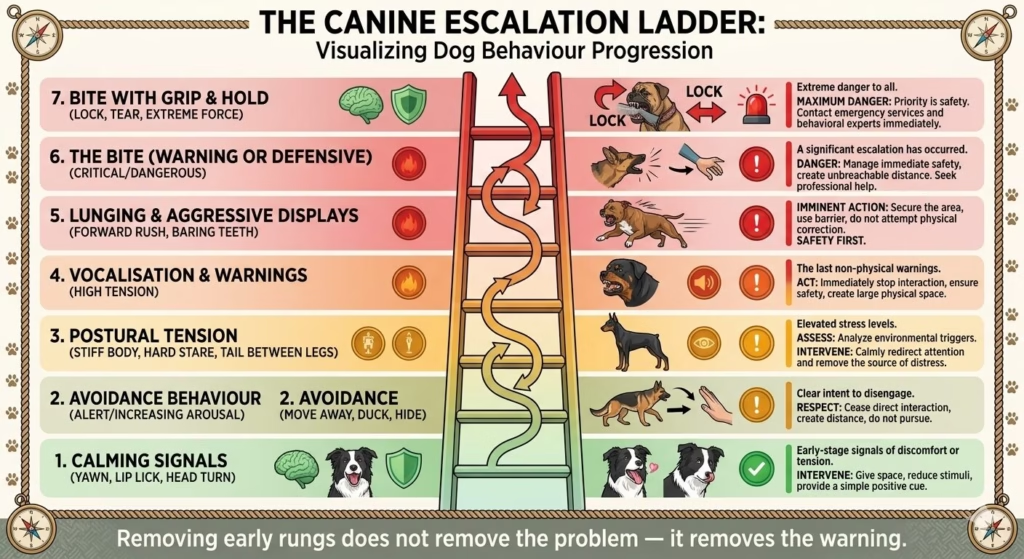
- Dogs rarely escalate to biting without prior communication of discomfort. The escalation ladder — from subtle calming signals to stiffening to growling to snapping to biting — is consistent and learnable.
- A 2020 study in *Frontiers in Veterinary Science* found that even experienced dog owners misidentified stress signals in dogs approximately 40% of the time when signals were presented in isolation, improving significantly when signals were presented in contextual clusters.
For families with children, this knowledge is protective. For every dog owner, it is the foundation of a relationship built on genuine understanding rather than assumption. And for those already working on training — this knowledge transforms the training relationship in ways that no technique alone can replicate.
The Primary Channels of Canine Communication
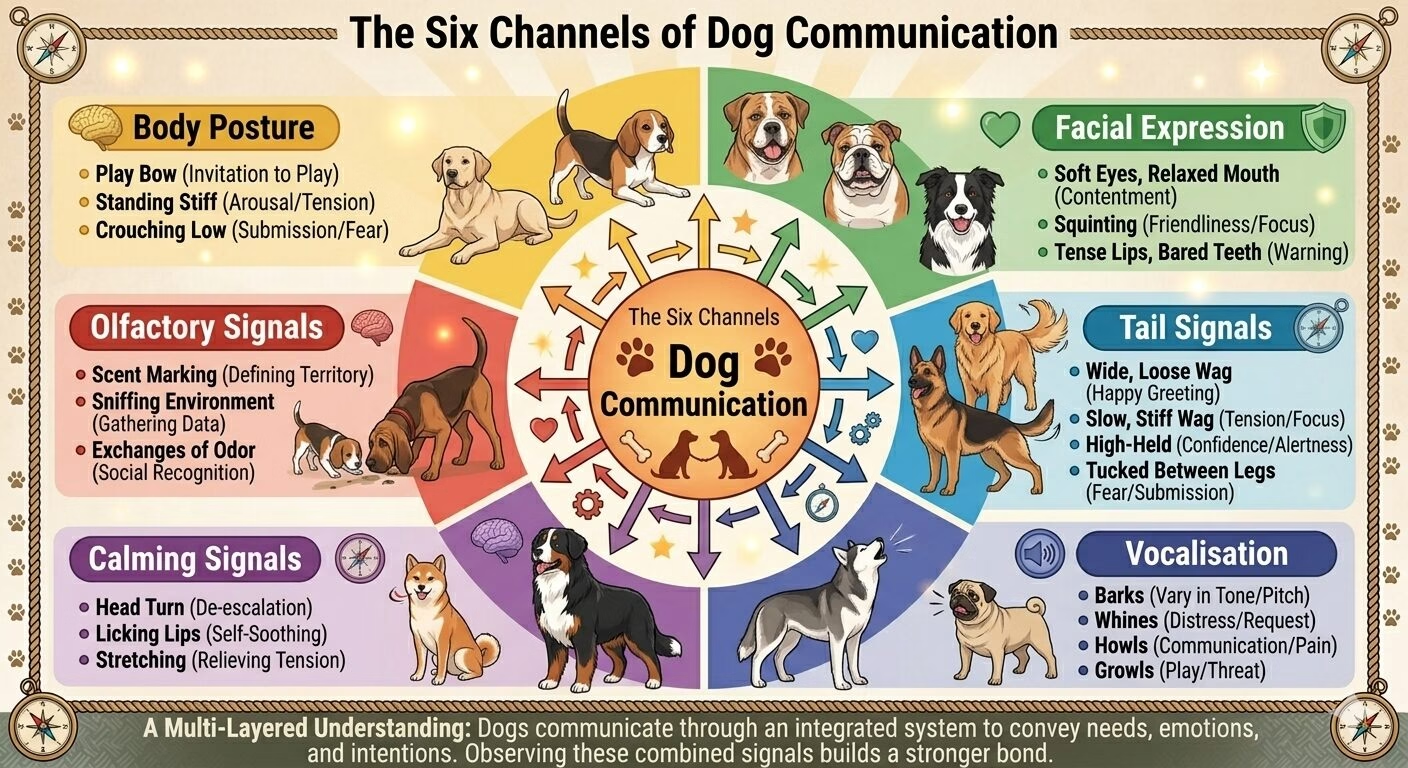
Dogs do not communicate in a single channel. Reading a dog accurately requires integrating information across multiple physical and behavioural systems simultaneously.
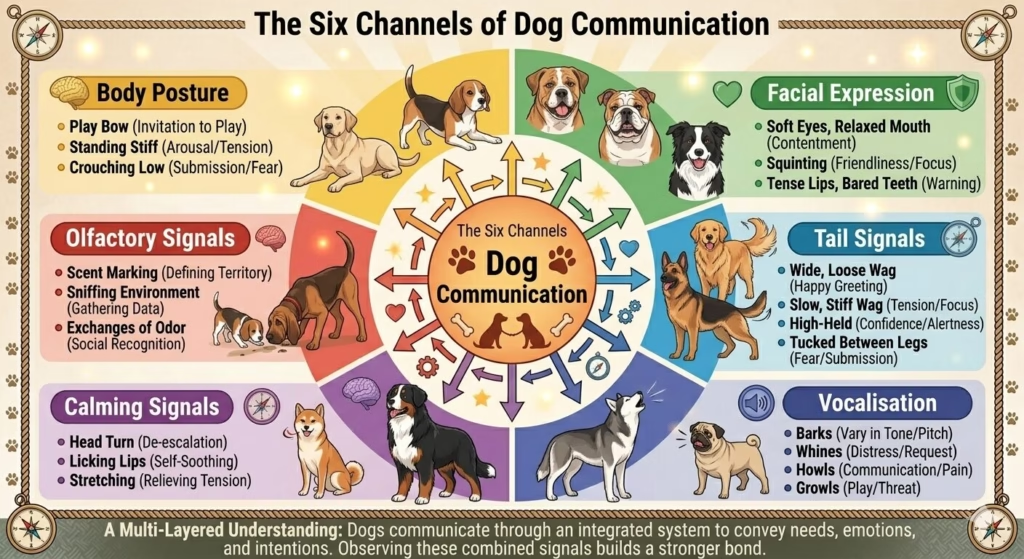
The six primary communication channels are:
1. Body posture — the overall orientation, height, and tension of the dog's body. The most information-rich single channel.
2. Facial expression — ear position, eye softness or hardness, mouth tension, lip position, and whisker orientation. Includes subtle micro-expressions often missed at normal observation speed.
3. Tail position and movement — not just whether the tail is wagging, but how it is wagging, at what height, and with what speed and lateralisation.
4. Vocalisation — the type, pitch, frequency, and context of sounds produced.
5. Calming and appeasement signals — a distinct category of deliberate behaviours specifically used to communicate non-threat intent or to de-escalate tension.
6. Olfactory signals — scent marking, directed sniffing, and the chemical communication layer that operates largely below human perception but represents one of the dog's primary social information channels.
Each channel operates semi-independently and can contradict the others. A dog with a wagging tail and a stiff body is not a happy dog. A dog with a low tail and a relaxed face may simply be calm. The capacity to hold these channels in simultaneous awareness — rather than fixating on a single signal — is the core skill in canine communication literacy.
The Science Behind the Signals — Ethology and Physiology
Understanding why dogs signal the way they do is not merely academic — it changes how owners interpret ambiguous signals and why certain training responses are more effective than others. This section provides the ethological and physiological foundations underpinning the signal categories covered in the sections that follow.
What Ethology Tells Us
Ethology — the scientific study of animal behaviour in natural contexts — established the framework for understanding dog signals through the work of Nobel laureates Konrad Lorenz and Nikolaas Tinbergen, whose mid-20th century work on fixed action patterns and releaser stimuli laid the groundwork for reading species-specific behaviour sequences.
For dogs specifically, the most consequential ethological framework is the herding motor pattern sequence — approach, eye, stalk, chase, heel-nip, drive — identified by Raymond and Lorna Coppinger in their analysis of how selective breeding has preserved, modified, or truncated working breed behaviour sequences. These motor patterns are not fully learned — they are released by specific stimuli and run largely automatically once triggered. This is why redirection at the onset of a sequence is effective and redirection after the sequence is underway is not.
Equally significant is the work of Turid Rugaas, whose field observations in Norway identified and catalogued over 30 calming signals — deliberate communicative behaviours dogs use to manage social tension. Rugaas's framework was largely observational, but subsequent behavioural research has supported the communicative function of the key signals she identified, particularly yawning, lip licking, and ground sniffing in tension contexts.
The Physiology of Stress Signals
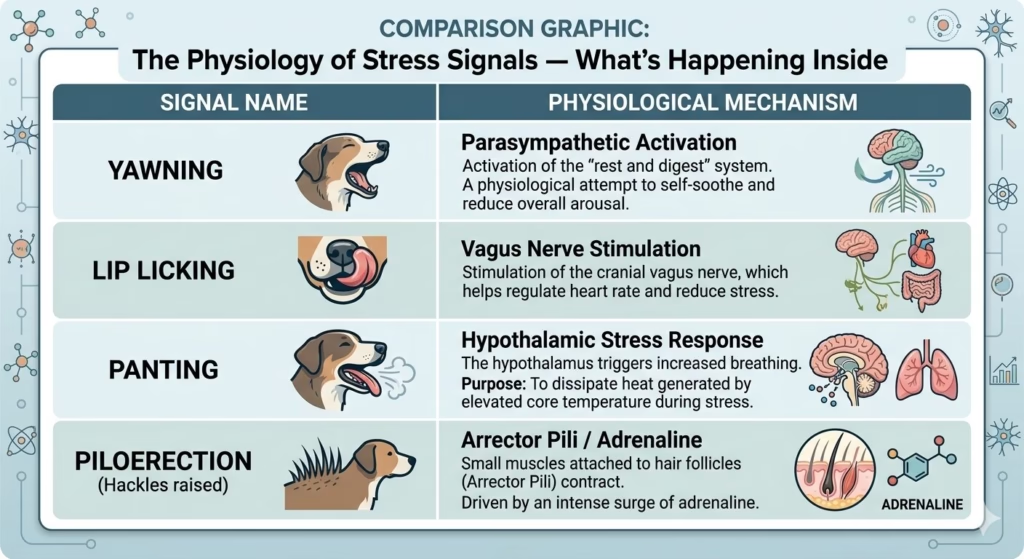
Several signals that owners observe are not purely communicative — they are physiological responses to autonomic nervous system activation that carry communicative information as a secondary function.
1. Yawning as a stress response
Yawning activates the parasympathetic branch of the autonomic nervous system, producing a brief drop in arousal. In humans, yawning is associated with state transitions — moving between alertness and drowsiness. In dogs, yawning in interaction contexts performs a similar physiological function: it briefly down-regulates arousal in a situation the dog finds stressful. The communicative element — signalling non-threat to the observer — is real, but the physiological self-regulation function is equally important. A yawning dog is not merely telling you something; it is also trying to calm itself.
2. Lip licking (tongue flick) as a stress response
The tongue flick activates salivary flow and briefly stimulates the vagus nerve, which plays a central role in the parasympathetic stress-dampening response. Like yawning, this signal has dual function — it communicates appeasement outward and simultaneously attempts to reduce internal arousal. Research on cortisol levels in dogs during handling has found elevated lip licking frequency correlates with elevated salivary cortisol — confirming the stress physiology behind the signal.
3. Piloerection (raised hackles)
Controlled by the arrector pili muscles under the influence of adrenaline released during sympathetic nervous system activation. Piloerection is involuntary — the dog does not choose to raise its hackles any more than a human chooses to get goosebumps. This is important for owner interpretation: piloerection is a physiological data point about internal state, not a deliberate communication. It can appear in fear, aggression, high excitement, and uncertainty — context and accompanying signals determine which.
4. Panting without thermal cause
The hypothalamus regulates both temperature and stress response. Stress-induced panting in a cool environment reflects hypothalamic activation by cortisol and adrenaline, not temperature regulation. A dog that begins panting during a car journey, veterinary visit, or unfamiliar social situation is displaying a stress-physiology response — the panting is the body's attempt to regulate internal temperature elevation produced by stress-hormone activation.
The Neuroscience of Scent and Social Attention
In scent hound breeds specifically, understanding the neuroscience of olfactory processing clarifies why the social communication channel is temporarily unavailable when scent drive is active. The olfactory bulb in dogs processes scent information via direct connections to both the limbic system (emotion and motivation) and the prefrontal cortex (decision-making). When compelling olfactory input is present, dopaminergic reward pathways are activated in a way that competes directly with the neural circuitry supporting social attention. This is not a simple distraction — it is a neurochemical prioritisation of one information stream over another.
This is why food rewards lose efficacy above scent threshold: the dopaminergic reward produced by active scent pursuit exceeds the reward signal produced by food, and the motivational calculus genuinely favours the scent. Training that accounts for this neurochemical reality — working below threshold, using scent-based rewards, and channelling rather than suppressing olfactory drive — is not merely gentler. It is neurologically aligned with how the dog's brain actually works.
Reading Tail Position and Movement
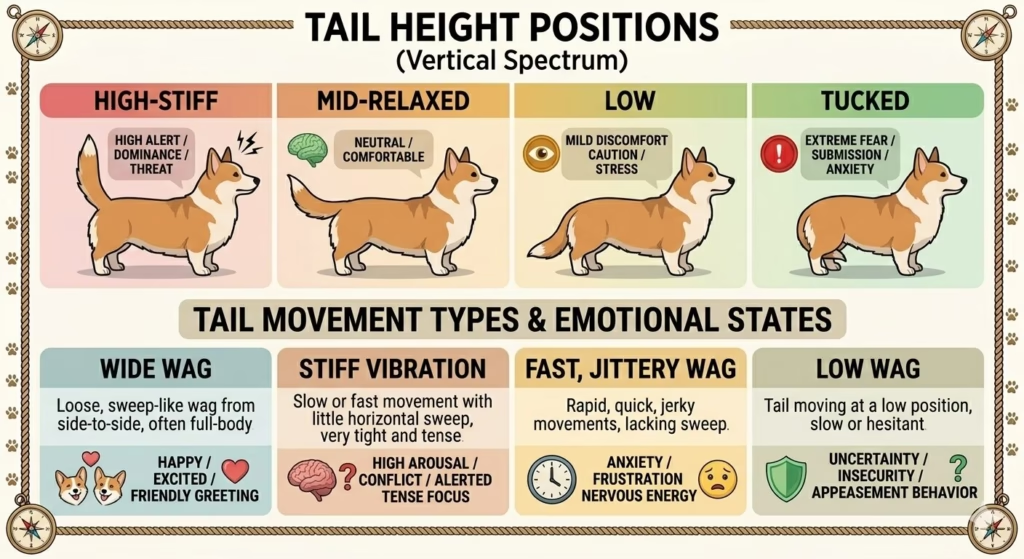
The tail is one of the most visible and most misread communication channels in dogs. The commonly held belief that a wagging tail means a happy dog is, at best, a significant simplification.
What tail height communicates
1. Tail carried high and stiff
Arousal, assertion, or potential challenge. In an unknown dog, approach with caution rather than enthusiasm.
2. Tail carried at mid-height, relaxed
Neutral, comfortable state. The baseline for a dog at rest.
3. Tail tucked between hindlegs
Fear, submission, or significant anxiety. A consistent tuck, rather than a momentary one, warrants attention and environmental modification.
4. Tail carried low but not tucked
Calm, relaxed, or mildly uncertain. Context-dependent reading required.
What tail movement communicates
-
Wide, loose wag involving the hindquarters
High confidence, friendly engagement. The full-body wag of a genuinely happy dog.
2. Stiff, rapid wag at high carriage
Arousal. This is not a friendly signal — it is an indicator of high activation that may be positive or negative depending on context.
3. Slow wag at mid or low carriage
Uncertainty, tentative engagement, or mild anxiety.
4. Helicopter wag (circular)
Almost universally positive — associated with greeting a favourite person.
The Science Behind the Signals — Tail Lateralisation
A 2011 study published in *Current Biology* by Giorgio Vallortigara and colleagues at the University of Trieste found that dogs wag more to the right when approaching something they wish to engage with positively, and more to the left when facing something aversive or uncertain. This lateralisation reflects the left-hemisphere dominance for positive approach states and right-hemisphere dominance for withdrawal and negative affect — a pattern consistent across vertebrates. The effect is subtle and not visible to the naked eye in most cases, but it reflects the neurological sophistication of tail communication. Notably, the same researchers found in a 2013 follow-up that *other dogs* respond differently to left-biased versus right-biased tail wags in conspecifics — demonstrating that the lateralisation carries genuine intraspecies social information.
Ear Signals — What Every Position Means
Ear position communicates attention, emotional state, and intent with high reliability across most breeds. The challenge is that ear anatomy varies significantly — a Corgi's large upright ears read differently from a Beagle's long dropped ears — and owners need to read relative position rather than absolute position.
Universal ear signals (adjusted for breed anatomy)
- Ears fully erect, oriented forward
High alert, focused attention. May precede play, prey drive activation, or confrontation.
- Ears slightly back, relaxed
Content, calm. The resting ear position of a comfortable dog.
- Ears flattened fully against the skull
Fear, extreme submission, or pain. One of the clearest distress signals in the canine repertoire.
- Ears rotating independently
Actively processing auditory information. Common in dogs tracking a sound source.
- One ear up, one relaxed
Mild uncertainty or curiosity. Often seen when a dog is assessing an unfamiliar situation.
Breed note
Corgis have large, upright, mobile ears that communicate with exceptional clarity — the expressive range is wide and easy to observe. Beagles' dropped ears limit forward mobility, so ear signals in Beagles are better read in combination with head carriage and brow tension.
The Science Behind the Signals — Ear Lateralisation
Parallel to tail lateralisation, a 2017 study in *PLOS ONE* found that dogs orient their ears asymmetrically in response to different auditory stimuli, with left-ear orientation more common for emotionally significant sounds (such as the owner's voice) and right-ear orientation for novel environmental sounds. This reflects the same hemispheric lateralisation found in tail movement — emotional processing is left-hemisphere dominant in dogs as in most vertebrates — and suggests that ear orientation is not purely mechanical sound location but carries information about the dog's emotional processing of the sound source.
Eye Contact, Facial Expressions, and Micro-Expressions
Eye contact is one of the most contextually loaded channels in canine communication. The meaning of direct eye contact shifts dramatically depending on who is making it, toward whom, and in what emotional state. This section extends beyond the standard signal categories to include the subtle facial action units — brief, rapid muscular movements — that Brenda Aloff's photographic work and subsequent research have established as carrying significant communicative information.
Standard eye contact signals
Soft eye
Slightly squinted, relaxed eyelids, no tension in the surrounding musculature. Indicates comfort, contentment, or positive engagement.
Hard eye
Wide, fixed, unblinking stare. One of the most consistent pre-aggression signals in the canine repertoire. Combined with body stillness, this is a serious warning signal.
Whale eye (half-moon eye)
The whites of the eye become visible as the dog turns its head while keeping its gaze fixed on a stimulus. Almost always indicates anxiety or discomfort.
Blinking and looking away
A deliberate calming signal. When a dog breaks eye contact and blinks or looks away during an interaction, it is communicating non-threat intent.
Micro-Expressions and Subtle Facial Action Units
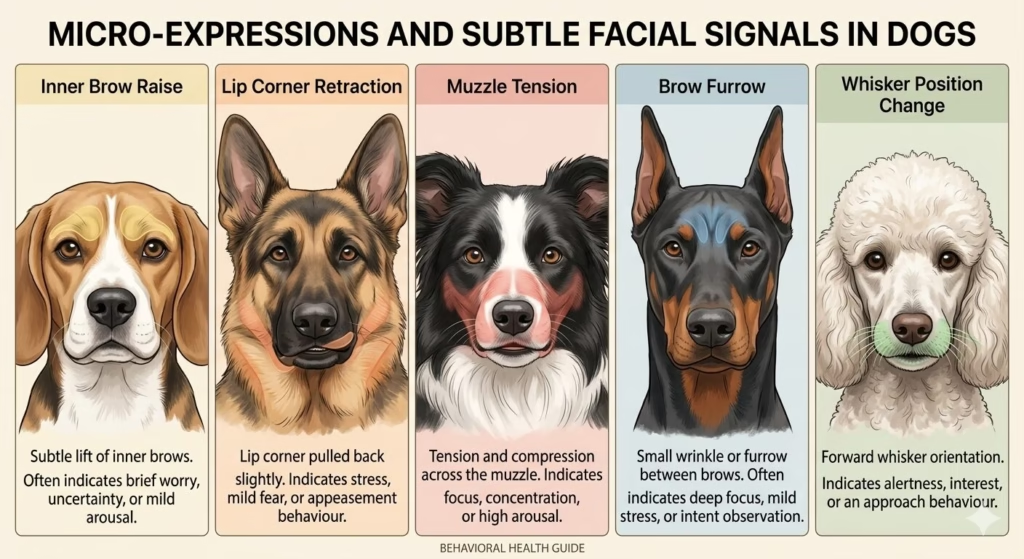
The facial musculature of dogs is considerably more developed than that of wolves, and recent research suggests this is a direct result of domestication selection pressure. A 2019 study by Juliane Kaminski and colleagues at the University of Portsmouth found that dogs produce specific facial movements — particularly the inner brow raise (equivalent to the Duchenne-adjacent AU1 in human facial action coding) — significantly more in the presence of humans than when alone. This expression makes dogs' eyes appear larger and more infant-like, activating human caregiving responses. The frequency of this expression was higher in dogs adopted from shelters than in those from breeders, suggesting a learned or selected-for communicative adaptation.
Key micro-expressions to observe
- Inner brow raise
The medial brow pulled upward and inward, creating a worried or appealing expression. Functions as an affiliative signal directed at humans. In Aloff's photographic work, this expression appears consistently in dogs seeking social connection during moments of uncertainty.
- Lip corner retraction
A horizontal pull of the lip corners without lip raising — distinct from a snarl. Associated with submission and appeasement in direct interactions with dominant individuals. Brief and easily missed at normal observation speed.
- Muzzle tension
Subtle tightening of the muscles around the muzzle and jaw, visible as a slight wrinkling or flattening of the muzzle surface. An early stress indicator — appears before more obvious signals and is detectable with focused observation.
- Brow furrow
Vertical wrinkling between the eyes, associated with concentration, mild anxiety, or conflict. Frequently missed because it is subtle and brief.
- Whisker position
Whiskers (vibrissae) move forward and fan slightly during approach and investigation; draw back and flatten during fear or submission. This signal requires close observation but is reliable.
Developing micro-expression literacy
Reading these subtle signals requires practice with slow-motion video observation. Owners who record short video clips of their dogs in varied situations and review them at reduced speed report significant improvements in signal literacy within 2–3 weeks. The 5-Minute Daily Observation Protocol in Section 20 provides a structured framework for building this skill.
Posture and Full-Body Signals
Posture — the height, orientation, and tension of the dog's entire body — provides the context within which all other signals must be interpreted.
High posture (body raised, weight forward)
The dog is asserting itself, preparing to engage, or issuing a challenge. Combined with stiff movement and direct orientation toward another dog or person, this warrants management attention.
Low posture (body lowered, weight distributed or back)
Can indicate submission, fear, play solicitation, or predatory crouching — context determines which. A dog that lowers its body and wags loosely is soliciting play. The same lowering with a tucked tail and averted gaze indicates fear or submission. A very low, still crouch with fixed forward gaze is predatory orientation.
Play bow
Front end lowered, hindquarters raised, loose face, often accompanied by a wag. One of the clearest and most universal play initiation signals in dogs. Reliably positive when it appears in a relaxed body.
Freeze
Complete stillness, usually mid-movement. A very significant signal — it typically indicates that the dog is processing a threat or challenge and making a decision. A freeze that precedes resumed movement toward the stimulus is an escalation warning.
Body blocking
Deliberate positioning of the body between two parties or across a path. In herding breeds, this is often a herding motor pattern expression. In other contexts, it can be resource guarding or protective behaviour.
The Science Behind the Signals — Postural Communication and Cortisol
Research on social buffering in dogs — the documented phenomenon whereby the presence of a familiar human reduces a dog's cortisol response to stressors — has found that postural signals play a role in triggering this effect. A dog that adopts a relaxed, low-tension posture in the presence of its owner is not only signalling comfort to observers; it is actively downregulating its own stress physiology through postural feedback to the autonomic nervous system. This bidirectionality — where posture both reflects and influences internal state — has implications for training: asking a tense dog to adopt a sit or down (which structurally reduces postural tension) can produce genuine physiological calming, not merely compliance.
Calming Signals — The Language of De-escalation
Calming signals are a category of deliberate communicative behaviours first described in detail by Norwegian dog trainer and behaviourist Turid Rugaas in the 1990s. Her work identified over 30 distinct signals that dogs use to communicate non-threat intent, reduce tension in themselves or others, and invite de-escalation in tense situations.
These signals are not random behaviours. They are a sophisticated social communication system, and dogs that are not acknowledged when using them will either intensify the signal, escalate, or shut down — all outcomes owners want to avoid.
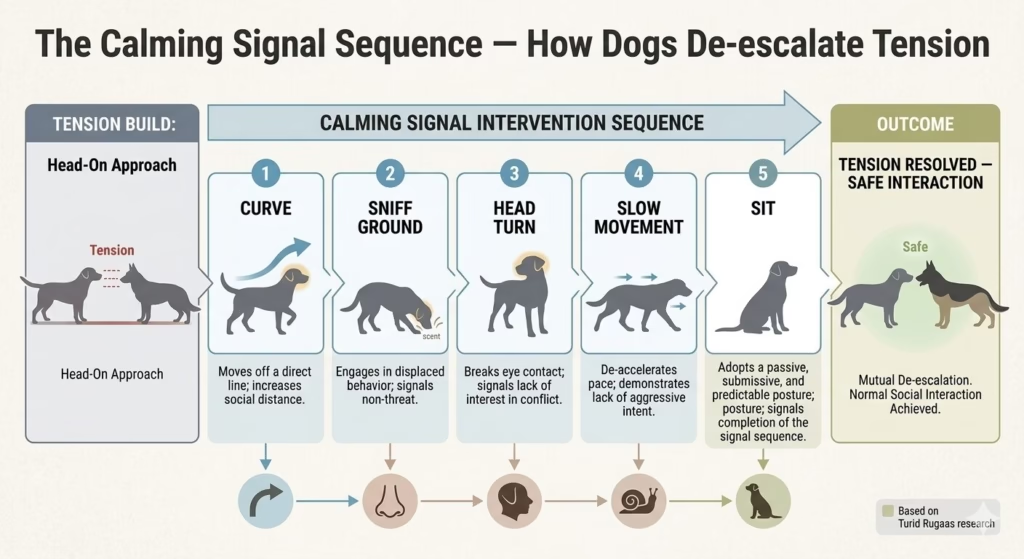
The most commonly observed calming signals include:
- Yawning
When not associated with tiredness, a yawn directed at a stimulus is a clear calming signal and physiological self-regulation attempt (see Section 3b).
- Lip licking (tongue flick)
A brief, rapid lip lick directed at a person or dog. In interaction contexts, it is a stress signal and a de-escalation attempt with concurrent physiological function.
- Looking away / head turn
Deliberately breaking eye contact and orienting the head to one side. A direct communication of non-threat.
- Sniffing the ground
Dogs that abruptly begin sniffing the ground during an approach or interaction are frequently using a calming signal. The sniffing is not exploratory — it is communicative.
- Slow movement
Deliberately slowing or pausing during an approach is a calming signal. Owners who charge toward their dogs in excitement will frequently observe the dog responding with slowing, sniffing, or looking away.
- Sitting or lying down
Offered spontaneously in a tense situation, these are powerful calming signals. A dog that sits as another dog approaches is communicating peaceful intent unambiguously.
- Curving
Approaching in an arc rather than head-on. Polite dogs curve their approach to other dogs as a default. Direct, head-on approaches are socially rude in canine terms.
The Science Behind the Signals — Rugaas and Subsequent Research
Rugaas's original framework was largely observational and generated significant debate in the canine research community. Subsequent empirical work has provided mixed but generally supportive findings. A 2018 study by Mariti and colleagues found that dogs displayed significantly more calming signals (particularly yawning and lip licking) in stressful handling conditions than in neutral conditions, supporting the stress-response function. A 2019 study in *Animals* found that dogs directed more ground-sniffing and head-turning behaviour toward unfamiliar dogs displaying tense body language than toward familiar dogs, supporting the targeted communicative function Rugaas described. The current scientific consensus is that calming signals represent a genuine communicative category, though the degree of intentionality versus reflex varies across individual signals.
Stress and Anxiety Indicators
Stress signals are distinct from calming signals. Where calming signals are communicative — directed outward to influence the situation — stress indicators are reflexive physiological and behavioural responses to internal arousal states.
Physical stress indicators
- - Panting in the absence of heat or exercise (see Section 3b for physiological explanation)
- - Yawning combined with visible body tension
- - Piloerection (raised hackles) — can appear along the entire spine or in a patch at the shoulders or rump
- - Dilated pupils
- - Excessive shedding — short-duration coat dump visible during veterinary handling in stressed dogs
- - Tense, closed mouth
- - Tucked tail
Behavioural stress indicators
- - Hypervigilance — constant scanning, inability to settle, startling at minor stimuli
- - Displacement behaviours — sudden, out-of-context scratching, sniffing, or self-grooming during training or interaction
- - Inability to take food rewards
A dog that normally works eagerly for food but refuses treats has typically exceeded its stress threshold. This is one of the most reliable indicators available to trainers and is covered in detail in Section 19.
Avoidance
Moving away from, behind, or under furniture
Increased vocalisation
In contexts that would not previously have triggered it
A stressed dog cannot learn effectively. Stress indicators during training sessions are not signs of a disobedient dog — they are signals that the training environment needs adjustment.
Vocalisation Guide — Barking, Growling, Whining, and More
Vocalisation is the most commonly anthropomorphised communication channel — and therefore one of the most commonly misinterpreted. Owners who punish growling do not remove the discomfort that caused it. They remove the warning, leaving a dog that bites without apparent signal.
Barking
Rapid, repetitive, high-pitched bark
Alert or demand. Common in herding breeds during play and at perceived territorial events.
Low, slow, intermittent bark
A genuine warning. Treat seriously — this is often a precursor to escalation if the stimulus continues.
High-pitched, single bark
Surprise or pain.
Continuous, rhythmic bark at consistent pitch
Separation anxiety or boredom. Often accompanied by pacing or destructive behaviour.
Growling
Low, sustained growl with stiff body
A serious warning. The dog is communicating discomfort or challenge at high intensity.
Rumbling growl during play
Often accompanies tug games and wrestling. In context, usually positive — confirmed by a loose body and play face.
High-pitched growl
Often a fear response, particularly in resource guarding contexts.
The Science Behind the Signals — Growl Acoustics
Research by Péter Pongrácz and colleagues at Eötvös Loránd University found that humans can reliably distinguish between play growls and food-guarding growls at statistically significant levels — and that dogs can do so even more reliably. The acoustic differences are measurable: food-guarding growls have lower fundamental frequency, greater energy in low-frequency bands, and longer duration than play growls. This finding validates both the communicative specificity of growling and the human capacity to learn to read it — with training.
Whining and whimpering
Almost always associated with anxiety, frustration, or a need for attention. Whining that occurs during crating, separation, or unfamiliar situations signals discomfort. Respond with calm presence — not exuberant reassurance, which can amplify the state.
Howling
In scenthounds, howling (baying) is a breed-normal communication directed at pack members to signal a find or maintain contact during a hunt. In a domestic context, howling in response to sounds — sirens, music, or other dogs — is often social participation behaviour rather than distress.
Olfactory Communication — Scent Marking and Social Sniffing
Olfactory communication is the channel most invisible to humans and most central to dogs. Where humans are primarily visual social animals, dogs are primarily olfactory social animals. The social information exchanged through scent in a single brief dog-to-dog encounter exceeds what most humans would gather from a five-minute conversation.
Scent Marking
Scent marking via urine, faeces, and anal gland secretions deposits identity information that persists in the environment long after the depositing dog has moved on. The information encoded in canine urine marking includes:
- Species, breed, and individual identity — each dog's scent signature is individually unique.
- Sex and reproductive status — intact males and females in oestrus produce markedly different chemical profiles detectable by conspecifics at trace concentrations.
- Age— urine composition shifts across developmental stages in ways that conspecifics can detect.
- Health status — metabolic byproducts of various disease states alter urine chemistry in ways that other dogs detect and respond to. This is the mechanism underlying the documented capacity of dogs to detect certain cancers and blood glucose fluctuations in humans.
- Emotional state — stress hormones and their metabolites are present in urine and alter the scent profile in ways other dogs respond to with increased investigation.
- Overmarking — depositing urine on or near another dog's mark — is a social statement. In male dogs, it most commonly communicates competitive or assertive intent. In some cases, it is simply information layering — adding one's own data to an existing social noticeboard.
11b. Sniffing as Social Information Gathering
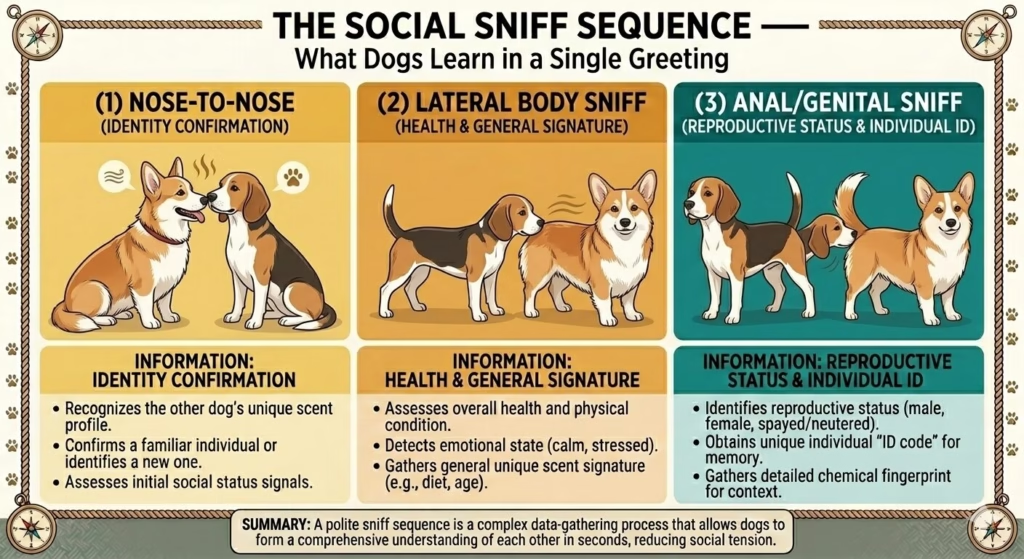
When dogs sniff each other's anal region, genitals, and mouth, they are conducting a detailed chemical assessment of that individual's identity and current state — the equivalent of reading a comprehensive social profile in a single interaction. This is not rudeness by human standards; it is the primary social assessment mechanism of a species for whom chemical information is primary.
The social sniff sequence
In polite inter-dog greetings typically runs, mutual nose-to-nose (identity confirmation) → lateral body sniff (general health and identity) → anal/genital sniff (reproductive status and individual signature). Interrupting this sequence — by pulling dogs apart during the lateral and anal sniff stages — deprives them of the information they are seeking and can increase social tension rather than reduce it, because the assessment remains incomplete.
Sniffing the environment (flehmen-equivalent behaviour). Dogs that slow their walk to sniff a specific location intensively are reading a chemical message deposited by a previous visitor. This behaviour is not procrastination — it is active social information processing. The Beagle's exceptional investment in this activity reflects its scent hound heritage: the dog is doing, in a domestic street context, exactly what it was bred for. For a full exploration of how scent drive shapes Beagle behaviour and trainability, the article [Why Beagles Ignore Commands](https://beaglepuppies.co.za/why-beagles-ignore-commands/) on BeaglePuppies covers the neurological and genetic dimensions in detail.
The Science Behind the Signals — Olfactory Anatomy
The vomeronasal organ (Jacobson's organ) — a specialised chemoreceptor structure in the roof of the mouth — processes pheromone-type chemical signals separately from the main olfactory system. In dogs, this organ is functional and projects directly to brain regions governing reproductive and social behaviour, bypassing the cortex. This means that some chemical social information is processed subcortically — influencing behaviour without conscious awareness — which partly explains why dogs respond to certain social chemical signals in ways that appear automatic and difficult to train away.
Play Signals and Happy Dog Body Language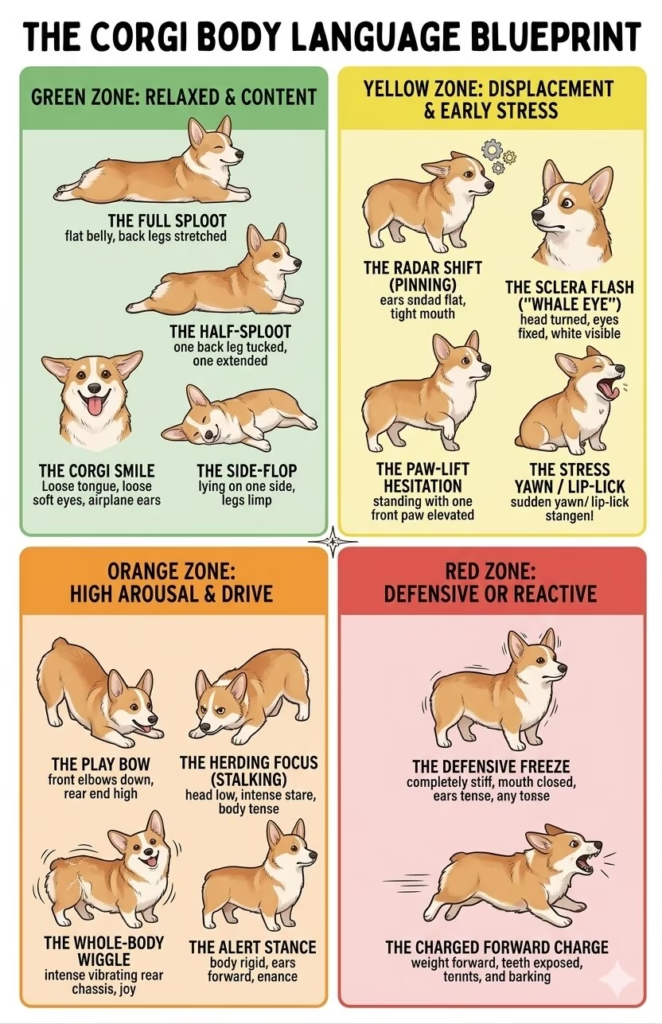
Recognising genuinely positive communication is as important as recognising stress and warning signals. A dog in a good emotional state communicates that clearly.
Reliable positive signals include
1. Play bow
Front down, hindquarters up, loose face, often a bark or vocalisation. The universal play invitation.
2. Loose, wiggly body movement
Relaxed musculature — hip sway, gentle body-to-body contact, bouncy gait — communicates comfort and positive engagement.
3. Soft, squinty eyes
Narrow, relaxed eye contact during interaction signals contentment.
4. Open, relaxed mouth
A loose jaw, slightly open mouth, and relaxed tongue indicate a dog in a positive emotional state.
5. Voluntary proximity
A dog that chooses to be near you — pressing against your leg, settling near your feet, seeking physical contact — is communicating positive social attachment.
6. Rapid tail wagging with loose body
The full-body wag. One of the most reliable positive state indicators.
The ability to confirm that your dog is genuinely comfortable — rather than tolerating a situation — changes how you structure interactions, training sessions, and social introductions.
How Dogs Communicate With Each Other vs. With Humans
Dogs communicate somewhat differently with humans than with other dogs — and understanding this distinction has practical value.
With other dogs, canine communication is primarily physical and largely instinctive. The calming signal system, the play signals, and the escalation sequence described above all developed for intraspecies use.
With humans, dogs make significant adaptations. Research by Dr. Ádám Miklósi and colleagues at Eötvös Loránd University found that dogs have evolved specific skills for reading and responding to human communicative gestures that are not present in wolves or other canids. Dogs follow human pointing gestures, respond to human eye contact as a social cue, and actively seek human gaze when problem-solving — behaviours reflecting thousands of years of co-evolutionary adaptation.
Practical implications
- Dogs comfortable with humans tend to make more eye contact with them than with unfamiliar people — the reverse of inter-dog polite behaviour, where sustained eye contact is assertive.
- Dogs adjust their vocalisations in human company — the domestic dog's bark range is significantly more varied than the wolf's, likely as an adaptation to human communication preferences.
- Dogs monitor human emotional states and adjust their behaviour in response. An anxious owner produces a more anxious dog. A calm, confident owner reduces a dog's arousal baseline in measurable ways.
The Science Behind the Signals — Oxytocin and Mutual Gaze
A landmark 2015 study by Miho Nagasawa and colleagues published in *Science* found that mutual gaze between dogs and their owners produces a significant elevation in urinary oxytocin in both parties — a finding that had previously been documented only in human parent-infant pairs. Wolves raised by humans did not show this effect, suggesting it is a specifically domesticated adaptation. This research confirms that the social bond between dogs and humans has a genuine neurochemical substrate — and that eye contact, used appropriately (soft, mutual, relaxed) is not merely a training cue but an active bond-reinforcing behaviour.
Common Human Behaviours That Miscommunicate to Dogs
Many interactions that humans consider affectionate or friendly read very differently in canine social terms. Understanding this mismatch is protective — particularly for children — and makes socialisation more effective when applied thoughtfully.
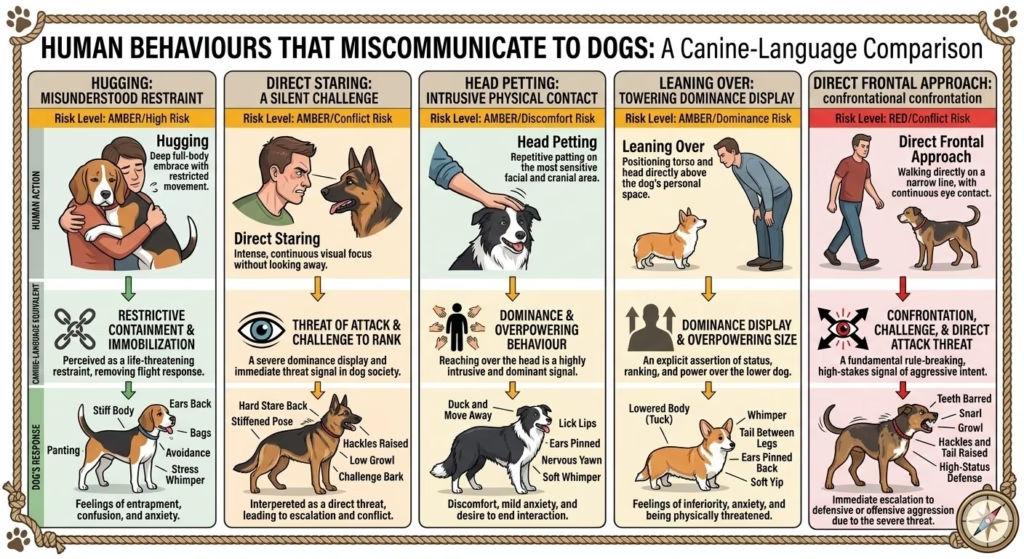
1. Hugging
Hugging involves placing arms around the neck and shoulders of another individual — a behaviour that in canine social terms maps closely to a dominant physical assertion (another dog placing a foreleg over the shoulder or neck of a subordinate). Research by Stanley Coren, published in *Psychology Today* (2016) and based on photographic analysis of 250 images of people hugging dogs, found that in 81.6% of photos, dogs showed at least one visible stress signal — including whale eye, turned head, lowered ears, lip licking, or yawning. Children are the most frequent huggers and the most frequent bite victims, and the correlation is not coincidental. Most dogs tolerate rather than enjoy hugging; the distinction matters enormously for safety.
2. Direct Staring
In canine social language, a sustained, direct, unblinking stare is a challenge or assertion signal. Humans staring directly at a dog — particularly an unfamiliar dog, or one that is already aroused — are communicating challenge in a language the dog reads accurately, even if the human intends friendliness. Children who stare at dogs face-to-face are particularly at risk. Teaching children to look slightly to the side when approaching an unfamiliar dog, rather than establishing direct eye contact, reduces the perceived social pressure significantly.
3. Petting on the Top of the Head
Most dogs dislike being petted on the top of the head by unfamiliar people, and many merely tolerate it from familiar people. The reaching hand moving over the dog's head from above activates a ducking or avoidance response in many dogs — the approach from above is a threat-axis approach in canine terms. Dogs consistently prefer being stroked under the chin, on the chest, or along the shoulder by unfamiliar people. A 2016 study in *Applied Animal Behaviour Science* confirmed that dogs display significantly more affiliative signals and fewer avoidance signals in response to chest and chin stroking than head patting during initial interactions with strangers.
4. Leaning Over a Dog
Standing over a dog and leaning forward — a common human greeting posture toward dogs — uses the high-posture, forward-weight, looming approach that in canine terms signals dominance and challenge. Many dogs respond to this with whale eye, lowered head, and avoidance. A squat or crouch — reducing height and presenting a less threatening frontal profile — consistently produces more positive greeting responses from dogs, particularly anxious or undersocialised individuals.
5. Direct Frontal Approach
Approaching a dog head-on, moving directly toward its face, replicates the direct-approach challenge posture of canine assertive behaviour. A polite canine approach is curved. When humans approach dogs in straight, direct lines — particularly running children approaching an excited dog — they are sending social signals that the dog reads accurately and responds to, often in ways the human finds confusing.
6. Forced Interaction
Holding a dog still for prolonged handling it has signalled discomfort with — particularly grooming, nail trimming, veterinary examination, or child interaction — overrides the dog's communication entirely. A dog that has learned that its signals are not heeded will either stop signalling (making it unpredictable) or escalate to the only remaining option. Cooperative care protocols — training dogs to accept handling through incremental, consent-based exposure — are the evidence-based alternative.
Breed-Specific Communication — Corgis and Beagles
Every breed communicates within the same universal canine framework, but occupational heritage shapes both the frequency and intensity of certain signals.
Corgi communication tendencies
- Corgis are herding dogs, and their communication reflects it. The herding motor pattern — approach, eye, stalk, chase, heel-nip, drive — is a physical communication sequence as much as a working sequence. When a Corgi stares intensely at a moving target, it is communicating intent.
- Corgis tend to be expressive vocally — barking is a standard part of the herding communication repertoire. In a domestic setting, this can translate to a dog that barks to direct, manage, or alert with more frequency than owners expect.
- Heel nipping is the most misunderstood Corgi communication. It is not aggression — it is a deeply instinct-driven herding signal, a physical directive, best understood through the breed's full working heritage. For a comprehensive breakdown of the triggers, the training approaches, and the management strategies specific to this behaviour, the article [Why Corgis Sometimes Nip Heels](https://pemberdiamonds.co.za/why-corgis-sometimes-nip-heels/) on PemberDiamonds covers this in the depth it deserves.
Beagle communication tendencies
- Beagles are scenthounds bred to hunt in packs, and their communication is strongly olfactory and vocal. The bay — the deep, melodic howl used to signal a find and maintain pack contact — is a Beagle's most distinctive communication tool.
- More significantly for daily life, Beagles communicate disengagement from human instruction through scent-driven behaviour. When a Beagle's nose engages fully, its attentional capacity for social communication is genuinely reduced. At that point, adjusting the environment rather than attempting to override the drive is the productive response. The article [Why Beagles Ignore Commands](https://beaglepuppies.co.za/why-beagles-ignore-commands/) on BeaglePuppies explores this in full and provides practical breed-appropriate training approaches.
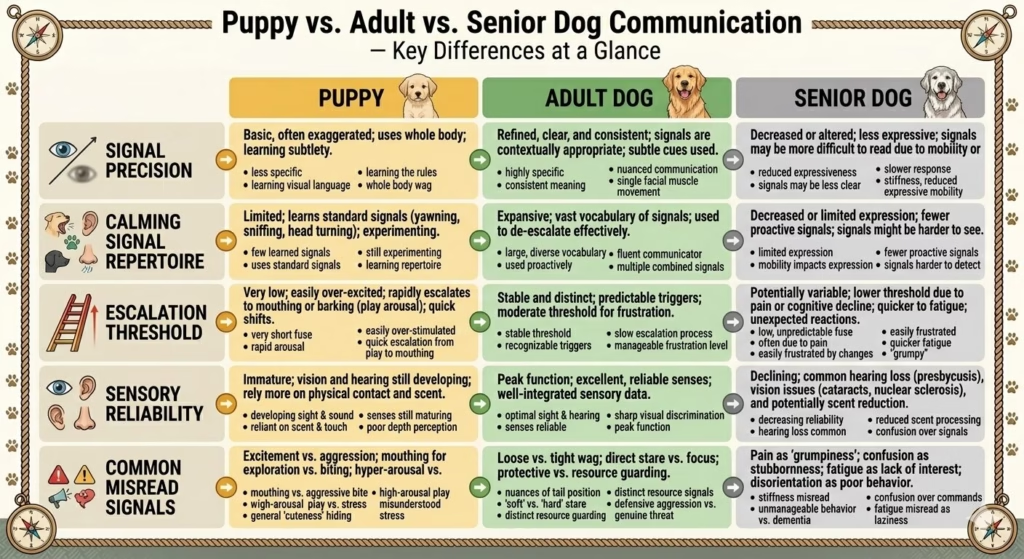
Puppy-Specific vs. Senior Dog Communication Differences
Communication is not static across a dog's lifespan. Both puppies and senior dogs communicate in ways that differ meaningfully from adult dogs — and owners who understand these differences interact more effectively and more safely at both ends of the age spectrum.
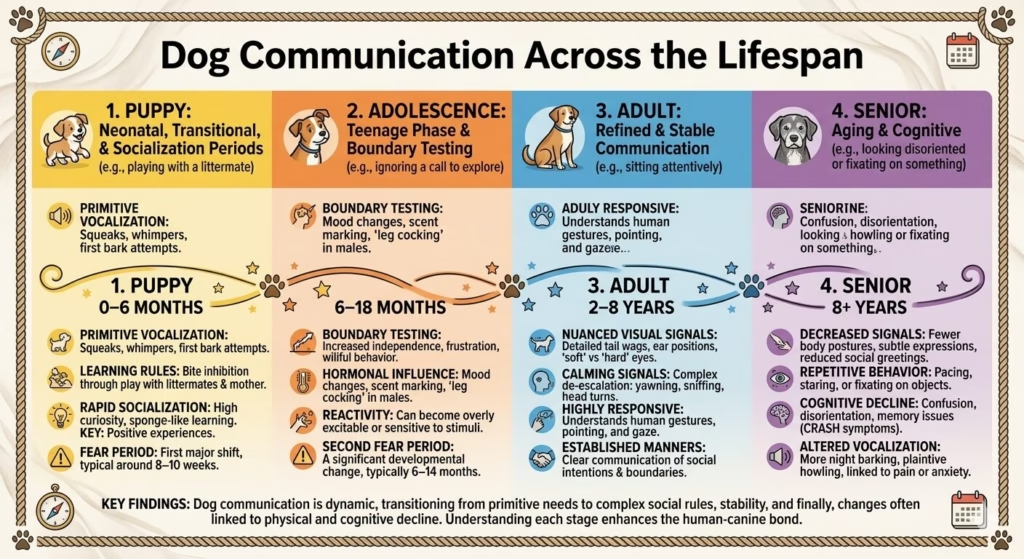
Puppy Communication
Puppies communicate within the same basic framework as adults but with several important differences in expression, precision, and signal range.
- Neonatal and transitional period (0–3 weeks) Communication is almost entirely tactile and olfactory — vocalisations signal discomfort, cold, or hunger. The social signal repertoire does not exist yet in any meaningful sense.
- Socialisation window (3–16 weeks) This is the critical developmental stage for signal learning. Puppies develop their calming signal repertoire primarily through play with littermates — bite inhibition is learned through feedback; calming signals are learned through observation and response from adult dogs and littermates. A puppy removed from its litter before 7–8 weeks misses significant calming signal learning, which can produce a dog with a reduced or distorted communication repertoire in adulthood.
Puppy-specific signals
- Inguinal presentation
Rolling onto the back and exposing the inguinal (groin) region is a high-level appeasement signal in puppies — a request for adult tolerance. Adults typically respond by sniffing and moving on. In adult dogs, full belly exposure is often a play invitation rather than submission.
- Pawing
Puppies paw at the muzzles of adult dogs to solicit regurgitation (a feeding behaviour from wolf ancestry). In domestic dogs, pawing at adult dogs and humans functions as an attention and appeasement solicitation.
- Exaggerated signal expression
Puppy calming signals and play signals tend to be broader and more exaggerated than adult equivalents — the play bow is more exaggerated, the tail wag more whole-body. This is thought to be communicative compensation for the smaller range of motor control puppies have.
Adolescence (6–18 months)
Hormonal changes produce a measurable shift in communication — arousal thresholds lower, social confidence can fluctuate significantly, and some adolescent dogs temporarily communicate with less precision as they navigate changed internal states. Owners often report that their dog forgot its calming signals during adolescence. The signals are still present but less consistently deployed.
Senior Dog Communication
Communication changes in senior dogs for a combination of sensory, cognitive, and musculoskeletal reasons — and owners who recognise these changes can adapt their interactions to reduce confusion, frustration, and pain-related communication breakdown.
Sensory decline
Hearing loss in senior dogs is common and significantly affects vocalisation-based communication. A dog that no longer responds to its name is not necessarily disobedient — it may genuinely not hear the call. Visual decline (cataracts, reduced peripheral vision) similarly affects a senior dog's ability to read incoming body language signals accurately, which can produce apparently disproportionate reactions to approaches from the blind side or peripheral field.
Cognitive dysfunction
Canine cognitive dysfunction syndrome (CDS) — the dog equivalent of dementia — affects a significant proportion of dogs over 11 years. Communication changes associated with CDS include increased vocalisation (particularly at night), reduced responsiveness to previously reliable cues, and apparent confusion in social interactions. A senior dog that begins communicating with apparent anxiety or confusion in familiar contexts warrants veterinary assessment before a behavioural explanation is assumed.
Musculoskeletal pain
Arthritis and joint pain are nearly universal in dogs over 10 years. Pain changes communication significantly — a dog that snaps when touched in a location that did not previously produce that response is communicating pain, not aggression. Reduced mobility also limits the dog's ability to perform avoidance and calming signals that require full body movement. A senior dog that appears to escalate more quickly than it used to may have lost access to the earlier signals in its repertoire due to physical limitation.
Reduced tolerance for stimulation. Senior dogs typically have lower thresholds for overstimulation and shorter windows of comfortable social engagement than younger adults. Recognising this — and structuring interactions accordingly — prevents unnecessary conflict and protects the dog's welfare.
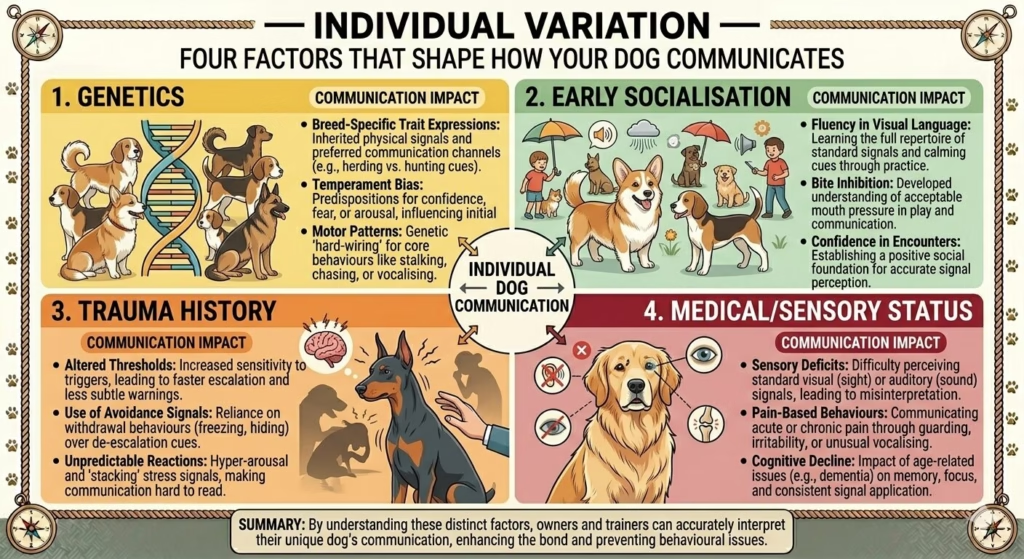
Individual Variation — Genetics, Socialisation, Trauma, and Health
One of the most important — and least discussed — dimensions of canine communication literacy is individual variation. Two dogs of the same breed, raised in similar environments, may communicate with meaningfully different repertoires, intensities, and frequencies. Understanding the sources of this variation prevents owners from either over-attributing a dog's signals to breed and missing individual communication, or under-attributing them and missing signals that are specific to their dog's history.
Genetics
Individual genetic variation influences not just the frequency of certain signals but the threshold at which they are deployed. Neurological traits including reactivity, arousal regulation, and fear sensitivity all have heritable components. A dog with high genetic reactivity — one that comes from lines selected for vigilance and fast response — will deploy signals at lower environmental thresholds than a dog with low reactivity. This is not a training failure; it is a structural starting point that training adjusts around rather than overrides.
Breed-level genetics shape the frequency of specific signals (Corgi herding motor patterns; Beagle olfactory prioritisation; sighthound predatory sequences) but within-breed variation is substantial. Individual genetic temperament assessment — through reputable breed-appropriate testing — provides useful baseline data for training and management planning.
Early Socialisation
The socialisation window (roughly 3–16 weeks, with a secondary window through 6 months) is the developmental stage during which a dog's signal repertoire is most actively shaped by experience. Dogs with rich, positive socialisation across diverse people, environments, dogs, and surfaces typically develop:
- A broader calming signal repertoire
- Higher thresholds before escalation
- More accurate reading of incoming signals from unfamiliar dogs
- Greater flexibility in social situations
Dogs with limited or aversive socialisation history may show
- Reduced or distorted calming signal use
- Lower escalation thresholds
- Poor reading of incoming social signals
- Context-specific or generalised anxiety communication
This is why breeders' early socialisation practices — not just genetics — have a direct and lasting impact on adult communication. The first 16 weeks are the most influential developmental stage in the dog's communication biography.
Trauma History
Dogs with a history of abuse, neglect, or significant aversive experiences often develop altered communication patterns that can be misread. Common patterns include:
Reduced signal range
A dog whose early calming signal use was consistently ignored or punished may have learned to suppress those signals — producing a dog that appears to skip directly to escalation with little warning. This is not aggression without provocation; it is communication after the early channels have been removed.
Appeasement overkill
Some trauma-history dogs display excessive appeasement signalling — constant lip licking, tail-tucking, and avoidance — in normal social situations, reflecting a generalised expectation of threat.
Mislabelled signals
Rolling onto the back in a trauma-history dog may be appeasement rather than play solicitation. Context and accompanying signals differentiate the two; assuming play invitation and proceeding with enthusiastic handling can produce a defensive response that appears unpredictable.
Medical Conditions
Pain, illness, and sensory impairment produce predictable communication changes that are often misread as behavioural problems.
Pain
A dog in pain communicates reduced tolerance for handling, proximity, and activity. Snapping, increased withdrawal, and reduced social engagement in a previously sociable dog should prompt veterinary assessment before a behavioural intervention is applied.
Hypothyroidism
A documented association exists between hypothyroid dysfunction and increased aggression and irritability in dogs — the communication change has a physiological substrate. Treatment typically produces measurable behavioural improvement.
Vision loss
A dog that cannot see approaching people or dogs cannot read their incoming signals and therefore cannot deploy appropriate calming responses in time. This produces apparently disproportionate reactions that are, from the dog's perspective, entirely appropriate given the information available.
Hearing loss
A deaf dog cannot hear recall commands, warning sounds, or owner communication. It relies entirely on visual signals — and in the absence of those, may be startled by contact from behind, which can produce a defensive snap that appears aggressive. Dogs suspected of hearing loss should be assessed veterinarily and transitioned to hand-signal-based communication.
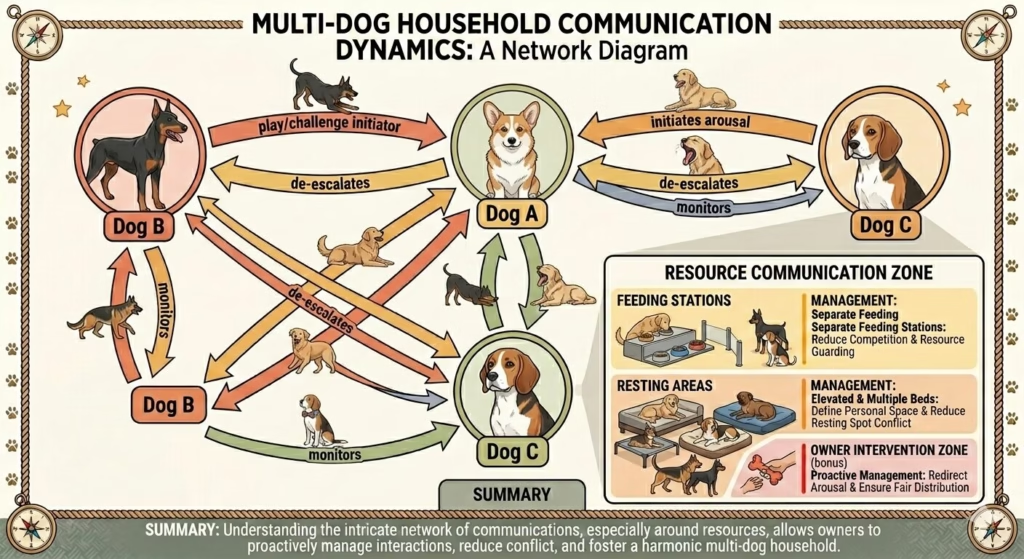
Multi-Dog Household Communication Networks
In households with two or more dogs, communication operates not just between individual dogs but as a social network — with established relationships, communication hierarchies, and inter-dog dynamics that profoundly affect how individual dogs signal and respond.
Dyadic Communication Patterns
Dogs in established pairs develop communication shorthand — abbreviated signals that only function within the shared relationship context because both parties understand the history behind them. An owner observing two bonded dogs interact may see what appears to be a very truncated greeting: a brief nose-touch and immediate return to separate activities. This is not poor social engagement — it is efficient communication between parties who have already established their relationship fully and do not need to renegotiate it at every encounter.
New dogs introduced to an established household do not have access to this shorthand. They communicate in full-length signals, which can produce apparent over-signalling relative to the resident dogs' shorter repertoire use. This is normal and typically resolves within weeks as the new dog learns the household communication norms.
Communication Hierarchies and Peacekeeping Roles
In multi-dog households, individual dogs often develop distinct communication roles. Some dogs become consistent calming signal users who de-escalate tension between other household dogs — a peacekeeping function. Others are consistent arousal contributors who initiate play, competition, or challenge. Understanding which dogs play which roles in your household enables more targeted management during high-tension situations.
Significant caution is warranted in households where one dog's communications are consistently suppressed by another's. A dog that never gets to complete a greeting sequence, is consistently interrupted in calming signal use by a more assertive dog, or shows persistent appeasement behaviour toward a specific housemate is communicating that its social needs are not being met. This situation does not self-resolve — it typically escalates over time.
Play Communication in Multi-Dog Groups
Play between two dogs is relatively easy to monitor. Play in groups of three or more becomes substantially more complex because:
- Role switching (who is chasing, who is being chased) is less regular
- A dog that becomes aroused as a play observer frequently enters play in a higher-arousal state than a dog that enters from rest
- "Pile-on" dynamics — where two or more dogs focus simultaneously on a single dog — can transition from play to genuine overwhelm very quickly, even when all parties appear to be playing
In multi-dog households, monitoring the communication of the most socially subordinate dog during group play — rather than the most active participant — provides the earliest and most reliable signal of when play is transitioning to something less comfortable.
Resource Communication
Food, resting spots, toys, and owner attention are common resource competition triggers in multi-dog households. Resource guarding communication — stiffening, hard eye, low growl, direct body orientation over the resource — should be read as information about environmental management needs, not as a behavioural flaw. Providing spatially separated feeding stations, multiple resting locations, and managed owner-attention interactions reduces resource communication conflicts more reliably than attempting to train resource guarding out of individual dogs.
Using Communication Knowledge in Training
Communication literacy is not a parallel skill to training — it is the foundation that makes training more effective, more humane, and more responsive to the dog in front of you. This section translates the signal reading covered throughout this article into direct training applications.
Recognising Threshold During Training Sessions
A dog above its stress threshold cannot learn effectively. The neural mechanisms that support new learning — long-term potentiation in the hippocampus, working memory in the prefrontal cortex — are suppressed by sustained cortisol elevation. This is not a behavioural opinion; it is neuroscience with direct practical implications.
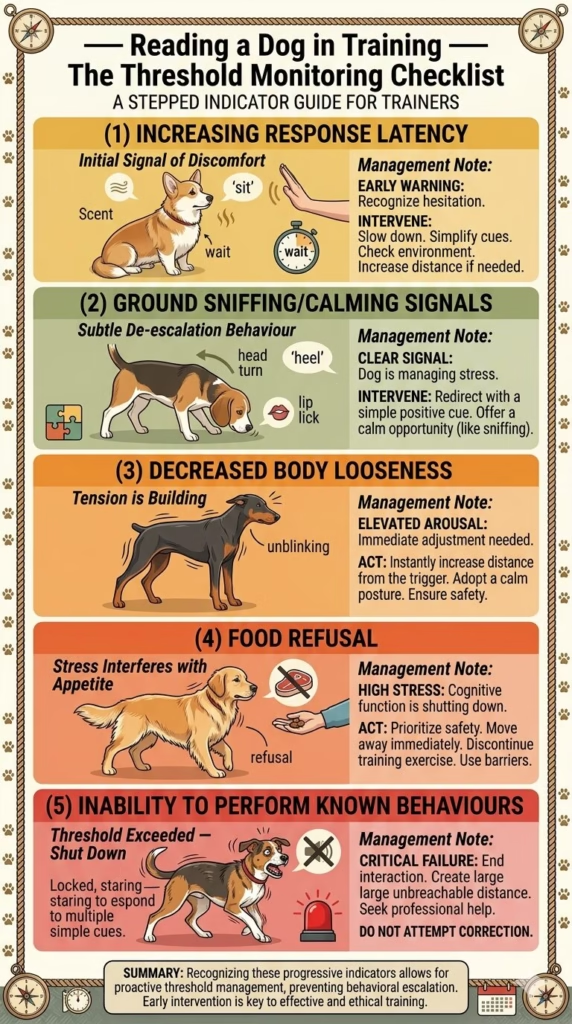
Threshold indicators to monitor during training
- Food refusal when the dog normally works eagerly for food — the most reliable single indicator
- Increasing latency between cue and response — the dog is taking longer and longer to respond, indicating rising cognitive load
- Sniffing the ground or turning away during prompts — calming signals that indicate the session is producing pressure the dog is attempting to manage
- Decreased body looseness — the dog's movement becomes stiffer and less fluid
- Inability to perform previously reliable behaviours — not forgetting, but losing access to the response due to arousal
What to do at threshold
End the training session, give the dog a brief scent decompression opportunity (allow sniffing at will for 2–3 minutes), and return to training only when the dog re-engages voluntarily. Alternatively, drop the criteria dramatically — ask for something very easy that the dog will succeed at, deliver a high-value reward, and end on that note. Pushing through threshold does not produce learning; it produces anxiety associations with the training context.
Reading Readiness to Work
A dog that is ready to train communicates this clearly: soft body, loose movement, soft eye contact with the handler, voluntary orientation toward the handler, food motivation intact. A dog that is not ready communicates equally clearly: scanning, sniffing, looking away, stiff movement, or hyperarousal.
The most effective training sessions begin with a 60-second readiness check — observe the dog's body language before giving the first cue. If the dog is not demonstrating readiness signals, address the cause (exercise deficit, environmental overstimulation, hunger, illness) before beginning the session.
Using Calming Signals to Build Training Relationships
Mirroring your dog's calming signals communicates that you have received and understood them — and this confirmation builds trust. Turning your head slightly away when your dog turns away. Blinking slowly when your dog offers a tongue flick. Moving in a curved arc rather than directly toward a dog showing appeasement signals. These are not complex behaviours — they are two-second responses that confirm to the dog that its communication is functional, which makes it more likely to use the social communication channel and less likely to escalate to higher-intensity signals.
Rewarding Communication Attempts
Dogs that offer calming signals during training — particularly when asked to do something they find challenging — are communicating. Acknowledging those signals, rather than ignoring or overriding them, builds a training relationship in which the dog remains a communicating participant rather than a compliance unit. Practically, this means: if the dog yawns mid-session, pause for five seconds before continuing. If the dog turns away, don't immediately prompt again — wait for re-engagement. These brief acknowledgements communicate respect and build session-by-session trust.
The 5-Minute Daily Observation Protocol
Canine communication literacy is a perceptual skill — and like all perceptual skills, it develops through structured practice over time, not through conceptual knowledge alone. The following protocol, practised for five minutes daily over four weeks, consistently produces measurable improvements in owners' ability to read their dogs in real time.
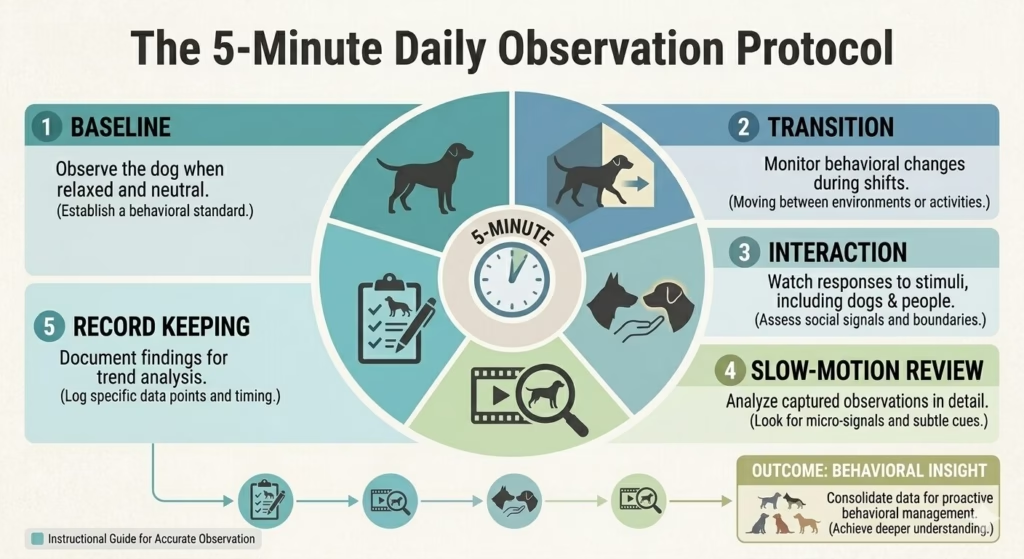
The Protocol
Minute 1 — Baseline observation
With your dog at rest or in calm activity, observe without interacting. Note tail height and movement, ear position, body posture, and any facial tension. This is your dog's resting baseline. Familiarity with the baseline is essential for reading departures from it.
Minute 2 — Transition observation
Introduce a mild change to the environment (stand up, move toward the door, produce the lead). Observe how your dog transitions from rest to arousal. Note the sequence — which signals appear first, which appear secondary. Each dog has a consistent pre-arousal signal sequence. Learning yours gives you the earliest possible intervention point.
Minute 3 — Interaction observation
Conduct a brief, mild interaction — approach, greet, handle briefly. Observe the signals your dog deploys during the interaction. Is the body loose or stiff? Does a tongue flick appear? Does your dog lean into the contact or lean slightly away?
Minute 4 — Slow-motion review
If you have filmed the interaction (recommended), review 30 seconds of footage at half speed. Look specifically for micro-expressions — the brief brow movements, the lip corner retractions, the early muzzle tension that disappears before you can register it at real time. This step alone produces significant signal literacy gains within two weeks.
Minute 5 — Record keeping
Note three observations from the session in a running log. Over four weeks, patterns emerge — consistent pre-stress signals, context-specific signal clusters, individual communication quirks. This log becomes a personalised communication profile for your dog.
Weekly progression
In weeks 1–2, conduct observations in low-stimulation environments. In weeks 3–4, repeat observations in progressively more stimulating contexts (garden with activity, arrival of a visitor, multi-dog interaction). The goal is to build fluency across the full range of your dog's communication contexts.
Reading Communication in Real-Life South African Scenarios
Canine communication plays out differently in different contexts. Understanding how to apply body language knowledge in real-world situations makes the skill genuinely useful rather than merely theoretical.
At the dog park
Focus on greeting approaches — a dog approaching another head-on with high posture and a stiff, high tail is not reading well for a positive interaction. A curved approach, loose body, and brief mutual sniffing is the appropriate sequence. Owners who observe mounting tension (hard eyes, stiff bodies, piloerection) should interrupt and separate before escalation occurs.
With domestic workers
Many South African dogs have complex social histories with adults outside the immediate family. A dog that yawns, lip-licks, or moves away when a domestic worker enters a room is communicating discomfort — not aggression. Slow, calm, food-associated introduction protocols and inviting workers to participate in feeding routines typically establish positive associations within days to weeks.
During load shedding
Disrupted routines, darkness, and altered household sounds raise dogs' baseline arousal and anxiety. During extended outages, watch for increased lip licking, reduced food interest, and hypervigilance. Maintaining consistent feeding and exercise times and using calm, predictable interaction helps dogs regulate more quickly.
During thunderstorms and fireworks
South African dogs face particularly intense firework seasons. The body language of a storm-anxious dog — tucked tail, wide eyes, whale eye, panting, seeking contact or hiding — is communication of genuine distress. Providing a safe contained space, maintaining calm owner behaviour, and offering presence without forcing it mirrors the calming signals the dog uses itself.
For additional practical guidance on training approaches specific to Corgi owners, the articles Without Cattle, Corgis and Family Dynamics, and You Have Eight Windows With Your Corgi provide targeted guidance across the key ownership contexts. For a deeper professional-level exploration of herding psychology and training, A Psychological Journey into Herding Dog Behavior and Training on PemberDiamonds is a valuable companion resource.
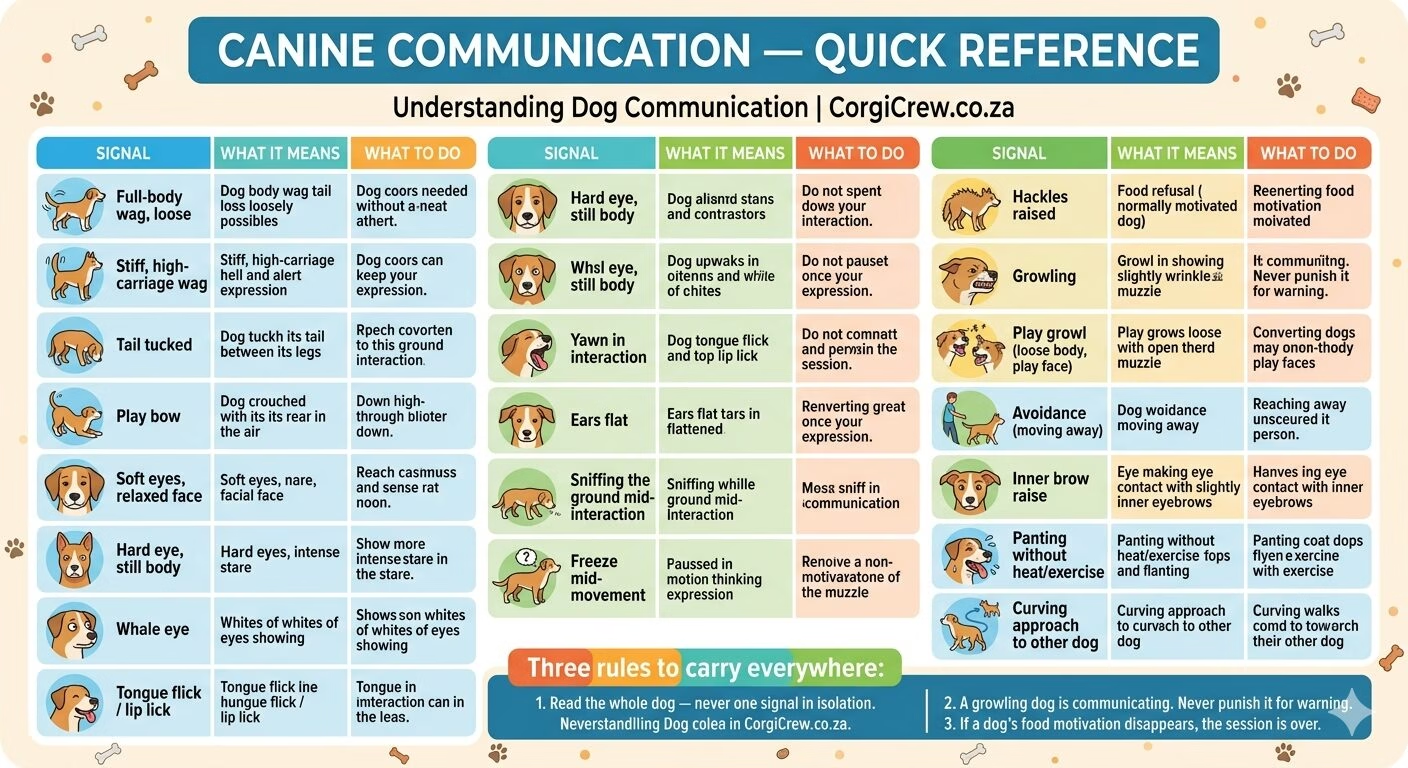
Signal Quick Reference Cheat Sheet
 EXPERT INSIGHT
Canine Communication Specialist Perspective — On the Removed Warning and the Science of Trust
"The single most dangerous misunderstanding I encounter in dog owner education is the belief that a growling dog is a bad dog. I have worked with families who punished growling consistently and successfully — the dog stopped growling. What they were left with was a dog that bit without warning, because the warning had been trained away while the discomfort that caused it remained entirely intact.
Growling is not aggression. It is communication — and the science now tells us it is acoustically specific communication. Research has demonstrated that humans can reliably distinguish play growls from warning growls at above-chance levels, and that dogs can do so even more reliably. The information is there. Owners just need the training to read it.
What the research on oxytocin and mutual gaze also tells us — and I find this genuinely exciting — is that building communication fluency with your dog is not a one-way skill acquisition. When you learn to read your dog's signals accurately and respond to them, the dog's trust in the social channel increases. It uses calming signals more readily, because they work. It escalates less frequently, because early communication is acknowledged. The entire relationship becomes more communicative and less reactive. The science describes something dog owners have known intuitively for generations: a relationship in which both parties are heard is a relationship in which neither party needs to shout."
 1. What does it mean when a dog yawns at me?
Context determines the meaning. A yawn during rest is tiredness. A yawn directed at you during handling, training, or a tense interaction is almost certainly a calming signal — the dog communicating non-threat intent while simultaneously attempting to self-regulate its arousal through the parasympathetic activation that yawning produces. If you see repeated yawning in interaction contexts, assess whether the situation is creating stress and adjust accordingly.
2. Why does my dog wag its tail but still seem nervous?
Tail wagging does not equal happiness — movement must be read alongside carriage height, speed, and whole-body posture. A stiff, rapid wag at high carriage in a tense body indicates arousal, not friendliness. A slow wag at low carriage with a tucked body signals uncertainty or anxiety. Always read the tail as one channel within the full picture.
3. What is the difference between a play growl and a warning growl?
Pitch, body tension, and context. A play growl during tug is typically accompanied by a loose body, a play face, and reciprocal engagement. A warning growl is lower in pitch, sustained, and accompanied by stillness or stiffening. Research has confirmed these acoustic differences are measurable and that humans can learn to distinguish them reliably with practice.
4. How can I tell if my Corgi is herding me or being aggressive?
Herding behaviour is triggered by movement, appears in a loose forward-oriented body with an alert rather than hard facial expression, involves brief contact that stops when movement stops, and lacks the preceding stiffening and hard stare of genuine aggression. For a detailed breakdown specific to Corgis, the article [Why Corgis Sometimes Nip Heels](https://pemberdiamonds.co.za/why-corgis-sometimes-nip-heels/) on PemberDiamonds covers the distinction in full.
5. What does whale eye mean in dogs?
Whale eye refers to the visible whites of the eyes when a dog turns its head while keeping its gaze fixed on a stimulus — creating a half-moon of white at the eye's edge. It almost always signals anxiety or discomfort. When you observe it, reduce pressure, give the dog an exit option, and reassess the interaction before continuing.
6. Why does my dog sniff the ground when we meet other dogs at the park?
In many cases, this is a calming signal — the dog communicating non-threat intent to the approaching dog and simultaneously de-escalating its own arousal. It is prosocial behaviour, not avoidance. If it appears alongside a loose body and neutral tail, the dog is communicating competently. If the body is tense, it may be stress-driven displacement behaviour — context and whole-body reading is essential.
7. Is it normal for my dog to communicate differently with my children than with adults?
Yes, and it matters for safety. Dogs frequently modify their communication in response to the movement patterns, sound profile, and energy of different individuals. Children who move quickly and approach head-on produce different responses than calm adults. Teaching children to move slowly, avoid direct eye contact during initial greetings, and recognise calming signals is one of the most effective safety investments a family can make.
8. What does it mean when a dog refuses treats during training?
A dog that normally works enthusiastically for food but refuses treats is almost certainly above its stress threshold. This is one of the most reliable threshold indicators available to trainers. Stop the session, reduce the stimulation level, allow decompression through free sniffing, and restart at lower intensity. Pushing through this signal does not produce learning — it produces anxiety associations with training.
9. Can stress from load shedding affect how my dog communicates?
Yes, significantly. Disrupted routines raise dogs' baseline arousal and anxiety. During extended load shedding periods, owners often report increased barking, reduced food interest, and hypervigilance. These are communications of a stressed nervous system. Maintaining routine, providing consistent enrichment, and using calm predictable behaviour reduces the impact.
10. Why is my senior dog suddenly growling when touched?
Unexplained growling in a senior dog when touched in a location that was previously unremarkable should prompt a veterinary assessment before a behavioural explanation is applied. Arthritis and joint pain are nearly universal in dogs over 10 years, and pain changes communication significantly. The dog is not becoming aggressive — it is communicating pain in the only way available to it. A veterinary assessment followed by appropriate pain management typically resolves this communication change.
11. What are micro-expressions in dogs and how do I learn to read them?
Micro-expressions are brief, rapid facial muscle movements that carry communicative information — inner brow raises, lip corner retractions, muzzle tension — that are often missed at normal observation speed. The most effective way to develop micro-expression literacy is recording short video of your dog during interactions and reviewing the footage at half speed. Within two to three weeks of this practice, most owners report significantly improved real-time signal reading. The 5-Minute Daily Observation Protocol in this guide provides a structured framework.
12. How does my dog use scent to communicate?
Scent marking via urine deposits identity information including individual signature, sex, reproductive status, age, health status, and emotional state. Directed sniffing in social greetings gathers equivalent information about other individuals. Overmarking (depositing urine on or near another dog's mark) is a social statement. The chemical communication layer is primary for dogs in a way it is not for humans — it operates largely below human perception but represents a continuous, rich social information exchange between dogs.
13. Is it true that hugging dogs is dangerous?
Research by Stanley Coren analysing 250 photographs of people hugging dogs found stress signals in over 80% of images. Most dogs tolerate rather than enjoy hugging — it maps too closely to a dominance-assertion posture in canine social terms. This does not mean all hugging is dangerous in all dogs, but it means owners should read their dog's responses to being hugged honestly rather than assuming all physical affection is welcome in this form. Children should be taught alternative affectionate gestures.
14. How do I introduce two dogs for the first time using communication knowledge?
Allow a curved, side-by-side approach rather than a head-on meeting. Permit the full social sniff sequence (nose, body, anal) to complete without interruption where safe to do so. Monitor for stiff bodies, hard eyes, and high tail carriage — these are tension signals that warrant separation and a more gradual introduction. A successful first meeting has loose bodies, mutual sniffing, some mutual disengagement, and no sustained direct staring from either party. Walking the two dogs in parallel before allowing direct contact often produces calmer first meetings.
15. What does it mean when my dog constantly licks its lips during veterinary visits?
Lip licking at the veterinarian is a classic stress-signal cluster — the dog is attempting to appease (communicating non-threat to the handler) and simultaneously self-regulating its arousal through the vagus nerve activation that tongue movement produces. It confirms the visit is a significant stressor. Owners who observe this consistently can discuss cooperative care desensitisation protocols with their veterinarian — building positive associations with the veterinary context through low-intensity, food-paired visits before medical procedures are required.
16. My dog was abused before I adopted it. Why does it seem to skip straight to snapping without warning?
Dogs whose early calming signal use was consistently ignored or punished may have learned to suppress those signals — effectively removing the early rungs of the escalation ladder. The snapping is not coming without warning; the warnings are either suppressed or expressed so briefly and subtly that they are missed at normal observation speed. Slow-motion video review during interactions often reveals signal fragments that were not visible in real time. Working with a qualified canine behaviourist — not a general obedience trainer — is the appropriate professional resource for trauma-history dogs.
17. How do dogs in multi-dog households establish who communicates what?
Multi-dog households develop communication networks over time, with individual dogs taking consistent roles — some become reliable de-escalators (consistent calming signal users), others consistent arousal contributors. These roles are not equivalent to dominance in the simplistic sense; they are socially functional positions that stabilise the group's communication dynamics. Observing which dog in your household most reliably uses calming signals during tension, and which most reliably increases arousal, gives you the management information you need to structure introductions, feeding, and group play appropriately.
18. Can puppies be taught to read dog communication signals?
Puppies develop their communication reading skills primarily through play with littermates and interaction with adult dogs — they learn through experience, not instruction. What owners can do is ensure that puppy socialisation includes sufficient interaction with calm, well-communicating adult dogs and socially appropriate puppies to build a rich experiential base. Removing a puppy from these interactions too early, or restricting its dog-to-dog contact during the socialisation window, produces a dog with a narrower communication reading repertoire in adulthood.
19. Why does my dog communicate differently at the dog park than at home?
Context and arousal level change communication profoundly. At home, the dog is in a familiar, lower-stimulation environment with predictable social partners — its baseline arousal is low and its communication is correspondingly precise and measured. At the dog park, unfamiliar dogs, high arousal levels, and complex social dynamics raise the baseline significantly. Communication in high-arousal contexts tends to be less nuanced, less stable, and more likely to escalate quickly. Owners who are comfortable reading their dog's signals at home should expect those signals to be faster, more compressed, and less predictable in park contexts until they develop familiarity with that specific environment.
20. How long does it take to become fluent in reading dog communication?
With structured daily practice — such as the 5-Minute Daily Observation Protocol in this guide — most owners report meaningful improvement in signal recognition within two to three weeks, and functional fluency in reading their own dog in familiar contexts within four to six weeks. Reading unfamiliar dogs in novel contexts accurately takes longer — typically several months of varied exposure. The skill ceiling is genuinely high; experienced canine professionals continue developing nuance in signal reading across many years of practice. The good news is that even modest early improvement produces measurable positive changes in the human-dog relationship.
CONCLUSION
Three things will genuinely change how you live with your dog if you take them forward. First, dog communication is always happening — your dog is not silent between commands. Learning to read what it is saying in the quiet moments, the stressed moments, and the playful moments is as important as understanding its responses to your cues. Second, calming signals, stress indicators, and olfactory behaviour are all requests and reports — a dog that yawns during handling, turns away during a greeting, or pauses to investigate a scent is communicating something specific. Responding accurately builds a trust reserve that makes every difficult moment easier. Third, individual variation is real and significant. The signals described in this guide are the vocabulary; your specific dog's history, genetics, developmental stage, and health status are the context that makes the vocabulary meaningful.
Dog communication sits at the centre of every aspect of the lifestyle and activities you share with your dog — from walks and training sessions to family introductions and veterinary visits. Owners who invest in this knowledge do not just experience fewer incidents. They have richer relationships, more responsive dogs, and the confidence that comes from genuinely understanding the animal living alongside them.
The language has always been there. You now have the vocabulary, the science behind it, and the daily practice protocol to read it fluently.
 CALL TO ACTION
If this guide has opened up how you think about what your dog is telling you, the next step is applying that understanding to your specific breed. Corgi owners will find the practical companion piece in the CorgiCrew-recommended read Why Corgis Sometimes Nip Heelson PemberDiamonds — a full breakdown of herding signals, nipping behaviour, and training approaches. For those navigating the communication-and-training challenges of a scent-driven Beagle, Why Beagles Ignore Commands is your next read. And for everything about living well with a Corgi alongside family, Corgis and Family Dynamics is waiting.