
Building a Lifelong Bond & Leadership
The definitive reference on trust, respect, clear communication, and becoming a confident guide for your dog — from the first weeks of puppyhood through the senior years.
The Most Important Relationship You Will Ever Build
There is a particular moment most puppy owners know well: you are sitting on the floor, your new puppy climbs into your lap, sighs deeply, and falls asleep. In that instant, you understand that something profound has begun. This guide is about honouring that moment — and building, systematically and thoughtfully, a relationship that will sustain both of you for a lifetime.
The bond between human and dog is not accidental. It is the product of roughly 15,000 years of mutual selection: dogs who could read human cues survived and reproduced; humans who could read dogs used them for hunting, herding, and protection. The result is a cross-species relationship with no parallel in the animal kingdom — one built on a shared language of gaze, gesture, and emotional attunement.
Yet despite this deep evolutionary history, the relationship can go wrong. It goes wrong when owners confuse fear with respect. It goes wrong when communication is inconsistent, when rules change without reason, when a puppy's natural needs are misread as disobedience. It goes wrong, most often, when people do not understand what dogs actually need from them.
This guide is a corrective. Drawing on decades of peer-reviewed research in animal cognition, comparative psychology, and applied behaviour analysis — and informed by the practical wisdom of professional trainers, veterinary behaviourists, and ethologists — it offers a comprehensive, evidence-based framework for building the kind of bond that is the envy of everyone who witnesses it.
It is organised into four parts. Part One establishes the foundation: the science of the bond, how dogs experience the world, and why trust is the currency on which everything else depends. Part Two reframes leadership entirely, dismantling the damaging dominance mythology that still pervades popular culture and replacing it with a model rooted in guidance, consistency, and earned respect. Part Three is the practical engine: two-way communication, the mechanics of clear cues, and the art of reinforcement as a relational practice. Part Four lifts the guide beyond the puppy phase, addressing adolescence, the evolving relationship in adulthood, and the final chapter of a dog's life.
Whether you are holding a puppy for the first time or deepening a relationship with a dog you have had for years, this guide is written for you. The bond is always being built. It is never finished. And it is always worth the effort.
Expert OpinionDr. Alexandra Horowitz Cognitive Scientist & Author | Barnard College, Columbia University “The dog-human relationship is unique in the animal world because it is genuinely mutual. Dogs attend to us in ways no other species does — they follow our gaze, they read our emotions, they look back at us when uncertain. Understanding this attentiveness is the beginning of real communication. When we stop broadcasting at our dogs and start listening to them, the relationship transforms.” Dr. Horowitz directs the Dog Cognition Lab at Barnard College and is the author of Inside of a Dog and Our Dogs, Ourselves. Her research focuses on the sensory and cognitive worlds of dogs and the nature of the human-dog bond. |
Part OneThe FoundationBefore you can lead, you must understand. Part One explores the science of the human-dog bond, how dogs perceive their world, and why trust is the single most important thing you can offer your puppy. |
Chapter 1
Why the Bond Matters
1.1 The deepest relationship in the animal kingdom
The relationship between humans and dogs is, by any measure, extraordinary. Dogs are the only non-human species that has evolved specifically to live alongside us, not merely to tolerate our presence but to actively seek it. They prefer the company of humans to that of other dogs. They monitor our faces continuously. They experience separation from us as a form of mild grief, evidenced by elevated cortisol levels, reduced food intake, and changes in sleep patterns.
This is not sentimentality. It is the measurable product of millennia of co-evolution. Early wolves that were less fearful of human proximity gained access to richer food sources near human settlements. Over generations, those wolves changed — in body, brain, and behaviour — to become increasingly attuned to the creatures who fed them. Humans, in turn, selectively bred for traits that made dogs more useful and companionable. By the time we reach the modern era, we have a species whose neurological architecture is specifically shaped to connect with ours.
1.2 The science of the bond: oxytocin and beyond
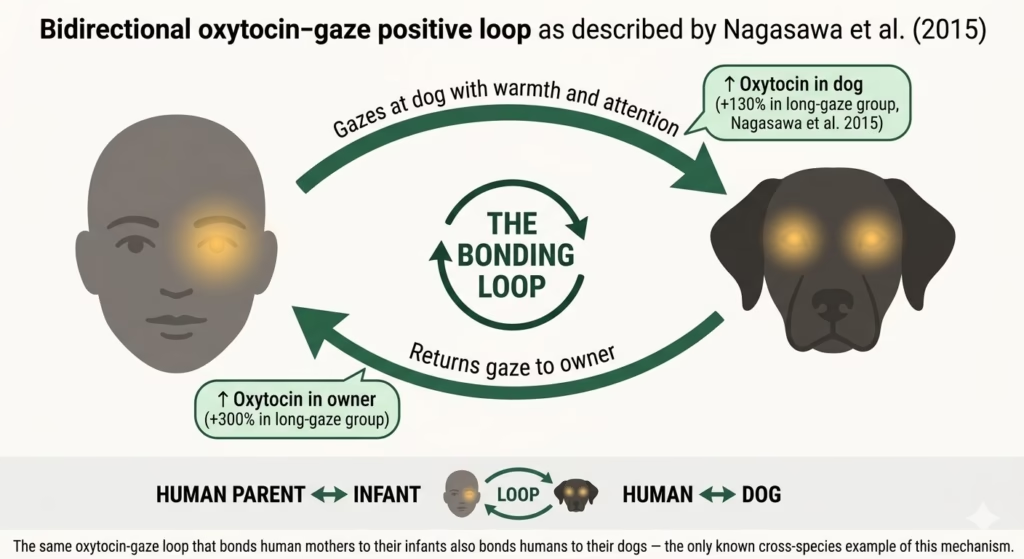
The most striking evidence of the bond's depth comes from neuroendocrinology. A landmark 2015 study by Nagasawa and colleagues, published in Science, demonstrated that mutual gazing between dogs and their owners triggers a surge of oxytocin — the neuropeptide associated with bonding, trust, and affiliation — in both species simultaneously. This is the same hormonal loop that operates between mothers and infants. No other interspecies relationship has been shown to activate this loop.
The implications are significant. The bond is not merely behavioural — it is biochemical. It is written into the body. When you look into your dog's eyes with warmth and attention, you are both, literally, falling in love.
Beyond oxytocin, research has identified dopaminergic reward pathways that activate in dogs during positive interaction with their owners, and mirror-neuron activity suggesting that dogs may experience a form of emotional resonance with human feelings. The picture that emerges is of a species exquisitely calibrated for emotional intimacy with humans.
1.3 What dogs need from us
Understanding what dogs actually need from the relationship is foundational to building it well. Dogs need, in rough order of urgency: safety (freedom from threat, both physical and psychological), belonging (secure attachment to a consistent human), predictability (a world that makes sense because its rules do not change arbitrarily), stimulation (physical, cognitive, and social), and autonomy (the ability to make small choices within safe parameters).
The first three — safety, belonging, and predictability — are so closely intertwined that they function as a single cluster. A dog who does not feel safe cannot fully bond. A dog who lacks a secure attachment cannot be reliably predictable. A dog whose world is unpredictable never quite relaxes. These needs are not negotiable.
1.4 What we gain in return
The research on human benefits of the human-dog relationship is substantial and growing. Regular interaction with dogs reduces cortisol, lowers blood pressure, and has been associated with reduced risk of cardiovascular events. Time with dogs activates the same oxytocin system that operates in the dog. Dogs provide a form of non-judgmental companionship that is particularly therapeutic for people experiencing depression, anxiety, and social isolation.
More subtly, caring well for a dog cultivates a set of capacities that are broadly valuable: attentiveness to non-verbal communication, patience with a being who cannot use language to explain itself, and the discipline to be consistent even when consistency is inconvenient. The relationship makes us better, in small but measurable ways, at relating.
Expert OpinionDr. Brian HareProfessor of Evolutionary Anthropology | Duke University / Duke Canine Cognition Centre “Dogs have hijacked our social system. They use the same cues that humans use to engage us — eye contact, facial expressions, approaching when distressed — and they do it better than any other species, including other primates. This is not manipulation. It is the product of a genuine evolutionary partnership, one of the most successful co-evolutionary relationships in the history of life on Earth. The dog did not domesticate itself by accident; it domesticated itself because we were worth domesticating.” Dr. Hare is the founder of the Duke Canine Cognition Centre and co-author of The Genius of Dogs and Survival of the Friendliest. His research investigates dog cognition, domestication, and the evolutionary origins of human social intelligence. |
| Research Spotlight
A 2019 meta-analysis of 24 studies (Herzog, Anthrozoös) found that dog ownership was associated with a 24% lower risk of all-cause mortality among individuals who had previously experienced a cardiac event. The researchers concluded that, while causality cannot be fully established, the mechanisms — increased physical activity, reduced cortisol, and the oxytocin-mediated bonding response — are biologically plausible and well-supported. |
Chapter 2
How Dogs See the World
2.1 The nose as primary organ
If there is a single fact about canine perception that should change everything about how you interact with your dog, it is this: the dog's primary sense organ is its nose. While humans extract roughly 80% of environmental information visually, dogs rely on olfaction to a degree that is, from a human standpoint, almost incomprehensible. A dog's nasal epithelium contains approximately 300 million olfactory receptors, compared to around six million in humans. The region of the brain dedicated to analysing smell is proportionally 40 times larger in dogs than in humans.
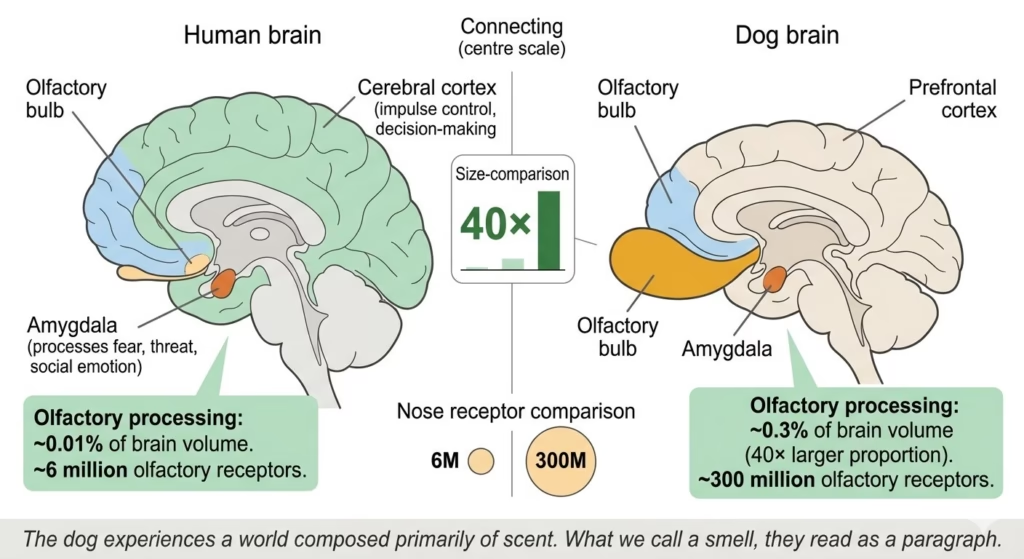
This is not merely a quantitative difference — it is qualitative. Dogs can detect the biochemical signatures of emotional states (fear produces measurable changes in sweat composition that dogs detect reliably). They can track scent trails hours after the scent-leaving individual has passed. They can identify specific individuals by scent alone with extraordinary accuracy. The world a dog inhabits is, in large part, an olfactory world invisible to us.
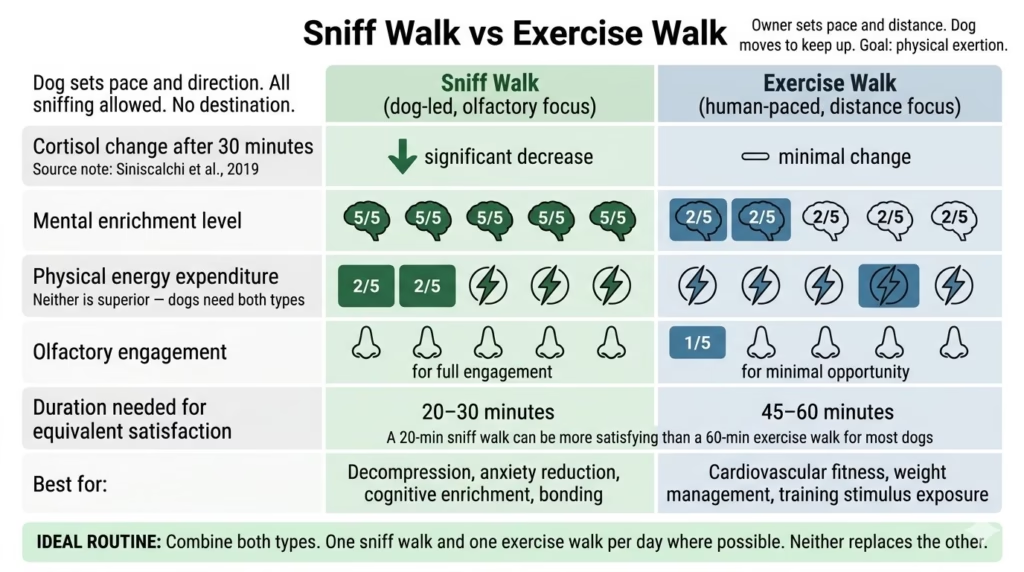
The practical implication: when your dog stops to sniff a lamp post for ninety seconds, they are reading a social newspaper. Pulling them away is the equivalent of someone tearing the newspaper from your hands mid-sentence. Allow sniffing. Sniff walks — walks in which the dog sets the pace and chooses what to investigate — are among the most enriching experiences available to a domestic dog.
2.2 Reading canine body language: the complete vocabulary
Dogs communicate primarily through body language, and the vocabulary is rich, precise, and often misread by humans. Literacy in this language is not optional for anyone serious about the relationship — it is foundational.
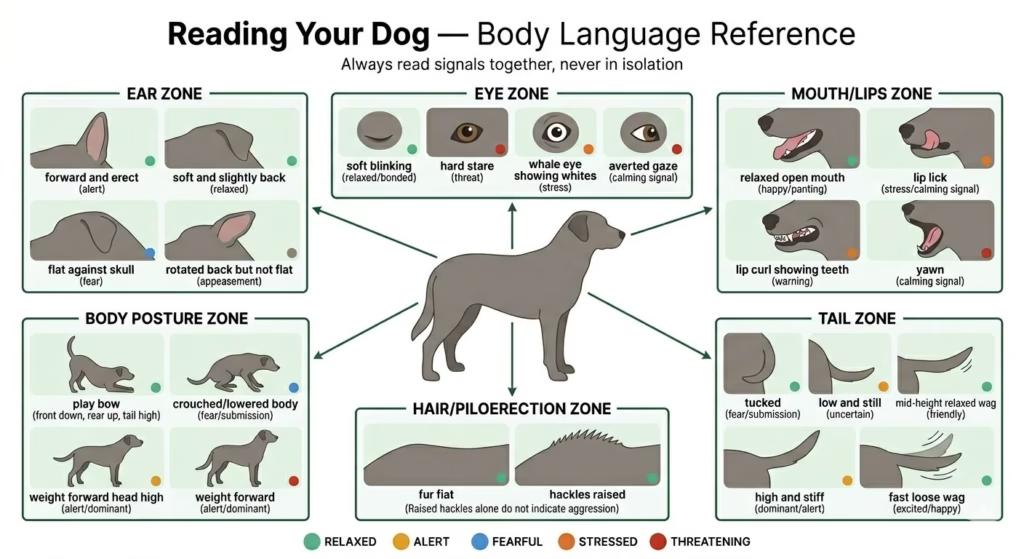
Tail position and movement: The tail is not a simple happiness meter. The height of the tail indicates arousal level; a very high tail signals high alertness or dominance posturing, while a low tail signals uncertainty or submission. Wagging direction matters: research by Vallortigara and Quaranta (2007) showed that rightward wag bias indicates positive affect; leftward bias indicates negative affect. A wagging tail does not mean a happy dog.
Ear position: Ears forward indicate alertness and engagement. Ears pinned flat against the skull indicate fear or extreme submission. Ears held back but not flat often indicate anxiety or appeasement.
Eye contact: Soft, blinking eye contact between bonded dog and owner is a positive affiliative signal. Hard, unblinking stare is a threat. Whale eye — visible whites at the corners — is a stress indicator. Averting gaze is a calming signal, often misread as inattention.
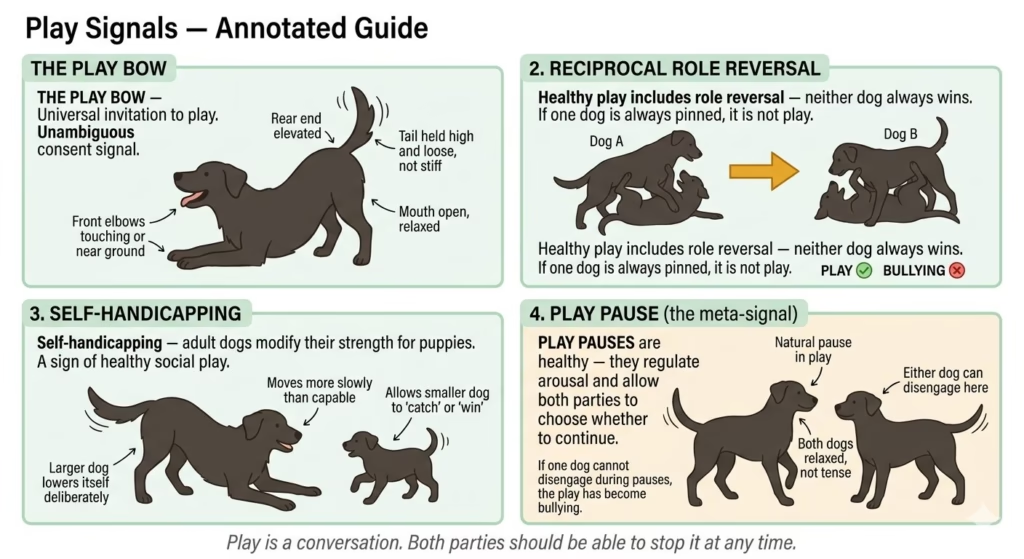
Body posture: A dog making itself large (weight forward, head high, fur raised) is expressing confidence or threat. A dog making itself small (crouched, weight back, head low) is expressing deference or fear. Play bow — front end down, rear end up — is an unambiguous invitation to play.
2.3 Stress signals and calming signals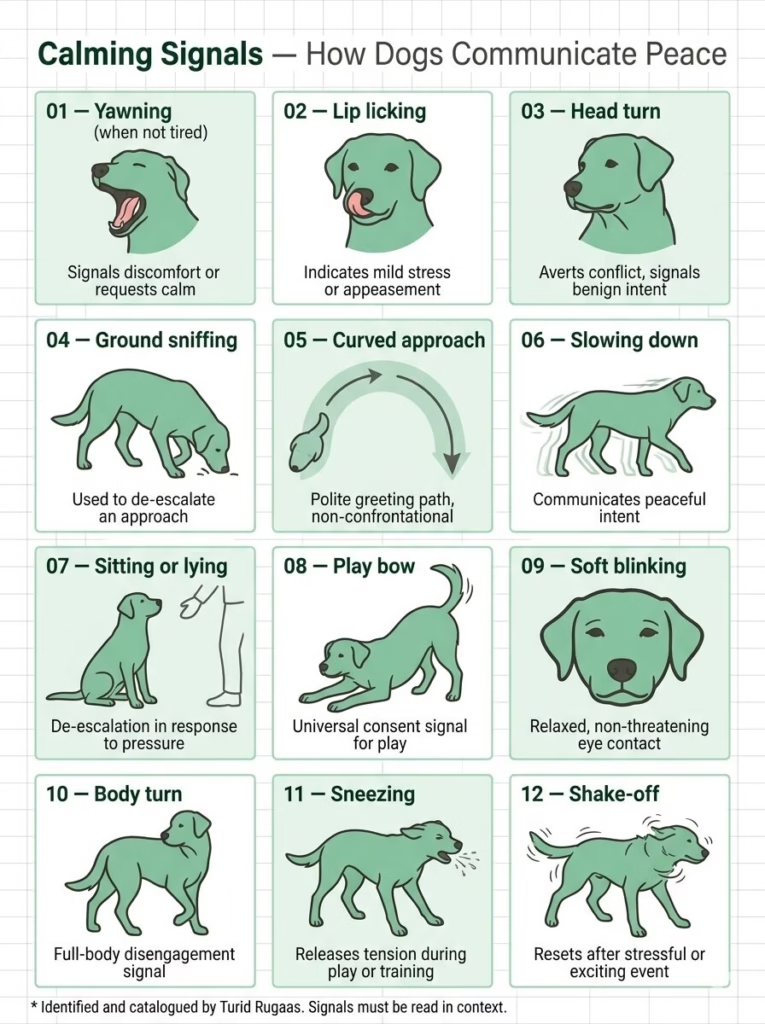
Norwegian ethologist Turid Rugaas identified and catalogued a set of signals dogs use to communicate and reduce tension, which she termed calming signals. These include: yawning (when not tired), lip licking (when not eating), turning the head away, sniffing the ground, walking in a curved path toward another dog or person, blinking slowly, and sitting or lying down when approached. Recognising these signals is critical because they often precede more visible stress responses, and responding appropriately can de-escalate a situation before it reaches that threshold.
Stress signals that indicate a dog is approaching its threshold of tolerance include: panting when not warm or exercised, excessive drooling, shaking as if wet, loss of ability to take food (indicates high arousal level), hyper-vigilance, inability to settle, repetitive behaviours such as licking or circling, and the freeze-stiff body posture that often precedes a snap or bite. Owners who can read these signals in real time are able to intervene protectively and build a dog's trust that they will be kept safe.
2.4 The emotional world of a puppy
The science of animal emotion has advanced substantially in the past two decades, and the emerging consensus is clear: dogs experience a rich emotional life. Paul Ekman's primary emotions — joy, fear, anger, sadness, surprise, and disgust — have measurable neurological and behavioural correlates in dogs. More complex social emotions, including jealousy (established by Cook et al., 2018) and a form of empathy (Huber et al., 2017), have also been documented.
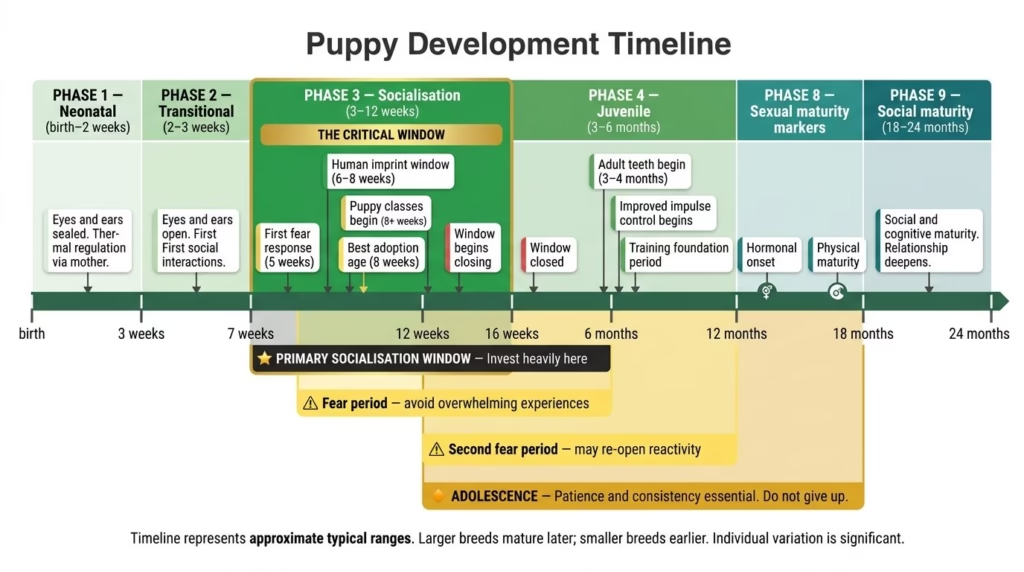
Puppies in particular experience the world with enormous emotional intensity and relatively poor emotional regulation. Fear is experienced fully but the capacity to contextualise it (this is safe, I have survived this before) develops slowly over months of positive experience. Joy is similarly unfiltered. This is why the early weeks of a puppy's life have such disproportionate influence on adult temperament: emotional memories formed in this period are particularly durable.
| Expert Opinion
Dr. Marc Bekoff Professor Emeritus of Ecology & Evolutionary Biology | University of Colorado Boulder “The evidence that dogs experience rich emotional lives is now overwhelming. The question is no longer whether dogs feel — of course they feel — but how we, as the humans who live with them, choose to honour that. A dog who has learned that their signals will be heard and respected is a dog who lives with far less chronic stress. The relationship literally changes their physiology. And ours.” Dr. Bekoff is one of the founders of the field of cognitive ethology. He is the author of more than 30 books including The Emotional Lives of Animals and Canine Confidential, and has been a pioneer in the scientific study of animal consciousness and emotions. |
Chapter 3
Trust — The Currency of the Bond
3.1 What trust means for a dog
Trust, for a dog, is not an abstract concept. It is a felt sense of safety in the presence of a specific individual. A dog who trusts their owner has learned, through consistent experience, that this person is predictable, that their presence signals safety rather than uncertainty, and that needs expressed through body language and vocalisation will be acknowledged rather than ignored.
This definition has important implications. Trust is not built through dominance, through making yourself the biggest presence in the room, or through forcing compliance. It is built through the accumulation of small, reliable experiences: the signal that predicted food actually produced food, the gentle voice that preceded the needle at the vet actually reduced the severity of the experience, the discomfort was acknowledged and the dog was moved away from it.
3.2 Predictability as safety
Predictability is perhaps the most underappreciated dimension of the trust relationship. Research on chronic stress in dogs consistently identifies unpredictability — not just unpleasant events, but the inability to anticipate what will happen — as a primary driver of cortisol elevation and anxiety. A dog who is sometimes punished for jumping up and sometimes greeted enthusiastically for the same behaviour lives in a state of perpetual uncertainty about what their world means. That uncertainty is corrosive.
The corollary is powerful: even rules that seem strict, from a certain perspective, provide enormous psychological relief if they are entirely consistent. A dog who knows that jumping up never produces the desired outcome (attention) and that sitting reliably does has a comprehensible, navigable world. Consistency is not severity — it is kindness in its most fundamental form.
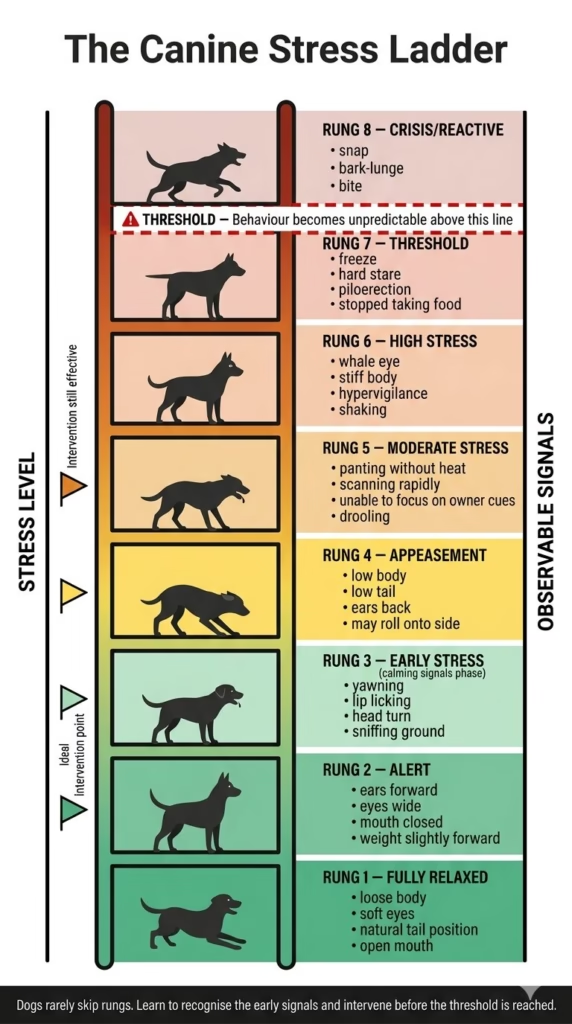
3.3 What breaks trust and how to repair it
Trust is broken when a dog's signals are ignored — when a dog showing stress signals is forced to remain in a frightening situation without relief, when a dog in pain receives punishment rather than veterinary attention, when the expectations shift without reason. It is also broken by sudden or explosive anger, which is experienced by dogs as a highly unpredictable and threatening event, even when it is directed at furniture or traffic rather than the dog.
Trust can be repaired, but it requires patience and consistency. The process is essentially the same as the process for building it initially: many small, reliable positive experiences, an attentiveness to the dog's signals, and a willingness to move slowly. Forced exposure — making a fearful dog confront what frightens them without a carefully managed gradual approach — reliably worsens trust. The therapeutic approach is systematic desensitisation with counter-conditioning: exposure at sub-threshold levels, paired with something the dog genuinely values, very gradually approaching the feared stimulus.
3.4 Building trust through everyday rituals
The most effective trust-building is not concentrated in training sessions but distributed throughout every day. Each time you notice your dog's stress signal and act on it, trust accumulates. Each time you call your dog to you and make it a pleasant experience (rather than using the recall to end all the fun), trust accumulates. Each time you maintain the same rule without exception, trust accumulates. The relationship is made in these unremarkable moments, not in the dramatic ones.
Daily rituals that are particularly effective trust builders include: a consistent morning routine that the dog can anticipate; a daily sniff walk where the dog leads; a regular training session of five to ten minutes, which should end on a success; and a period of quiet proximity — simply being together, without demands — which dogs experience as a form of social bonding equivalent to grooming in other species.
| Expert Opinion
Dr. Karen Overall Veterinary Behaviourist & Clinical Researcher | Penn Vet Working Dog Centre, University of Pennsylvania “Chronic unpredictability is one of the most toxic environments we can create for a dog. The neurobiological effects are measurable: elevated cortisol, changes in hippocampal volume, altered reactivity of the amygdala. When we talk about 'trust' in dogs, we are not being sentimental. We are describing a physiological state that has profound downstream effects on physical health, learning capacity, and quality of life. The most powerful thing an owner can do is simply be consistent.” Dr. Overall is a board-certified veterinary behaviourist and the author of the Manual of Clinical Behavioural Medicine for Dogs and Cats, widely regarded as the definitive clinical reference in the field. Her research focuses on the neurobiological correlates of anxiety and the efficacy of behavioural interventions. |
| Key Principle
Trust is not given — it is earned through repetition. Every consistent response to your dog's communication, every kept promise implied by a training cue, and every moment of genuine attentiveness is a deposit in an account that pays dividends in cooperation, resilience, and joy. |
Part TwoLeadership ReimaginedLeadership is not dominance. Part Two dismantles the most damaging myth in dog training — the alpha concept — and replaces it with a science-based model of the confident, caring guide that dogs actually follow. |
Chapter 4
What Leadership Really Means
4.1 The origins of the dominance myth
Few ideas have done more damage to the human-dog relationship than the concept of dominance hierarchy as the organising principle of canine society. The popular version of the idea — that dogs are pack animals who are constantly seeking to rise to the position of alpha, that they view their human family as a pack and will exploit any perceived weakness to seize leadership, and that effective training requires the owner to establish and maintain dominance — is almost entirely wrong. Understanding how this idea developed, and why it persists, is essential context for replacing it with something better.
The dominance model originated in a 1970 study of captive wolves by David Mech. The wolves Mech observed were unrelated individuals forced together in an enclosure — a highly artificial situation that produced the kind of aggressive status competition never observed in free-living wolf families, which are organised around a mated pair and their offspring, not a dominance hierarchy of unrelated adults. Mech himself has spent decades publicly correcting the misapplication of his early work, writing in 1999 that the concept of a rigid wolf dominance hierarchy and especially the concept of the alpha is outdated and based on faulty research.
The wolf-to-dog extrapolation compounds the error. Dogs diverged from wolves more than 15,000 years ago. They have been living alongside humans for so long that their social cognition, emotional regulation, and communicative strategies have been profoundly modified by the domestication process. Studies of free-ranging dog populations — the most ecologically valid comparison — show that dogs do not form stable dominance hierarchies at all. They live in loose, fluid social groups in which relationships are contextual rather than fixed.
4.2 What the science actually shows
The first comprehensive scientific critique of dominance-based training appeared in a 2009 position statement by the American Veterinary Society of Animal Behaviour (AVSAB), which concluded that dominance theory is not supported by the scientific literature and that training methods based on this theory are likely to increase fear and aggression in dogs.
Subsequent research has repeatedly confirmed this assessment. A 2008 study by Herron, Shofer, and Reisner found that 25% of dogs subjected to the alpha roll (being physically forced onto their back) showed aggression. Staring a dog down, hitting, and physically forcing submission produced the highest rates of aggressive responses of any training techniques studied. Conversely, methods based on positive reinforcement produced the lowest aggression rates and the highest compliance.
The neurological explanation is straightforward. Aversive stimuli activate the amygdala and the stress-response cascade. A dog who is operating under chronic threat is in a neurological state that is physiologically incompatible with learning. They are not attending, encoding, and practising; they are surviving. Fear may suppress behaviour in the short term, but it does not teach anything, and the suppressed behaviour tends to re-emerge under conditions of reduced threat, often with added emotional intensity.
4.3 The trusted guide model
The evidence points toward a fundamentally different model of leadership — one that is more demanding, not less. The trusted guide is an individual whose presence reliably predicts good things, whose signals are consistent and comprehensible, who manages the environment to prevent problems rather than punishing their occurrence, and who maintains the same expectations across situations and over time.
This model draws on the concept of secure attachment, originally developed by John Bowlby to describe human infant-caregiver relationships. Research by John Bradshaw and Rachel Casey has shown that dogs form attachments to their primary caregivers that have all the characteristics of secure attachment: proximity seeking, the use of the attachment figure as a safe base for exploration, and heightened distress at separation. The attachment figure in the trusted guide model is not an alpha wolf — they are something much closer to a trusted parent.
4.4 Why calm confidence is contagious
Dogs are extraordinarily sensitive to the emotional states of their companions, including their human companions. Research using functional MRI (Andics et al., 2016) has demonstrated that dogs process human vocal emotional cues in brain regions functionally homologous to those used by humans — and that this processing is both rapid and largely automatic. When you are anxious, your dog knows it before you have expressed it in any deliberate way: your heart rate, your cortisol level, your muscle tension, and your movement quality all broadcast your emotional state in channels your dog is continuously monitoring.
The practical consequence is that calm confidence in the owner genuinely regulates the dog's nervous system. This is not a training trick — it is a neurobiological reality. Breathing slowly and deeply before entering a potentially difficult situation, moving with purpose rather than hesitation, and maintaining a steady vocal tone are all communicative acts that your dog reads and responds to. Becoming the kind of leader your dog needs means, in part, developing the emotional regulation capacity to project calm under conditions that are genuinely challenging.
| Expert Opinion
Dr. Ian Dunbar Veterinarian, Animal Behaviourist & Author | Founder, Association of Professional Dog Trainers (APDT) “The dominance paradigm was never about dogs. It was about human psychology — about the comfort of having a simple explanation for complex behaviour, and about a cultural tradition of authoritarian relationships that we mapped onto an animal. The irony is that dominance-based training requires much less of the trainer. You do not have to understand behaviour, motivation, or communication. You just have to be harder than the dog. Building genuine leadership through relationship is far more demanding — and far more rewarding.” Dr. Dunbar is a pioneer of modern dog training and the originator of puppy socialisation classes. He has authored and hosted numerous books and television programmes on dog behaviour and is the recipient of the Association of Pet Dog Trainers Lifetime Achievement Award. |
Chapter 5
Becoming a Confident Leader
5.1 The energy you bring into the room
Leadership in the trusted guide sense begins before you give a single cue or ask for a single behaviour. It begins in the quality of attention you bring to every interaction. Dogs are, to use a term borrowed from clinical psychology, extraordinarily attuned to their attachment figures — they monitor mood, intention, and level of presence in real time. A distracted leader is experienced as an unreliable one. A consistently present, attentive leader is experienced as safe.
This does not mean performing positivity. Dogs are not fooled by false cheerfulness layered over underlying anxiety. It means, more practically, arriving at interactions with your dog mentally present: not checking your phone, not moving through a training session with one eye on the clock, not delivering a reward mechanically while your attention is elsewhere. The quality of engagement is itself communicative.
5.2 Consistent rules as the highest form of kindness
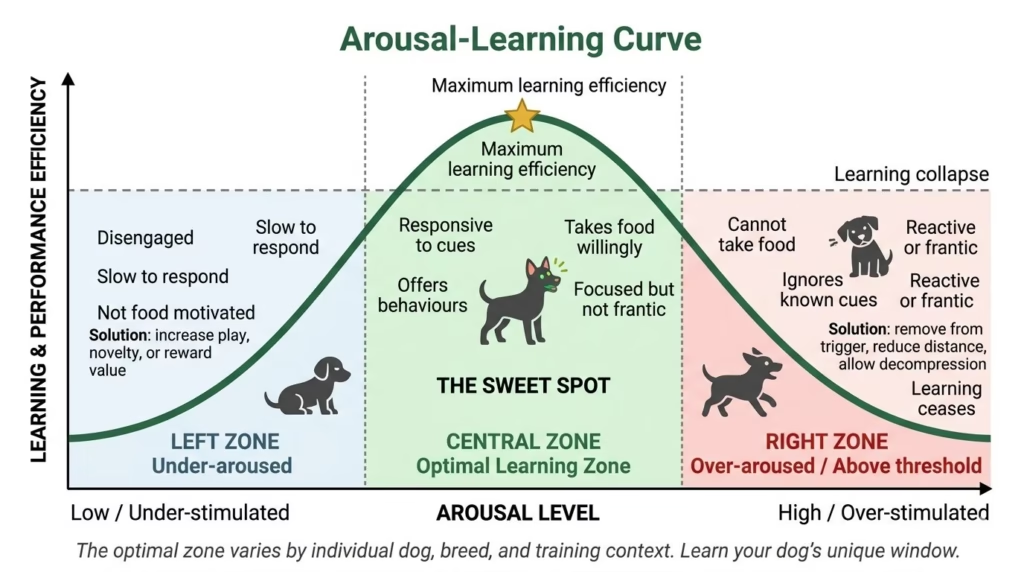
The second major dimension of confident leadership is the maintenance of consistent rules. This is, for many owners, the most difficult aspect, because it requires overriding the natural human impulse toward situational flexibility and what might feel like compassion in the moment. If the rule is that the dog does not jump on visitors, the rule applies when Grandmother visits at Christmas and finds the jumping endearing. If the rule is that the dog waits at the door, the rule applies on rainy mornings when you are late.
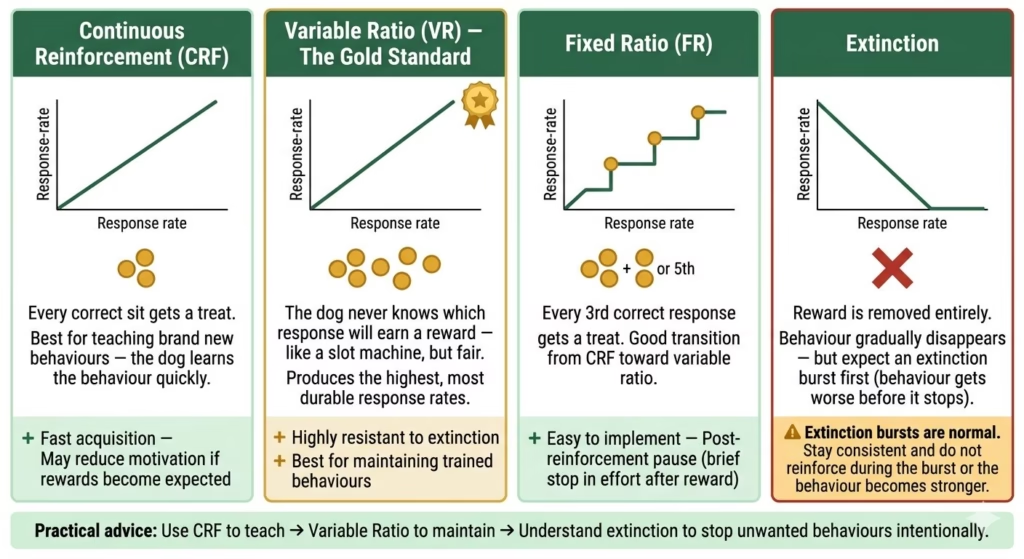
The reason consistency matters so profoundly is that dogs do not make exceptions — they make patterns. A behaviour that is reinforced 20% of the time is actually harder to extinguish than one reinforced 100% of the time, because the intermittent reinforcement schedule produces a dog who is highly motivated to keep trying. Inconsistent rules do not produce a flexible, adaptable dog; they produce a persistent, anxious one who never knows what to expect.
5.3 Decision-making on your puppy's behalf
One of the most important and least discussed aspects of leadership is the function of protection. Dogs — particularly puppies — are not equipped to navigate the full complexity of the human world safely. They lack the cognitive tools to understand traffic, the appropriate social distance from a frightened child, or the danger of ingesting a toxin that smells interesting. The confident leader makes decisions on the dog's behalf in these situations — not by punishing the dog for natural curiosity, but by managing the environment so that natural curiosity does not lead to harm.
This principle of management over correction is fundamental to modern behavioural science. Prevention of unwanted behaviour through environmental management is more effective, faster, and kinder than waiting for the behaviour to occur and attempting to suppress it after the fact. Baby gates, crates used properly as dens rather than prisons, leashes, and careful social introductions are all leadership tools — they are the confident guide deciding what experiences a puppy is ready for.
5.4 Handling uncertainty without panic
Confident leadership is tested most clearly not in controlled training environments but in novel or challenging situations: a sudden thunderstorm, an off-leash dog rushing toward yours, a puppy's sudden refusal to go somewhere they usually enjoy. In these moments, the owner's response is the primary data point the dog uses to assess threat level. An owner who freezes, panics, or overreacts broadcasts a threat assessment that the dog adopts. An owner who remains physically calm, uses a steady reassuring voice, and takes purposeful action communicates that the situation is manageable.
Developing this capacity is genuinely a skill, and it can be practised. Systematic exposure to mild challenges — attending puppy classes, taking your dog to novel environments, practising loose-leash walking in mildly stimulating areas — builds both the dog's resilience and your own. Owners who have navigated many small challenges together with their dog find that their calm in larger ones is genuine rather than performed.
| Expert Opinion
Patricia McConnell, PhD Applied Animal Behaviourist & Author | University of Wisconsin-Madison (Emerita) “Dogs don't need an alpha. They need an adult. Someone who sets clear expectations, who is predictably kind, who doesn't melt down when things go wrong, and who makes them feel safe enough to learn. The dogs I have seen with the most serious behaviour problems were almost never dogs whose owners were 'too soft' — they were dogs whose owners were inconsistent, anxious, or unpredictable. Calm, warm consistency is the thing. It is not glamorous advice, but it is the most effective leadership tool that exists.” Dr. McConnell is an applied animal behaviourist, ethologist, and the author of numerous books including The Other End of the Leash and For the Love of a Dog. She has been at the forefront of translating animal behaviour science into practical guidance for dog owners for over 30 years. |
Chapter 6
Respect vs Fear — Getting It Right
6.1 The critical distinction
Respect and fear can look identical from the outside. A dog who does not jump, who waits at doors, who comes when called, and who does not steal food from the counter might be doing all of these things either because they trust that compliance produces good outcomes or because they have learned that non-compliance produces painful consequences. The behaviour is the same; the internal state is entirely different. And the internal state matters — for welfare, for the quality of the relationship, and for the long-term reliability of the behaviour.
Fear-based compliance is brittle. It holds only as long as the threat of punishment is sufficiently proximate. Remove the owner from the room and the fear-trained dog has no internal motivation to maintain the behaviour. By contrast, a dog who has genuinely learned that certain behaviours produce reliably good outcomes has an internal motivation that is portable — it works whether or not the owner is present, whether or not the dog thinks they are being watched.
6.2 Recognising fear-based compliance
The signs of fear-based compliance are often subtle and easily misread as calm, well-mannered behaviour. They include: the dog who avoids eye contact and moves with a low, slightly crouched posture around their owner; the dog who executes cues correctly but without any of the tail-wagging, loose-bodied enthusiasm of a dog who genuinely enjoys working with their person; the dog who flinches when a hand is raised for any reason; the dog who freezes rather than actively engaging during training; and the dog who, given the choice, consistently moves away from their owner rather than toward them.
A key diagnostic question is: does your dog choose to be near you? A dog who seeks proximity voluntarily, who brings toys for games, who rests with physical contact when they could choose elsewhere, is expressing positive attachment. A dog who maintains distance even in safe environments is expressing something else.
6.3 Why punishment backfires
The use of punishment in dog training is not merely a welfare concern — it is an efficacy concern. Punishment has several specific failure modes that are well-documented in the learning theory literature. First, it suppresses behaviour generally, not specifically, which means it is likely to suppress desirable behaviours along with undesirable ones. Second, it does not teach the dog what to do — only what not to do — which leaves an enormous behavioural vacuum that tends to fill with alternative, often equally undesirable, behaviours. Third, it associates the learning context with aversion, which reduces motivation to engage with training.
The most serious failure mode is the association of the owner with punishment. A dog who has been physically punished by their owner develops a conditioned emotional response to that person that operates below the level of conscious training: they monitor the owner's moods with hypervigilance, they are prone to anxiety when the owner is displeased, and they are less likely to offer novel behaviours spontaneously because they have learned that incorrect attempts carry a cost. This is precisely the opposite of the relationship that enables advanced training and genuine partnership.
6.4 Boundaries set with warmth
None of this means that dogs should have no limits — quite the contrary. Dogs who are never told no, who are allowed to do anything, who have owners so anxious about the relationship that they cannot enforce any boundary, are not happier than dogs who have clear limits. They are more anxious, because a world without structure is a world without predictability.
The answer is boundaries set with warmth and enforced with consistency. This looks like: quietly removing a puppy from the sofa without drama or anger, and redirecting them to their bed. It looks like a calm, flat tone for a simple no, followed immediately by the indication of an alternative. It looks like a leash guiding a dog away from a situation rather than a yank punishing them for approaching it. The boundary is real; the enforcement is matter-of-fact rather than emotional; and the relationship remains warm on both sides of it.
| Expert Opinion
Dr. Susan Friedman Behaviour Analyst & Applied Behaviourist | Utah State University “Coercion is not leadership. Leadership is demonstrated by the quality of the relationship, not by the capacity to force submission. The question to ask is always: given a completely free choice, does my dog choose to be near me, to work with me, to engage with me? If the answer is no — if cooperation is obtained only through threat or force — then what has been built is not a relationship. It is a power structure. And power structures are fragile in ways that relationships are not.” Dr. Friedman is a pioneer in applying the science of behaviour analysis to non-human animals and a leading advocate for the use of the least-intrusive, minimally aversive approach to behaviour change. She is the creator of Behaviour Works, an online course for animal care professionals. |
| Practical Marker
Check the tail. A dog working with genuine enthusiasm shows a loose, mid-height, freely wagging tail between cues. A dog working under duress shows a low, possibly tucked tail or a high, stiff wag (which indicates arousal, not pleasure). The body does not lie. |
Part ThreeClear CommunicationCommunication is where the relationship becomes tangible. Part Three covers the mechanics of two-way communication, the science of effective cues, and the art of using reinforcement to deepen the bond. |
Chapter 7
Speaking Dog
7.1 The two-way street
Most training literature focuses on how to communicate to dogs: which cues to use, how to time rewards, how to shape behaviour through successive approximation. This chapter addresses the other half of the communication equation, which receives far less attention: how to listen to your dog. The most fluent communicators in the human-dog relationship are not those who have developed the clearest signals — they are those who have developed the sharpest receptive capacity.
The quality of the relationship is directly related to how well each party understands the other. Dogs who feel heard — whose signals produce appropriate responses from their owners — develop a kind of communicative confidence that makes them easier to live with, more willing to attempt new behaviours, and more resilient under stress. The experience of being understood is not a luxury; it is a biological need.
7.2 Decoding calming signals in daily life
Building literacy in calming signals is less a matter of memorising a vocabulary and more a matter of developing a habit of observation. The practice is this: at least once per day, consciously observe your dog for a full two minutes without doing anything — no talking, no touching, no asking for behaviour. Simply watch. What is the tail doing? What are the ears doing? Is the body loose or tight? Is the breathing regular or slightly held? What does the expression communicate?
Over days and weeks, this observation practice builds an internal baseline for what your specific dog looks like when relaxed, which makes deviations from that baseline legible when they occur. No two dogs are exactly alike in their expression; learning to read your dog specifically, rather than dogs generically, is the more valuable skill.
7.3 Different barks and their meanings
Vocalisation is a relatively small component of canine communication, but it carries information that owners often find useful. Research by Sophia Yin and others has identified consistent acoustic patterns associated with different functional categories of bark. High-pitched, rapid repetitive barking is typically associated with excitement or play solicitation. Low-pitched, slower barking with pauses is typically associated with alert or warning. A single sharp bark often indicates startlement. Whining and whimpering indicate distress or frustration. Howling is a distance communication signal, often triggered by specific auditory stimuli.
These are patterns, not absolute codes. Individual dogs vary in their vocal repertoire, and context is always the essential interpretive frame. The same dog may produce structurally similar barks in very different emotional states; the body language that accompanies the vocalisation is always more diagnostically reliable than the sound alone.
7.4 Play versus overstimulation — knowing the difference
One of the most important and practically urgent discriminations for puppy owners is the distinction between play and overstimulation. Play in dogs is characterised by the play bow (the universal consent signal), reciprocal role reversal (neither party always in the more powerful position), self-handicapping by larger or older dogs, and a general looseness and bounciness of movement. Pauses in play — short breaks that regulate arousal — are a normal and healthy feature.
Overstimulation looks different: movements become faster and less fluid; pauses disappear; calming signals increase; bite pressure escalates; the dog may begin to resource guard or fixate; and the body increasingly loses the playful looseness of genuine play. At this point, continuing the interaction is not enjoyable for the dog and will not strengthen the bond. The confident guide recognises the transition and ends the session calmly, before the dog has an opportunity to practise overaroused behaviour.
| Expert Opinion
Turid Rugaas Ethologist, Dog Trainer & Author | Hagen Hundeskole, Norway “We speak a great deal about training dogs to understand us. Almost nobody speaks about training ourselves to understand dogs. But the dogs are communicating all the time — constantly, fluently, with great precision. They are telling us when they are comfortable and when they are not, when they want to approach and when they need space, when the game is still fun and when it has gone too far. The problem is not that dogs are difficult to read. The problem is that we are not looking.” Turid Rugaas is the originator of the calming signals framework and one of the most influential ethologists in modern dog training. She is the author of On Talking Terms With Dogs: Calming Signals, a foundational text translated into dozens of languages. |
Chapter 8
Teaching Your Puppy to Listen
8.1 Cue vs command — a foundational shift
The language we use to describe what we ask of our dogs encodes assumptions about the relationship. The word command implies a military hierarchy in which non-compliance is insubordination. The word cue, drawn from the theatre, implies a signal that invites a performance — a communication that the performer has been trained to respond to because the response has been made worthwhile. This is more than semantics: the mental model you hold as an owner shapes how you respond to non-compliance, how you set up training situations, and ultimately what kind of relationship you build.
When a dog fails to respond to a cue, the command paradigm says the dog is being disobedient and the response is to increase pressure. The cue paradigm asks instead: has the dog been adequately trained at this level of difficulty? Is the environment too distracting? Is the dog's arousal level too high or too low? Is the cue clear enough? Was the value of compliance sufficient? This diagnostic approach produces far faster and more durable results than pressure-based responses to non-compliance.
8.2 The mechanics of timing
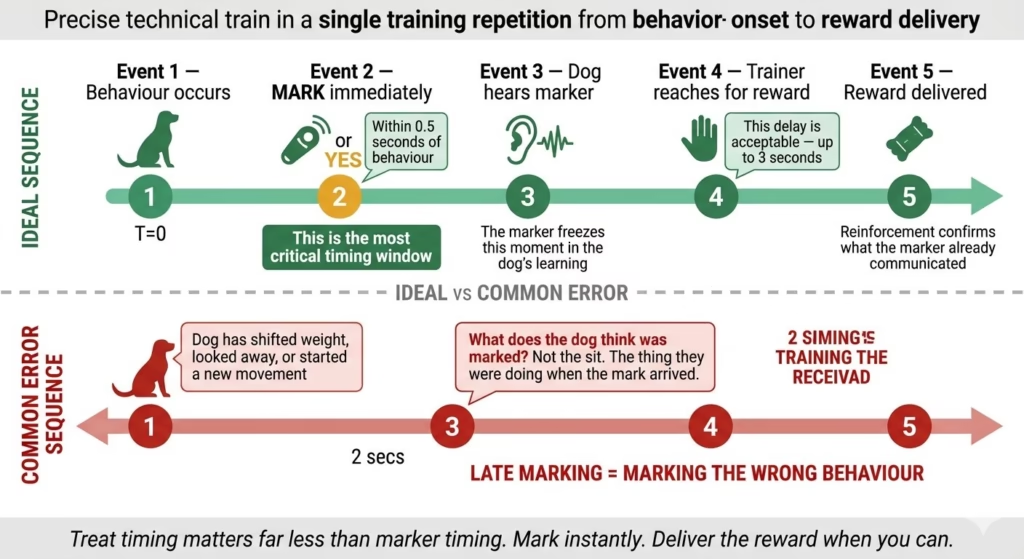
Timing is perhaps the single most technically demanding aspect of effective training, and improvements in timing produce improvements in learning rate that are disproportionate to the effort invested. The key is the marker: a precise, consistent signal that tells the dog exactly which behaviour produced the reinforcement. Without a clear marker, the dog receives ambiguous feedback, and the training process slows significantly.
The most widely used marker is the clicker — a small mechanical device that produces a distinctive click sound. The click is effective because it is acoustically precise (unlike a word, which varies with mood, timing, and pronunciation), consistent, and easily distinguishable from the ambient soundscape. The use of a verbal marker (often Yes or the word Good in a flat, consistent tone) is a valid alternative for owners who find the clicker cumbersome.
The critical principle is: mark the instant the target behaviour occurs, then deliver the reinforcement. The mark bridges the gap between behaviour and reward, allowing the reinforcement to be delivered seconds later without losing its informational value. The sequence is: behaviour occurs — mark immediately — deliver reinforcement. The delay acceptable between mark and delivery is considerably longer than the delay acceptable between behaviour and mark.
8.3 Voice, pitch, and body posture
Humans communicate meaning through acoustic parameters — pitch, pace, volume, and prosody — that are highly salient to dogs. Research by Andics and colleagues at the Neuroethology of Communication Laboratory in Budapest has established that dogs process the emotional content of human vocalisations in brain regions with functional analogies to those used by humans, and that they integrate acoustic and semantic information in ways that reflect genuine linguistic comprehension at a basic level.
The practical implications: use a warm, slightly higher pitch for praise and reinforcement (this is universally positive across mammalian species). Use a calm, level tone for cues. Use a very flat, brief tone for negative markers (indicating that the behaviour did not earn reinforcement — this is not punishment, simply information). Never use your dog's name in association with anything the dog finds aversive; the name should always predict good things. Body posture should be consistent with vocal communication: bending down to the dog's level invites engagement; standing over them is mildly threatening.
8.4 When to repeat — and when not to
One of the most common errors in training is repeating cues. Sit... Sit... Sit! SIIIIT. The effect of this pattern is to teach the dog that the first repetition of the cue carries no information — that Sit means the prelude to the real cue rather than the thing itself. This is entirely a trainer error, and it produces dogs who wait for multiple repetitions before complying, which owners then describe as stubbornness.
The rule is simple: cue once, wait several seconds, and if no response is forthcoming, make it easier — reduce the distraction level, move closer to the dog, increase the value of the reward — and cue again. If the dog reliably cannot respond to the cue in the current environment, that environment is too advanced for the dog's current training level. Retreat to where the dog can succeed, build the reinforcement history there, and gradually increase the challenge.
| Expert Opinion
Bob Bailey Master Trainer & Behaviourist | Animal Behaviour Enterprises (Ret.) “Timing is everything. The animal does not know what you wanted — it only knows what it did in the moment the consequence arrived. A training error is almost always a timing error: the reinforcement arrived too late, the marker was ambiguous, the cue was given at the wrong arousal level. The beautiful thing is that timing is entirely improvable with practice. Think of it as a motor skill, not a talent. Film your sessions. Review the film. Correct the timing. The dog's learning rate will improve immediately.” Bob Bailey trained over 140 species of animals during a 50-year career, including work with the US Navy's Marine Mammal Programme. He is considered one of the foremost authorities on operant conditioning and the technical mechanics of marker-based training. |
Chapter 9
Positive Reinforcement as a Love Language
9.1 Reinforcement as relationship
Positive reinforcement is most often discussed as a training technique, and it is an excellent one. But this framing undersells it significantly. Every time you reinforce a behaviour, you are communicating something to your dog: I noticed what you did. I valued it. Here is something that expresses that value. That communicative act, repeated thousands of times over the life of the relationship, builds a richly collaborative dynamic in which the dog actively participates in the relationship rather than merely complying with it.
This framing also clarifies why reinforcement should not be reserved for formal training sessions. The most powerful reinforcement happens in the unremarkable moments of daily life: the dog who chooses to lie quietly at your feet is reinforced with a brief word and a gentle stroke. The dog who comes when called gets greeted with genuine warmth. The dog who makes eye contact and checks in during a walk receives a treat and a smile. These micro-reinforcements, distributed throughout the day, are the fabric of the relationship.
9.2 Expanding the reinforcement repertoire
Most owners default to food as a primary reinforcer, and food is genuinely effective — it is biologically significant, easy to deliver at the right moment, and can be calibrated in value (a piece of kibble versus a piece of roast chicken) to match the difficulty of the training context. But a relationship built exclusively on food reinforcement has a ceiling. For the relationship to deepen, the reinforcement repertoire needs to expand.
For most dogs, the most powerful non-food reinforcers are: play (particularly interactional play involving the owner — tug, chase, fetch), physical affection (for dogs who genuinely enjoy it — many dogs do not, and the dog's response, not the owner's desire, is the guide), access to highly valued environmental stimuli (the sniff walk, the opportunity to greet a friendly dog), and social engagement (enthusiastic verbal praise delivered with full attention, not mechanical words delivered while looking at something else). Identifying what your specific dog finds most reinforcing outside of food, and deploying those reinforcers strategically, dramatically deepens the bond.
9.3 Jackpots, variety, and keeping engagement alive
Two principles from the learning theory literature deserve particular attention here. First, the jackpot principle: occasionally delivering a much larger than usual reinforcement for a particularly good performance creates a burst of enthusiasm in the learner that carries over into subsequent training. Jackpots are not effective if used too frequently (they become the new baseline expectation), but deployed for genuinely exceptional effort, they produce measurably increased motivation in subsequent sessions.
Second, variability in reinforcement type maintains engagement in ways that consistency cannot. A dog who always receives the same small food treat becomes habituated to it and the reinforcing value diminishes. A dog who sometimes gets a piece of cheese, sometimes gets a wild game of tug, and sometimes gets a long sniff of something extraordinarily interesting maintains much higher engagement, because the unpredictability of the specific reinforcer keeps the motivational system active in a way that is distinct from the demotivating unpredictability of inconsistent rules.
9.4 Fading lures without losing engagement
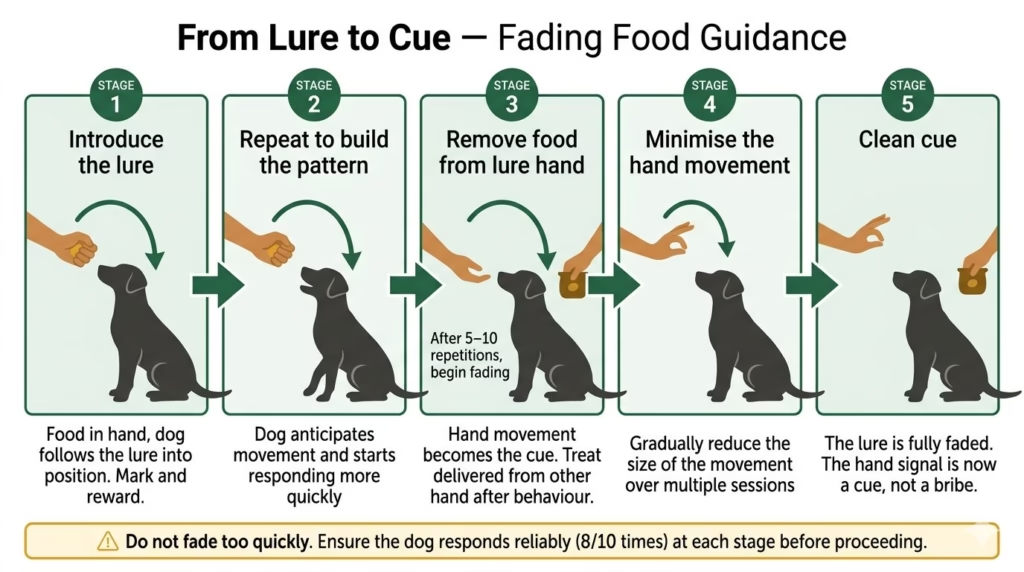
Lure-based training — using food or a toy to physically guide the dog into a desired position — is an effective way to begin teaching new behaviours, particularly with puppies. However, the lure must be faded relatively quickly, or it becomes a bribe rather than a training tool: the dog will perform only when the lure is visible. The process for fading the lure is systematic and gradual.
Once the dog is reliably following the lure into the desired position, begin using the same hand movement without food in the hand (the food is in your other hand or in a treat pouch). The hand movement becomes the cue; the food follows as reinforcement after the behaviour is performed. Over several sessions, the hand movement can become smaller and more stylised until it is a clean, compact signal. This process should be undertaken before the dog has had more than ten or fifteen repetitions of the lured version, while the behaviour is still new enough that the dog has not yet strongly associated performance with visible food.
| Expert Opinion
Dr. Susan Garrett World Champion Dog Agility Trainer & Behaviourist | Say Yes Dog Training, Ontario “The best reinforcement is the one your dog chooses, not the one you decide they should want. I have trained dogs who would rather have a thirty-second game of tug than any amount of food on earth. I have trained dogs who would sell their soul for a piece of cheese. The relationship deepens when you pay attention to what your dog actually values, not what is convenient for you to deliver. Reinforcement is not a salary. It is a conversation. Pay attention to what the other party is saying.” Dr. Garrett is a multiple world agility champion and one of the most influential educators in modern dog training. She is the creator of Recallers, a leading online dog training programme, and the author of Shaping Success. Her training philosophy centres on building intrinsic motivation and genuine enthusiasm in the learner. |
Part FourA Relationship for LifeThe bond does not end at puppyhood. Part Four addresses adolescence, the qualities of time that actually build the relationship, and how the bond evolves through adulthood and the final chapter of a dog's life. |
Chapter 10
Navigating the Adolescent Phase
10.1 The neurological reality of adolescence
Between approximately six and eighteen months of age — with significant breed variation, larger breeds maturing later — most dogs go through a period that owners find deeply bewildering and that is the single most common reason dogs are surrendered to shelters. The dog who was attentive and responsive as a young puppy appears to have forgotten everything. They are distracted, impulsive, slow to comply, easily aroused, and prone to behaviours that were apparently extinguished months ago.
This is not a training failure, a relationship failure, or a characterological problem with the dog. It is a neurological event. The adolescent dog's brain is undergoing massive structural reorganisation. Synaptic pruning — the elimination of underused neural connections — proceeds at an enormous rate. The prefrontal cortex, which in mature mammals is responsible for impulse control, decision-making, and the inhibition of instinctive responses, is among the last brain regions to reach full functional maturity. The adolescent dog is, quite literally, operating with reduced capacity for the behaviours that require the most neural self-regulation.
10.2 What to expect month by month
The early adolescent phase (6-9 months) is typically characterised by increased reactivity to environmental stimuli, reduced food motivation in highly stimulating environments, increased sexual behaviour in unneutered animals, and occasional episodes of apparent boldness followed by apparent regression to puppy-like fearfulness. This is a normal developmental oscillation, not a sign of developing pathology.
The mid-adolescent phase (9-14 months) often produces the most challenging behaviour. Impulse control is at its lowest point relative to the dog's size and physical capability. Resource guarding, frustration-based aggression, and selective deafness to well-trained cues are all more common in this window. It is also the period when the social fear window, opened briefly in early puppyhood, may re-open, making some previously comfortable dogs newly reactive to strangers, other dogs, or novel environments.
The later phase (14-24 months) is characterised by gradual stabilisation as the prefrontal cortex approaches functional maturity. Most dogs emerge from this phase calmer, more controllable, and with the training that survived adolescence genuinely consolidated. The behaviours that were established strongly enough to survive the pruning period are now deeply wired.
10.3 Staying consistent when it is hardest
The consistent application of training principles during adolescence is disproportionately valuable, for two reasons. First, the behaviours that survive this period become structurally embedded in the adult dog's repertoire. Second, the relationship maintained through this period provides the template for the adult relationship. Dogs whose owners maintained warmth, consistency, and engagement through adolescence emerge with a bond of particular depth — they have experienced that the human's care is not conditional on easy behaviour.
Practical strategies for surviving adolescence: reduce the difficulty of training exercises temporarily, building success in less stimulating environments. Increase management to prevent rehearsal of unwanted behaviours. Do not stop training — rather, adapt it to the dog's current capacity. Maintain the daily routine, which provides the predictability the adolescent dog's disordered nervous system needs. And, crucially, do not take the regression personally. It is not about you.
| Expert Opinion
Dr. Naomi Harvey Research Manager in Canine Behaviour | Dogs Trust & University of Nottingham “Our research with Dogs Trust found that dogs surrendered to shelters were most commonly aged between eight and eighteen months — peak adolescence. The owners described dogs who had become unmanageable, but in many cases the management strategies they were using were the same ones that had worked on a young puppy and were simply no longer matched to an adolescent dog's very different developmental needs. Adolescence is real, it is biologically driven, and it is survivable. But it requires adjustment, patience, and an understanding of what is actually happening in the dog's brain.” Dr. Harvey led a landmark 2020 study in Biological Letters demonstrating the neurological parallels between canine and human adolescence, including the link between reduced responsiveness to owner cues and insecure attachment style. The study was one of the first to establish the scientific reality of dog adolescence. |
Chapter 11
Quality Time — What Actually Counts
11.1 The difference between presence and quality
Time spent in the same house as a dog is not the same as time spent with a dog. A dog who spends twelve hours a day in a home where no one acknowledges them, engages with them, or responds to their attempts at communication is, in a meaningful sense, lonely — regardless of the number of people physically present. The research on attachment in dogs consistently shows that the quality of interaction — attentiveness, responsiveness, shared activity — is more predictive of bonding measures than raw time of proximity.
This is simultaneously reassuring and challenging. Reassuring, because it means that owners who work full days are not automatically providing an impoverished relationship — thirty minutes of genuine quality interaction can be more bonding than eight hours of cohabitation. Challenging, because it requires intentionality about how we use the time we do have with our dogs, rather than assuming that being in the same room is sufficient.
11.2 Sniff walks — the most underrated enrichment tool
The sniff walk is among the most powerful bonding and enrichment tools available to dog owners, and among the least used. A sniff walk is defined simply: the dog sets the pace and the direction, within safe parameters, and is allowed to investigate every smell for as long as they choose. The owner's role is simply to follow and wait.
Research by Berns and colleagues using fMRI has shown that olfactory investigation activates the reward circuitry in dogs in ways that parallel the activation produced by social bonding. A 2019 study by Siniscalchi et al. found that sniff walks produced greater decreases in cortisol and greater increases in positive affect markers than exercise-matched non-sniff walks. Dogs who have regular sniff walks show better impulse control, lower baseline arousal, and improved performance in formal training sessions, likely because their enrichment needs are better met.
11.3 Play as the language of joy
Play between a dog and their owner is one of the most reliable bonds-building activities available, and also one of the most frequently done badly. The most common error is play that is too owner-controlled: the owner decides when the game starts, what it involves, and when it ends, without attending to the dog's signals throughout. This is not play — it is performance on demand, which produces a dog who goes through the motions without genuine engagement.
Genuine play has the following characteristics: it is initiated by the dog as often as by the owner, or both parties have agreed-upon initiation signals that either can use; the game has natural pauses that allow both parties to choose to continue or not; the owner is genuinely present and responsive rather than mechanically throwing a ball while checking their phone; and the game ends while both parties are still enthusiastic, not after one party has become exhausted or bored. These conditions produce the physiological and relational outcomes associated with play: mutual oxytocin release, positive affect, and deepened attachment.
11.4 Training as the deepest bonding activity
Among all the activities that build the bond, structured positive training may be the most powerful, and it is the most counterintuitive. Training seems like work, not bonding. But consider what is actually happening in a positive training session: the owner is paying close attention to the dog; the dog is actively trying to communicate with the owner through behaviour; each successful communication is immediately acknowledged and rewarded; and the entire interaction is structured around the premise that the dog's choices matter and will be responded to. This is precisely the relational structure that builds secure attachment.
Short, frequent training sessions — five to eight minutes, two to three times per day — are more effective than long infrequent ones, for the same reason that micro-reinforcement throughout the day is more powerful than occasional large rewards. The regular rhythm of purposeful, positive, mutual engagement creates a pattern of interaction that the dog experiences as reliably good, and which shapes their general orientation toward the owner toward approach rather than avoidance.
| Expert Opinion
Dr. Jessica Hekman Veterinary Geneticist & Behaviour Researcher | Broad Institute of MIT & Harvard “We know from the genetics work that the domestication of dogs involved selection for specific behavioural traits: reduced fear of humans, increased tolerance of proximity, and a particular kind of social attentiveness that wolves simply do not show. What is less appreciated is that these traits require activation by experience. A dog with the genetic potential for deep human attachment who is never given the enrichment, the positive interaction, and the responsive care that allows that potential to be expressed will not reach their relational ceiling. The genes are an opening bid. The relationship is the negotiation.” Dr. Hekman is a researcher in canine behaviour genetics at the Broad Institute, studying the genetic architecture of domestication-related traits and how genes and environment interact to produce behaviour in domestic dogs. |
Chapter 12
The Lifelong Relationship
12.1 How the bond evolves from puppyhood through maturity
The relationship between a human and a dog is not static. It evolves continuously, shaped by accumulated experience, the changing capacities of the dog, and the changing circumstances of the human. Understanding the broad shape of this evolution allows owners to adapt proactively rather than reactively, maintaining the quality of the relationship through its natural transitions.
In early adulthood (two to five years), most dogs reach a period of relative stability and competence. The worst of adolescence is behind them; they have a consolidated repertoire of trained behaviours; and they have sufficient life experience to be generally less reactive than they were as younger dogs. This is often the period owners describe as the best of the relationship: the dog is easy to live with, deeply bonded, responsive, and full of vitality. It is a period to maintain and deepen, not coast through.
In middle age (five to nine years, breed-dependent), subtle changes in energy level and sometimes in learning rate begin to appear. Senior dogs often show a deepening of attachment — the social bond appears to become more, not less, important as physical vigour declines. Research by Gácsi and colleagues found that older dogs show stronger attachment behaviours and more sustained eye contact with their owners than younger dogs, suggesting that the relationship continues to develop and intensify through middle age.
12.2 The bond under stress
Illness, household change, bereavement, the arrival of a new baby, a move to a new home — these events test the relationship in ways that reveal its depth. Dogs are highly sensitive to disruptions in their routine and to changes in the emotional climate of the household. The response of most well-bonded dogs to human stress is to increase proximity-seeking behaviour — to stay closer, to check in more frequently, to offer more physical contact. This is the attachment system operating as designed.
The appropriate response to a dog's stress-related behaviour during household upheaval is not to dismiss it as attention-seeking but to honour it as the communication it is. Brief, calm acknowledgements — a hand rested on the dog for a moment, a quiet word — are more stabilising than either ignoring the behaviour or responding with elaborate reassurance that increases arousal. The dog needs to know you are present and calm, not that you are also distressed by their distress.
12.3 Enriching the senior dog's life
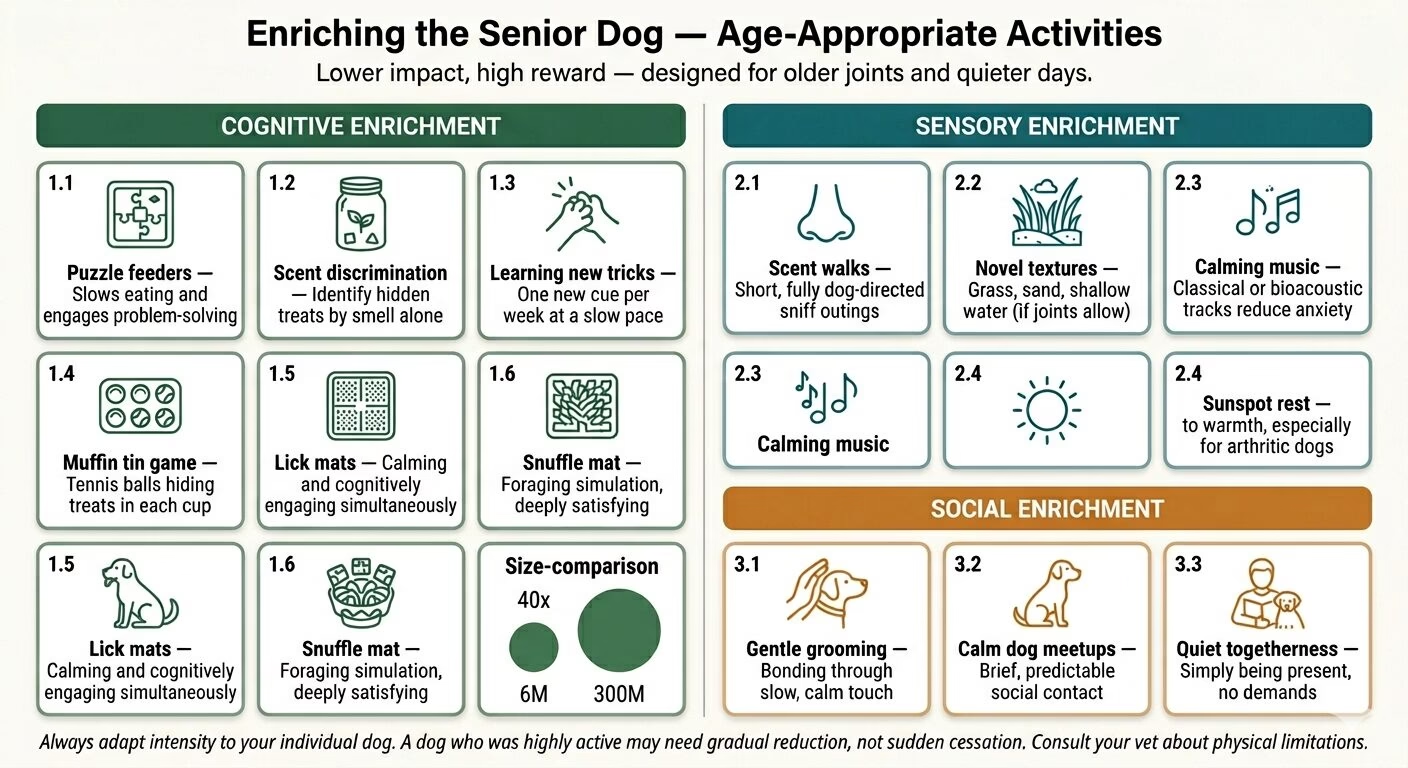
The care of the ageing dog is one of the most overlooked dimensions of the relationship. As dogs age, physical limitations become an increasingly important consideration — arthritis, reduced hearing and vision, and changes in sleep patterns and cognitive function all require adaptation. But the adaptations required are not merely physical. The senior dog's enrichment needs change but do not diminish.
Cognitive enrichment — puzzle feeders, scent work, learning new tricks at a calm pace — is particularly important for ageing dogs, because there is evidence that cognitive engagement delays the rate of cognitive decline. Scent work is particularly well-suited to senior dogs because it is low-impact, deeply engrossing, and highly rewarding. The mental engagement of tracking and identifying odours is as exhausting, in the best possible way, as physical exercise was in youth.
12.4 The final gift — honouring the senior dog
The final chapter of a dog's life is, for most owners, the hardest part of the relationship. The anticipation of loss, the management of declining health, and ultimately the decision about end of life are all experiences that test love and require courage. This guide will not minimise their difficulty.
What can be said is this: the quality of the final chapter is shaped by everything that came before it. A dog who has lived in a relationship of trust, respect, and genuine communication dies with that relationship intact. They carry it in their nervous system — in the calm that comes from secure attachment, in the absence of chronic fear, in the easy familiarity of the routines that have structured their life. The final gift is not managing the end well, though that matters. It is having lived the whole relationship well enough that the end is continuous with everything that preceded it.
| Expert Opinion
Dr. Marc Abraham Veterinarian, Animal Welfare Advocate & Author | PawsForever Foundation & University of Surrey “In twenty years of practice, I have sat with hundreds of families at the hardest moment. The ones who carry the least grief — not no grief, but the least complicated grief — are the ones who spent the life of the relationship paying attention. Not perfectly. Not without errors. But attentively. They knew their dog's signals. They had adapted as the dog aged. They had given the dog a life that matched what the dog actually needed, not just what was convenient. The bond they grieve is the bond they built. Every day is a day of building it.” Dr. Abraham is a veterinarian, broadcaster, and author of numerous books on pet health and welfare. He is a passionate advocate for responsible dog ownership and end-of-life care, and a regular contributor to public discussions on the human-animal bond. |
A Final ReflectionThe relationship between a human and a dog is among the most accessible forms of genuine, unconditional positive regard available to us. A dog does not care about your status, your appearance, your professional reputation, or the balance of your bank account. They care whether you are present, whether you are trustworthy, and whether you see them. The work of this guide — building trust, leading with calm confidence, communicating clearly, and attending to the full arc of the relationship — is the work of becoming that person. It is worthwhile. It always will have been. |
Expert Panel: Points of Consensus
The eight subject-matter experts whose perspectives are woven throughout this guide approach the topic from different disciplinary angles — cognitive science, veterinary medicine, ethology, behaviour analysis, genetics, and applied training. Their specific foci differ, but their conclusions converge on a set of core principles that can be stated with confidence:
- Trust is physiological. Chronic unpredictability produces measurable neurobiological harm in dogs. Consistency is not merely a training preference — it is an ethical obligation.
- The dominance paradigm is scientifically indefensible and practically counterproductive. Leadership built through positive guidance and earned respect produces more durable and welfare-compatible outcomes than any coercion-based alternative.
- Communication is bidirectional. The limiting factor in most human-dog relationships is not the dog's failure to understand the human, but the human's failure to understand the dog.
- The bond is not a static achievement. It is a living, dynamic entity that requires continuous investment, adaptation, and attention across the full arc of the dog's life.
- Reinforcement is relationship. Every positive reinforcement event is also a relational event — an act of communication, acknowledgement, and mutual engagement. Treating it as mere technique misses its most important function.
 Frequently Asked Questions
The following fifteen questions represent the most common points of confusion, concern, and curiosity raised by dog owners across the topics covered in this guide. Each answer draws on the research and principles developed in the preceding chapters.
Q1. How long does it take to build a strong bond with a puppy? |
| The bond begins forming from the first day, but depth takes time. Research suggests that most dogs show measurable secure attachment to a consistent caregiver within two to four weeks of regular positive interaction. However, the bond continues developing for years — some of the deepest dimensions of the relationship, including the mutual attunement that allows a dog and owner to read each other almost intuitively, develop over years of shared experience. There is no shortcut, but there is also no ceiling. The bond you have at five years will be richer than the one at six months, and the one at ten years richer still. |
Q2. My puppy seems to ignore me when we are outside. Is something wrong? |
| Almost certainly not. The outdoor environment is vastly more stimulating than the indoor environment, and a puppy's attentional system is not yet mature enough to reliably filter competing stimuli in favour of the owner. This is a training challenge, not a bonding failure. The solution is to practise attention and engagement in progressively more stimulating environments — starting in the quietest outdoor context available and very gradually increasing the challenge — while ensuring that attending to you is reliably the most rewarding thing that can happen in that moment. The dog will not become reliable outdoors through will or scolding; only through a sufficient reinforcement history. |
Q3. Is it true that I should never let my dog on the furniture or sleep in the bedroom? |
| This is a holdover from the dominance paradigm, and the scientific literature provides no support for it. Allowing a dog onto furniture or to sleep in the bedroom does not cause behaviour problems, does not undermine leadership, and does not signal that the dog has elevated status. Studies examining the correlation between co-sleeping and behaviour problems in dogs have found none. The relevant question is simply: does the dog make space when asked, and are there any circumstances (allergies, sleep disruption) that make the arrangement inadvisable for the human? If the answer to the first is yes and the second is no, the choice is purely a matter of preference. |
Q4. My dog growls occasionally when I approach their food bowl. Is this aggression? |
| Growling is communication, not aggression. It is the dog's way of saying I am uncomfortable with this situation. The appropriate response is to take the communication seriously, not to punish it. Punishing a growl does not remove the discomfort — it removes the warning signal, which means the next step in the escalation sequence (snapping or biting) arrives without warning. Resource guarding around food is normal and modifiable through careful counter-conditioning: systematically teaching the dog that a human approaching their bowl predicts something even better appearing. A certified applied animal behaviourist can provide a bespoke programme if the behaviour is severe or frequent. |
Q5. How important is socialisation, and when does the window close? |
| Socialisation is among the most critical investments of the puppy's early life. The primary socialisation window — the period during which novel exposures are integrated with relatively little fear and enormous retention — closes at approximately 12-16 weeks of age. This does not mean that dogs cannot learn to be comfortable with new things after this period; they can. But the neural plasticity available in those early weeks is unique. Every positive, carefully managed exposure during the window — to different people, sounds, surfaces, animals, and environments — is a gift to the adult dog. Missing this window is the single most preventable cause of fear-based behaviour in adult dogs. |
Q6. Should I use a shock collar? A prong collar? A slip lead? |
| The scientific evidence on aversive training tools is consistent and unfavourable. The use of shock collars (e-collars), prong collars, and choke chains is associated with increased cortisol, increased aggression, increased fearfulness, and reduced learning efficiency. A 2021 study published in Frontiers in Veterinary Science compared dogs trained with e-collars to those trained with positive reinforcement and found significantly higher stress indicators and no improvement in task performance in the e-collar group. These tools are banned or restricted in multiple countries on welfare grounds. The slip lead, used by many trainers as a management tool rather than a correction device, is less problematic if used correctly, but all collar-based corrections carry risk of physical injury to the cervical spine. A well-fitted harness and a training programme built on positive reinforcement make these tools unnecessary. |
Q7. My dog pulls on the leash constantly. Does this mean they are trying to dominate me? |
| No. Leash pulling reflects the fact that walking forward has been enormously reinforced — moving ahead gets the dog to the next smell, the next dog, the next interesting thing — and that the owner has, by continuing to walk when the dog pulls, consistently reinforced the pulling. It is a simple learning history issue, not a status dispute. The solution is equally simple in principle and requires patience in practice: loose-leash walking must become the only thing that predicts forward movement. Every time the leash tightens, forward movement stops. Every time the leash is loose, forward movement and intermittent reinforcement continue. With consistency, most dogs learn loose-leash walking within a few weeks. |
Q8. My puppy bites me constantly during play. How do I stop it? |
| Puppy biting (mouthing) is normal developmental behaviour — puppies explore the world with their mouths and learn bite inhibition through play. The goal is not to eliminate mouthing but to teach bite inhibition (graduated reduction of bite pressure) and to redirect to appropriate targets. The most effective approach combines: a brief, flat yelp or 'ouch' followed by immediate cessation of play when pressure crosses your threshold; consistent redirection to a toy when mouthing begins; and ensuring the puppy has adequate physical and mental exercise (an under-stimulated puppy bites more). Avoid pulling your hands away sharply — this activates prey drive and escalates the behaviour. Physical punishment for mouthing teaches the puppy to fear hands, not to be gentle with them. |
Q9. Is a dog ever 'too old' to train? |
| No. The oft-cited folk wisdom that you cannot teach an old dog new tricks is contradicted by considerable evidence. Adult and senior dogs learn through the same mechanisms as puppies — operant and classical conditioning — and in some respects are easier to train because they have better impulse control and lower baseline arousal. What changes with age is the rate of acquisition, which typically slows slightly, and physical limitations, which may constrain certain types of training. Cognitive engagement through training is also one of the most evidence-supported interventions for delaying cognitive decline in senior dogs. |
Q10. Should I adopt one puppy or two? |
| The evidence on littermate syndrome is sufficiently robust that most professional trainers and behaviourists advise against adopting two puppies simultaneously, particularly from the same litter. When two puppies grow up together, they tend to bond primarily with each other rather than with their human, producing dogs who are difficult to train individually, who become severely distressed when separated, and who may develop fear of unfamiliar people. If you want two dogs, the most successful approach is to adopt one, allow that dog to reach eighteen months to two years of age, and then introduce a second. This gives both dogs the full benefit of the socialisation period and the human-dog bonding process. |
Q11. My dog shows no interest in training. What am I doing wrong? |
| Low engagement in training is almost always a motivational issue, not a capacity issue. Common causes include: insufficient reward value (the reward offered is not sufficiently motivating to compete with the alternative attractions of the environment); session length (most dogs disengage after five to eight minutes of focused training — longer is not better); timing of training (a dog who has just eaten is less food-motivated; a dog who has just woken up is less cognitively available than one who has had moderate exercise); and training history (dogs who have been punished for incorrect attempts become reluctant to try new things). Begin by identifying your dog's highest-value reinforcers through preference testing, shorten sessions dramatically, and start with criteria so easy that the dog can succeed on virtually every attempt. |
Q12. How should I introduce my puppy to my existing dog? |
| The introduction should be managed to prevent either dog from feeling cornered or overwhelmed. Begin on neutral territory — a park neither dog associates with as their own space. Allow both dogs to approach and move away freely; do not force or hold either dog. Keep introductions brief initially and heavily reinforced. The dogs should be allowed to sniff each other, move away, sniff again, at their own pace. Monitor body language throughout: loose, bouncy movement indicates positive affect; stiffening, hard staring, or either dog refusing to move away is a signal to increase the distance between them. Early, brief, positive encounters build a foundation; rushing the process produces conflict that can take months to resolve. |
Q13. My dog has started being aggressive toward strangers. What caused this? |
| Reactivity toward strangers in a previously friendly dog most commonly has one of three causes: a frightening experience with a stranger that has generalised to the category; a gap in socialisation that was not apparent in the limited range of people the young dog encountered; or the onset of adolescence, which often re-opens fear windows. Less commonly, it may be pain-related (a dog who is in chronic pain is more likely to be defensive) — a veterinary check is always warranted with sudden behaviour changes. The management and rehabilitation approach involves systematic desensitisation with counter-conditioning, which should be undertaken under the guidance of a certified professional if the response is intense or involves any actual aggression. |
Q14. How much exercise does my puppy actually need? |
| The conventional guidance of five minutes per month of age, twice per day, for puppies under one year remains sensible as a starting point. This guideline exists because puppy growth plates are vulnerable to repetitive stress injury until they close, typically between twelve and eighteen months depending on breed and size. Running on hard surfaces, high-impact jumping, and forced distance running before growth plates close are associated with increased rates of joint problems in adulthood. Mental exercise — training, puzzle feeders, scent work — is equally important and often more tiring than physical exercise, with none of the joint-impact risk. A puppy who is mentally exhausted from twenty minutes of positive training is a calmer, more settled puppy than one who has run for an hour. |
Q15. Is my relationship with my dog really as important to them as it feels to me? |
| The evidence says yes — emphatically. Dogs show all the behavioural and physiological markers of secure attachment to their primary caregivers: they use their owners as a safe base for exploration; they show elevated distress at separation; they show distinctly positive physiological responses (including the mutual oxytocin surge described in Chapter 1) during positive interaction; and they preferentially seek proximity to their owners over all other individuals when stressed. Research by Payne et al. found that dogs' facial expressions change in specific, measurable ways when shown images of their owners versus strangers — a response not seen for other stimuli. The relationship is as real, and as important, as it feels. |
Selected Bibliography & Further Reading
Foundational science
- Nagasawa, M. et al. (2015). 'Oxytocin-gaze positive loop and the coevolution of human-dog bonds.' Science, 348(6232), 333-336.
- Hare, B. & Tomasello, M. (2005). 'Human-like social skills in dogs?' Trends in Cognitive Sciences, 9(9), 439-444.
- Andics, A. et al. (2016). 'Neural mechanisms for lexical processing in dogs.' Science, 353(6303), 1030-1032.
- Mech, L.D. (1999). 'Alpha status, dominance, and division of labor in wolf packs.' Canadian Journal of Zoology, 77(8), 1196-1203.
Behaviour and training
- Herron, M.E., Shofer, F.S. & Reisner, I.R. (2009). 'Survey of the use and outcome of confrontational and non-confrontational training methods in client-owned dogs.' Applied Animal Behaviour Science, 117(1-2), 47-54.
- Overall, K.L. (2013). Manual of Clinical Behavioural Medicine for Dogs and Cats. Elsevier.
- McConnell, P.B. (2002). The Other End of the Leash. Ballantine Books.
- Rugaas, T. (2006). On Talking Terms with Dogs: Calming Signals. Dogwise Publishing.
Development and attachment
- Harvey, N.D. et al. (2020). 'Putative neural correlates of attention control are associated with dog trainability.' Biological Letters, 16(2).
- Bradshaw, J. & Casey, R. (2007). 'Anthropomorphism and anthropocentricism as influences in the quality of life of companion animals.' Animal Welfare, 16(S), 149-154.
- Bekoff, M. (2007). The Emotional Lives of Animals. New World Library.
- Horowitz, A. (2009). Inside of a Dog: What Dogs See, Smell and Know. Scribner.
Recommended reading for owners
- Hare, B. & Woods, V. (2013). The Genius of Dogs. Dutton.
- Dunbar, I. (2004). Before and After Getting Your Puppy. New World Library.
- Garrett, S. (2005). Shaping Success. Clean Run Productions.
- Friedman, S. (2010). 'What's wrong with this picture? Effectiveness is not enough.' AVES Magazine, 1(2), 12-18.
Glossary of Key Terms
Calming signals: A set of communicative behaviours identified by ethologist Turid Rugaas that dogs use to signal benign intent, reduce tension in social situations, and communicate their own stress levels. Include yawning, lip licking, turning the head away, sniffing the ground, and the play bow.
Classical conditioning: A form of associative learning in which a neutral stimulus acquires emotional significance through repeated pairing with a biologically significant stimulus. The basis for counter-conditioning and desensitisation protocols.
Counter-conditioning: The process of changing a dog's emotional response to a stimulus by pairing the stimulus with something the dog finds highly positive at levels of exposure below the dog's fear threshold.
Desensitisation: Gradual, systematic exposure to a feared or reactive stimulus at intensity levels too low to trigger a fear response, progressively increasing intensity as the dog remains comfortable.
Lure fading: The process of removing a physical prompt (food or toy held in the hand to guide behaviour) once a behaviour is reliably established, transitioning to a hand signal as the cue.
Marker: A precise, consistent signal — most commonly a clicker or a specific word — that marks the exact instant a desired behaviour occurs, bridging the gap between the behaviour and the delivery of reinforcement.
Operant conditioning: A form of learning in which behaviour is shaped by its consequences: behaviours followed by reinforcement increase in frequency; behaviours followed by punishment decrease. The foundation of modern training methodology.
Oxytocin: A neuropeptide associated with bonding, trust, and social affiliation. Released in both dogs and humans during positive mutual interaction, particularly eye contact.
Positive reinforcement: The addition of something the animal values following a behaviour, which increases the likelihood of that behaviour recurring. Distinct from reward in that reinforcement is defined by its effect on behaviour, not by its intrinsic pleasantness.
Secure attachment: A pattern of attachment behaviour, originally described in human infants, in which the attachment figure is used as a safe base for exploration and a source of comfort under stress. Research has shown that dogs form secure attachments to their primary caregivers.
Systematic desensitisation: See Desensitisation. Often combined with counter-conditioning (DSC) for most effective treatment of fear-based responses.
Threshold: The level of stimulus intensity at or below which a dog can remain in a calm, trainable state. Training should occur below threshold; forcing above threshold produces flooding, not learning.